Method and device for scheduling robots

A robot and purpose technology, applied in the computer field, can solve the problems of the lack of continuity of the robot's warehousing work, increasing the idle time of the robot, and reducing the work efficiency.

CN112631268APending Publication Date: 2021-04-09BEIJING JINGDONG QIANSHITECHNOLOGY CO LTD
0 Cites 2 Cited by

Patent Information

Authority / Receiving Office
CN · China
Patent Type
Applications(China)
Current Assignee / Owner
Publication Date
2021-04-09

Smart Images

  • Figure 1
    Figure 1
  • Figure 2
    Figure 2
  • Figure 3
    Figure 3
Patent Text Reader

Abstract

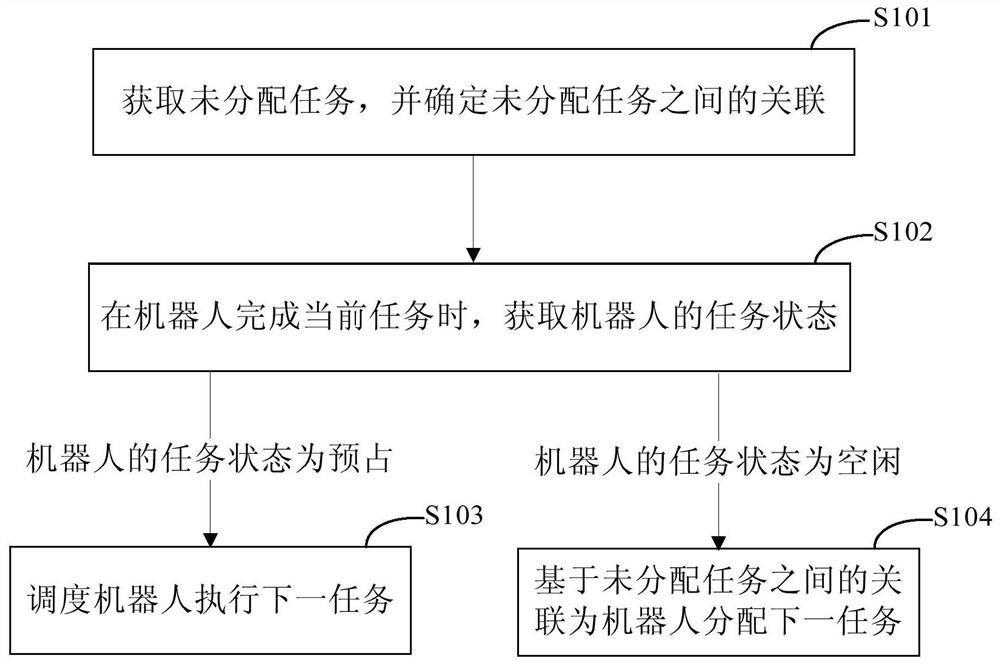
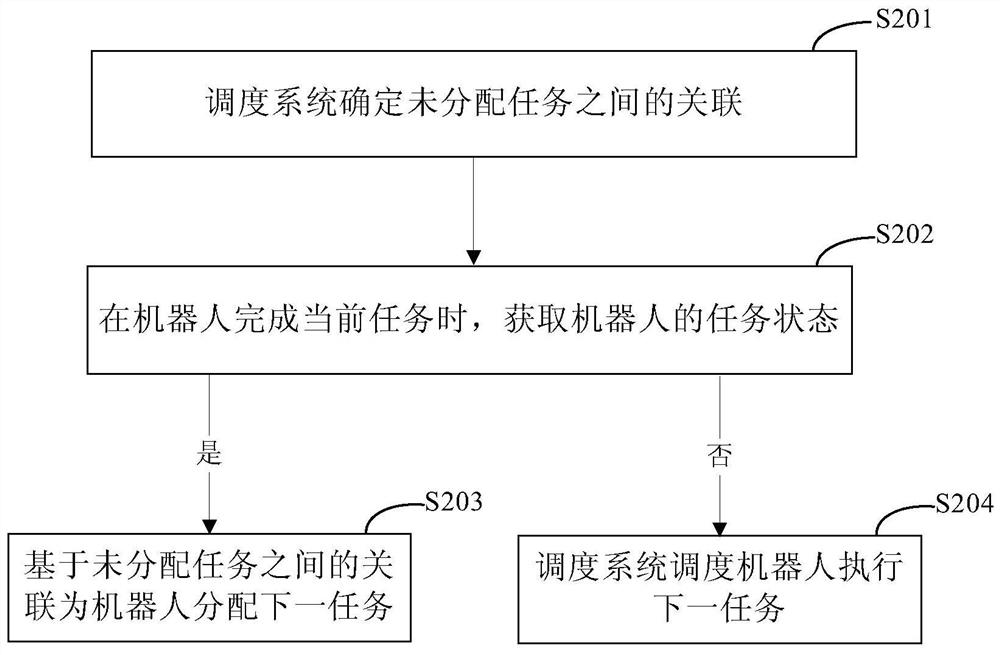
The invention discloses a method and device for scheduling robots, and relates to the technical field of computers. A specific embodiment of the method comprises the steps of obtaining unallocated tasks, and determining association between the unallocated tasks; when the robot completes the current task, obtaining the task state of the robot, wherein the task state is determined based on the current task; if the task state of the robot is pre-occupation, scheduling the robot to execute the next task; and if the task state of the robot is idle, allocating a next task to the robot based on the association between the unallocated tasks. According to the embodiment, the scheduling order can be optimized, and the storage work continuity of the robot is ensured, so that the work efficiency of the robot is improved, and the work efficiency in storage is improved.
Need to check novelty before this filing date? Find Prior Art

Description

technical field

[0001] The invention relates to the field of computer technology, in particular to a method and device for dispatching robots. Background technique

[0002] With the rapid development of artificial intelligence, unmanned storage technology is rising day by day. In unmanned warehousing technology, robots such as automatic guided vehicles (AGV), rail guided vehicles (RGV) or unmanned forklifts are often used to participate in warehousing work, and the robots can work automatically through the scheduling system, but the scheduling of the robots is abnormal. complex.

[0003] At present, the warehousing work that robots participate in mainly includes packing, handling, and unloading, and these warehousing tasks are related. For example, goods often need to be moved between workstations. to other workstations.

[0004] When scheduling robots, the existing scheduling system mainly schedules robots based on regional planning. A warehousing job can schedule any ro...

Examples

Embodiment approach

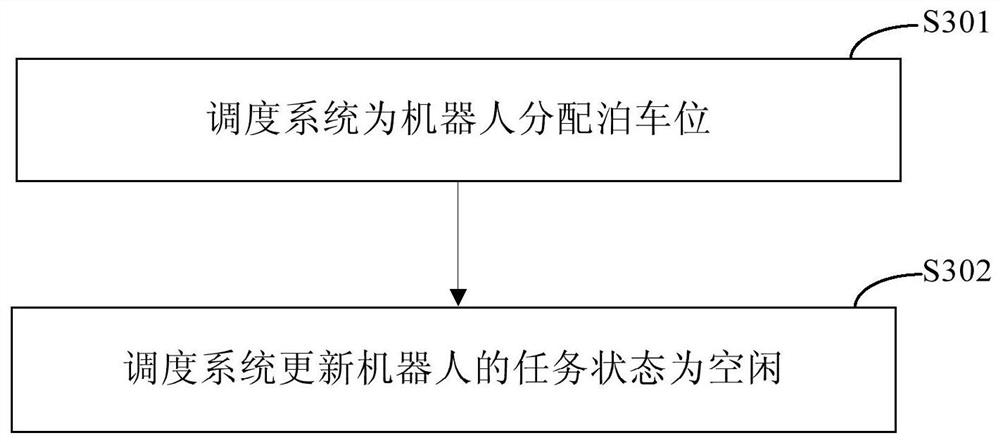
[0078] Step S301: the dispatching system allocates a parking space for the robot;

[0079] Step S302: The scheduling system updates the robot's task status to idle.

[0080] Figure 4 It is a schematic flow chart of the packing task of the method for dispatching robots according to a reference embodiment of the present invention.

[0081] Such as Figure 4 As shown, when the packing task is assigned to the robot, the process of the packing task can refer to the following implementation methods:

[0082] Step S401: When the robot arrives at the packing point, it sends an arrival message to the dispatching system;

[0083] Step S402: the scheduling system notifies the workstation where the packing point is located;

[0084] Step S403: the dispatching system sends an arrival prompt instruction to the robot;

[0085] Step S404: the workstation sends a packing completion message to the scheduling system when the packing is completed;

[0086] Step S405: The dispatching system...