
Wireless sensing system based on radio frequency energy awakening
A technology of wireless sensing and radio frequency energy, applied in the field of wireless sensing, can solve the problems of long acquisition period and reduce the real-time performance of data acquisition, and achieve the effect of reducing power consumption, facilitating remote data maintenance and management, and improving data transmission distance.
- Summary
- Abstract
- Description
- Claims
- Application Information
AI Technical Summary
Problems solved by technology
Method used
Image

Examples
specific Embodiment 1
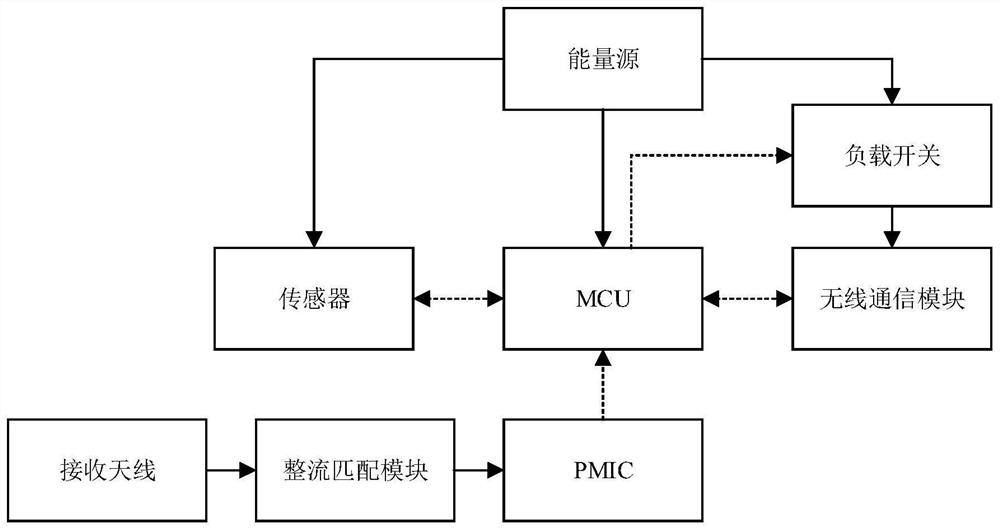
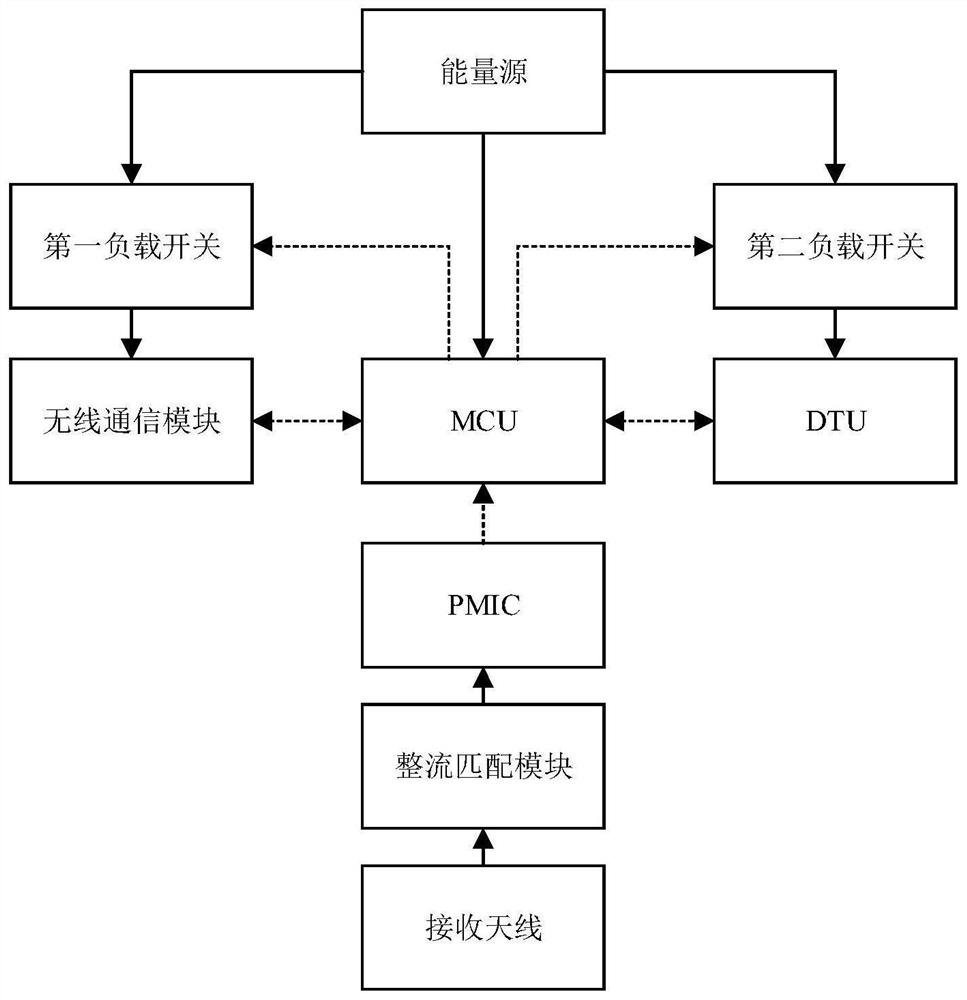
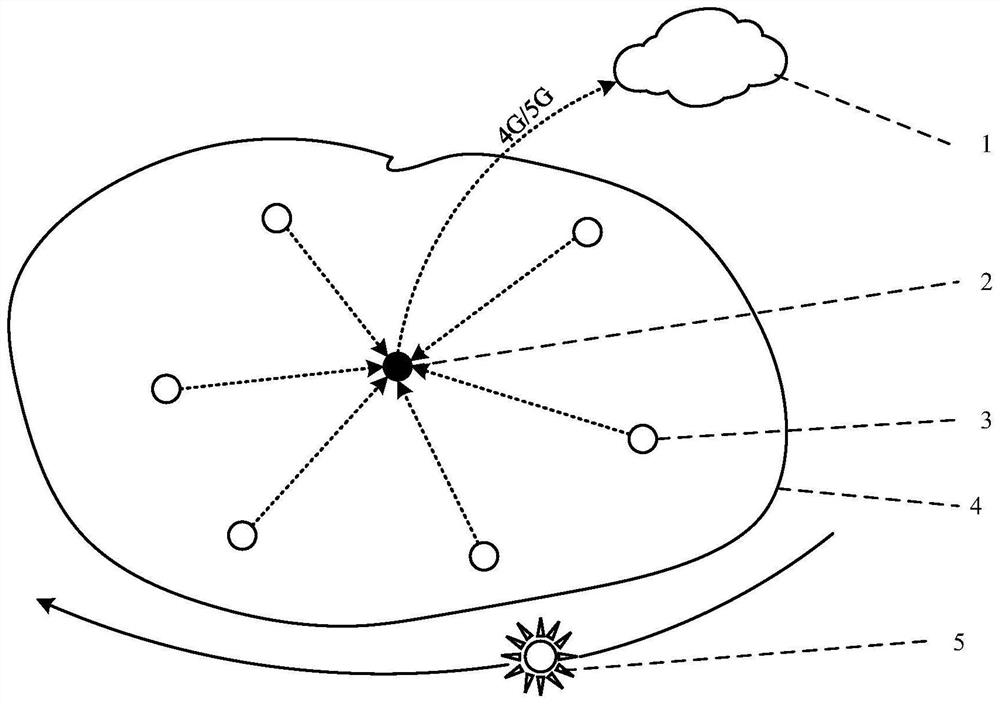
[0030] according to Figure 1 to Figure 4 As shown, the present invention provides a wireless sensor system based on radio frequency energy wake-up, such as figure 1 As shown, the nodes in the cluster include a receiving antenna, a rectification matching module, a PMIC, an MCU, a sensor, an energy source, a load switch and a wireless communication module.
[0031] The energy source supplies power to the sensor, the load switch, and the MCU. The MCU can communicate with the sensor and the wireless communication module, and controls the energy source to supply power to the wireless communication module through the load switch. The receiving antenna is connected to the rectification matching module, and then converted and output by the PMIC and connected to the MCU as an interrupt signal.
[0032] After the nodes in the cluster are powered on, the MCU and sensors are in the dormant state by default, and the load switch is turned off by default. After the wake-up source arrives, ...
PUM
 Login to View More
 Abstract
Description
Claims
Application Information
 Login to View More