
Roller modification auxiliary optimization method based on big data
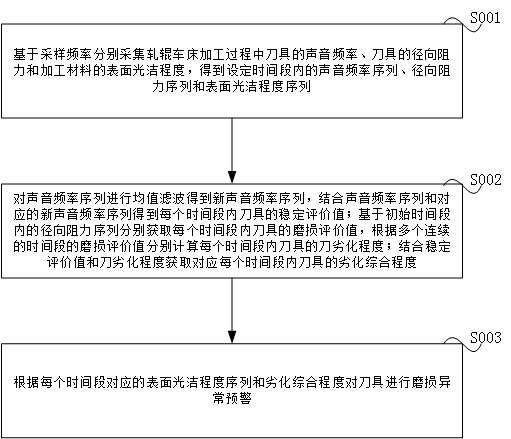
An optimization method and big data technology, applied in the field of machine tool parts processing, can solve the problems of tool wear, quality impact, waste of time and energy, etc., to reduce processing accidents, improve processing quality, and avoid the use of abnormal tools.
- Summary
- Abstract
- Description
- Claims
- Application Information
AI Technical Summary
Problems solved by technology
Method used
Image

Examples
Embodiment Construction
[0023] In order to further illustrate the technical means and effects adopted by the present invention to achieve the predetermined purpose of the invention, the following describes a method for auxiliary optimization of roll reforming based on big data proposed in accordance with the present invention with reference to the accompanying drawings and preferred embodiments, and its specific implementation The mode, structure, features and efficacy are described in detail as follows. In the following description, different "one embodiment" or "another embodiment" are not necessarily referring to the same embodiment. Furthermore, the particular features, structures or characteristics in one or more embodiments may be combined in any suitable form.
[0024] Unless otherwise defined, all technical and scientific terms used herein have the same meaning as commonly understood by one of ordinary skill in the art to which this invention belongs.
[0025] The specific scheme of a method...
PUM
 Login to View More
 Abstract
Description
Claims
Application Information
 Login to View More