
Self-locking, self-adjusting receptacles, particularly containers
A container and interlocking device technology, applied in the field of containers, can solve the problems of time-consuming injury and danger, and achieve the effects of less injury risk, time saving and personnel saving.
- Summary
- Abstract
- Description
- Claims
- Application Information
AI Technical Summary
Problems solved by technology
Method used
Image

Examples
Embodiment Construction
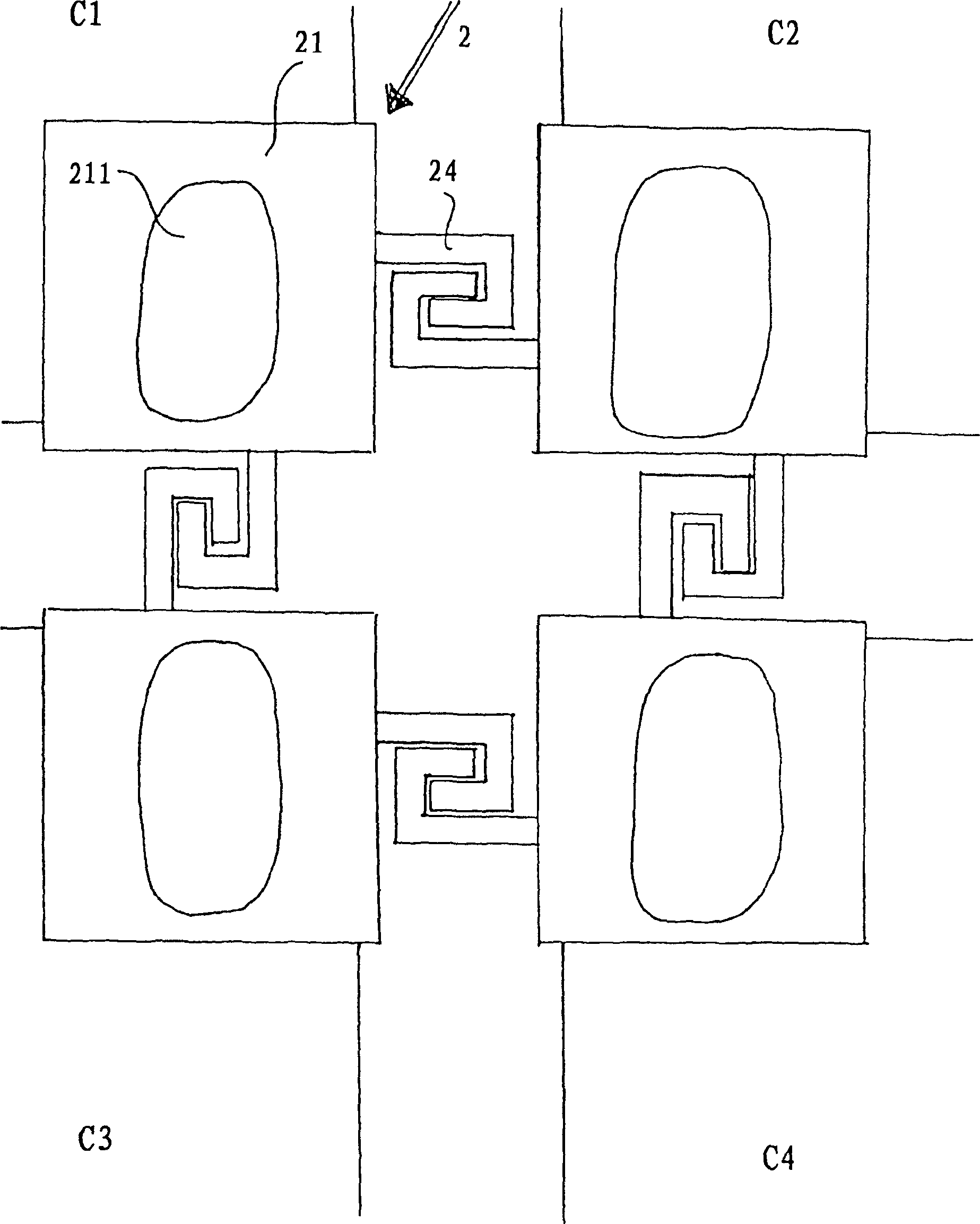
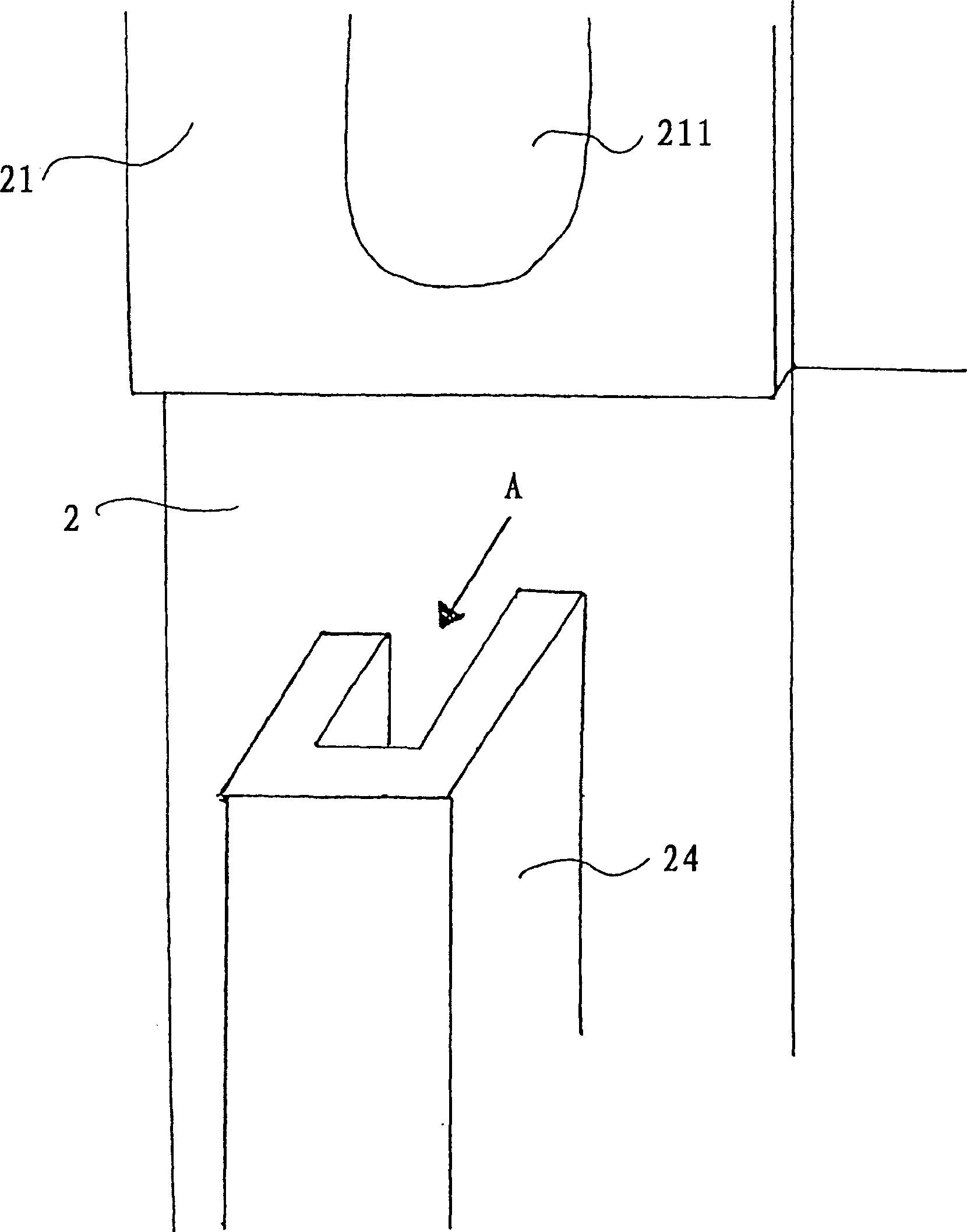
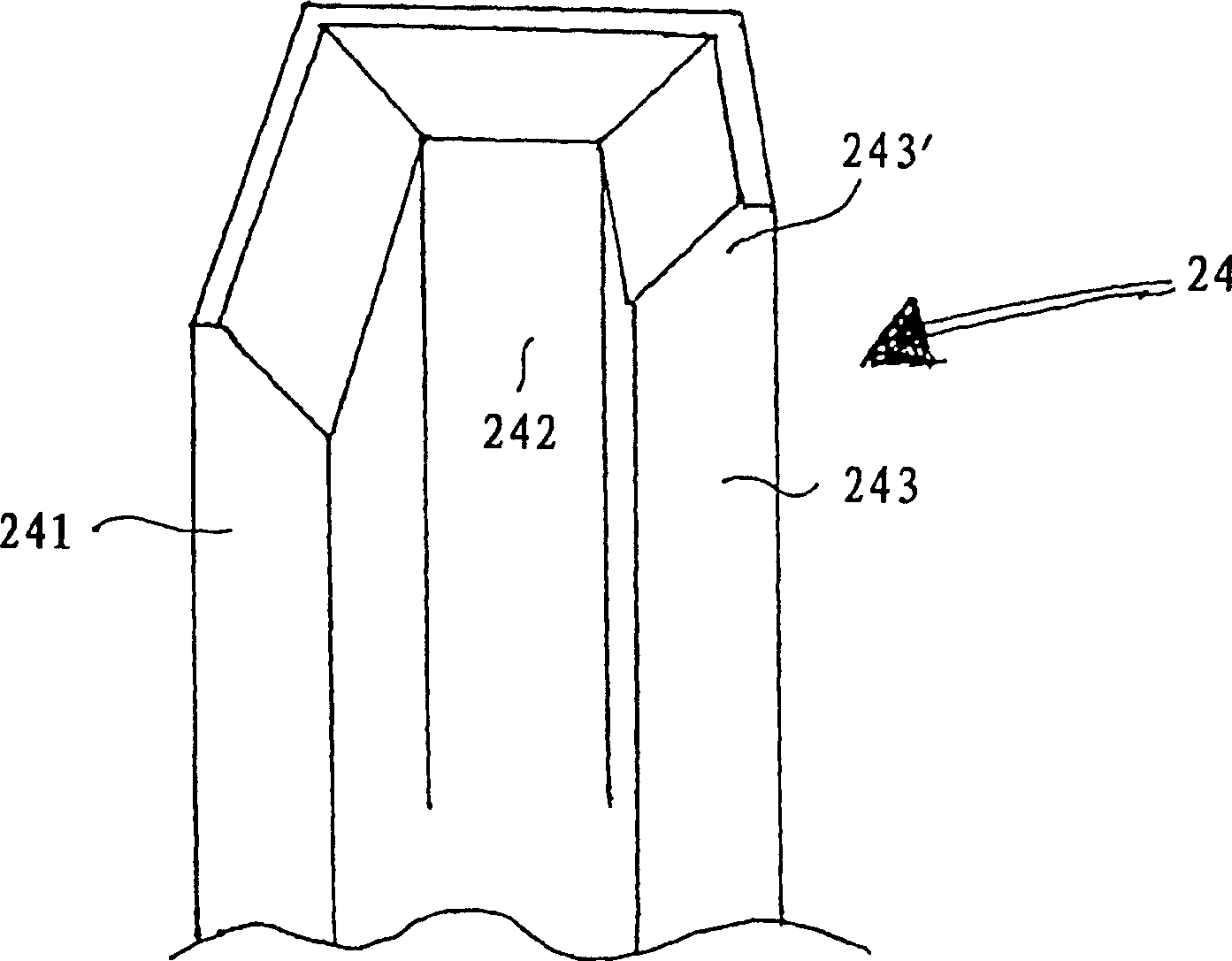
[0017] figure 1 Partially showing a plurality of containers C1, C2, C3 and C4 arranged in succession and juxtaposition, comprising a container corner 2 with interlocking housings 21 at the upper and lower ends of the corner, so-called corner castings, having an oval Shaped opening 211. The containers are interlocked with each other via an outer locking device 24 . The outer locking devices 24 are, for example, U-shaped and open on the inside, so that the outer locking devices 24 of an adjoining container can pass completely through them. The loading and unloading process and the parking process are always carried out from the top down, so that when a container is parked in its place, the next container is positioned next to the first container from above. During this process, the outer locking device of the second container can engage in the outer locking device of the first container, so that not only the locking takes place, but also the second container can be guided and ...
PUM
 Login to View More
 Abstract
Description
Claims
Application Information
 Login to View More