

Tunnel transistor
a tunneling transistor and tunneling technology, applied in the field of tunneling field effect transistors, can solve the problems of overlay/misalignment problems, difficult to form different source and drain regions with a small gate length, etc., and achieve the effect of greater transistor density
- Summary
- Abstract
- Description
- Claims
- Application Information
AI Technical Summary
Benefits of technology
Problems solved by technology
Method used
Image

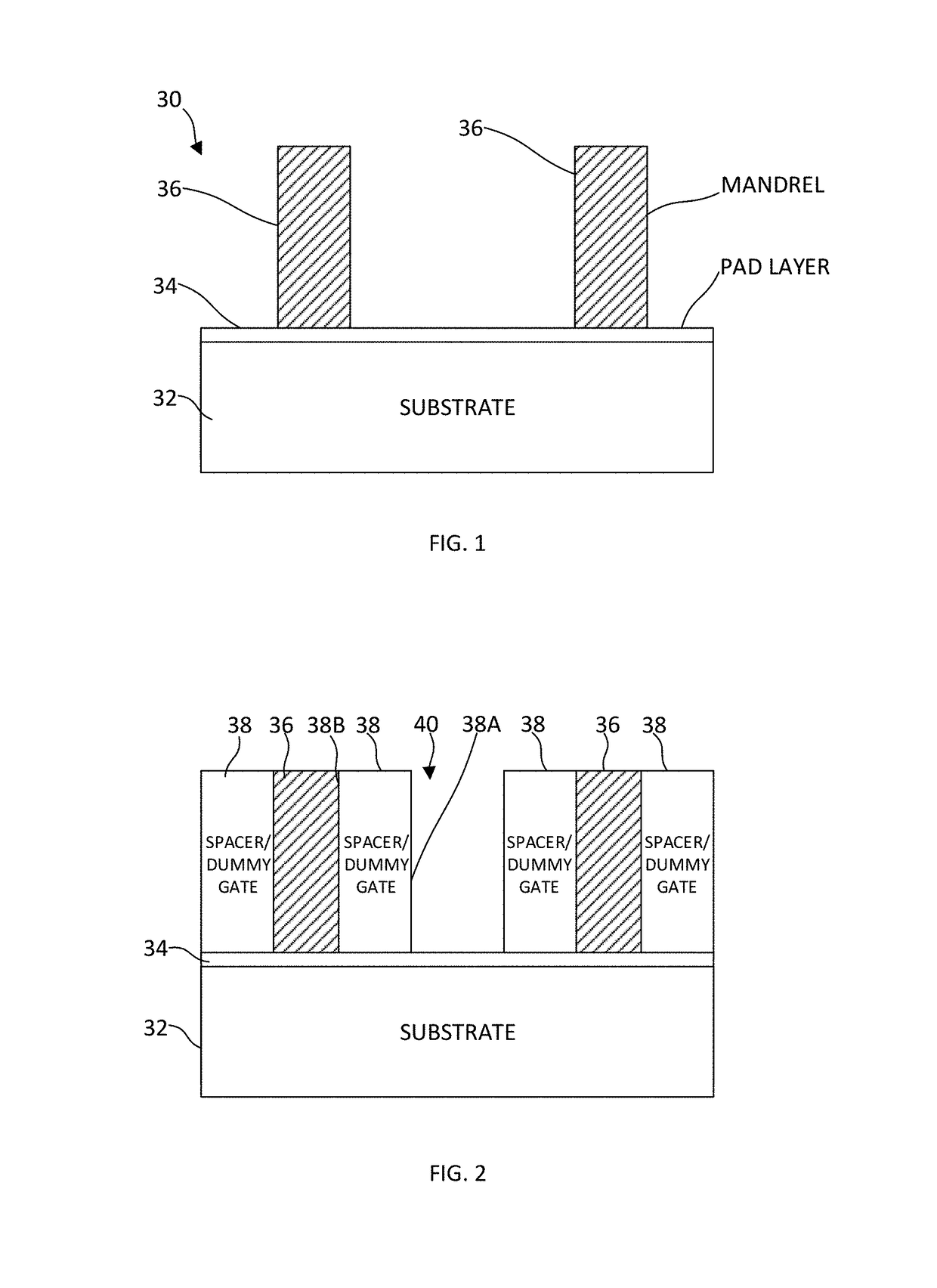
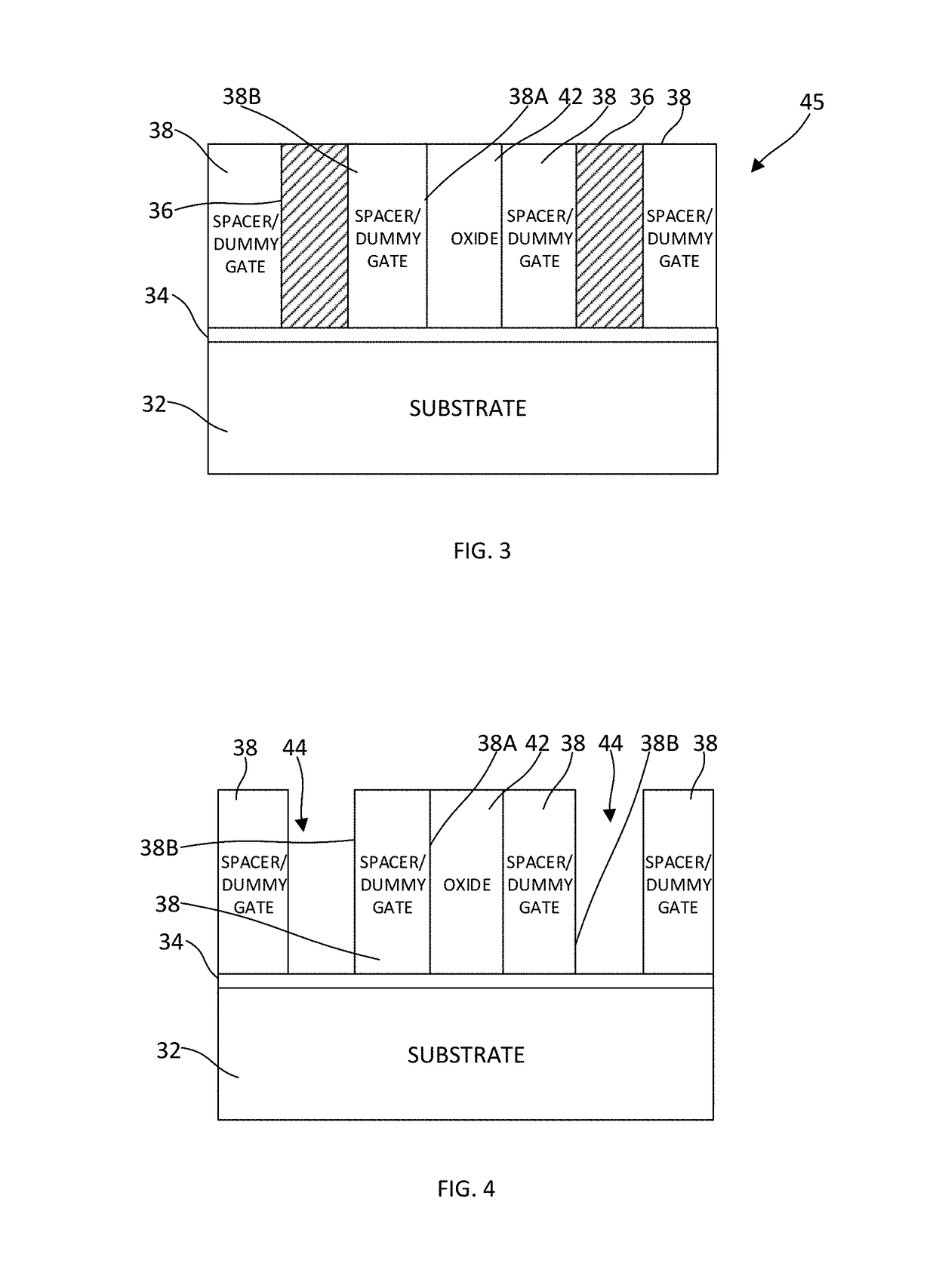
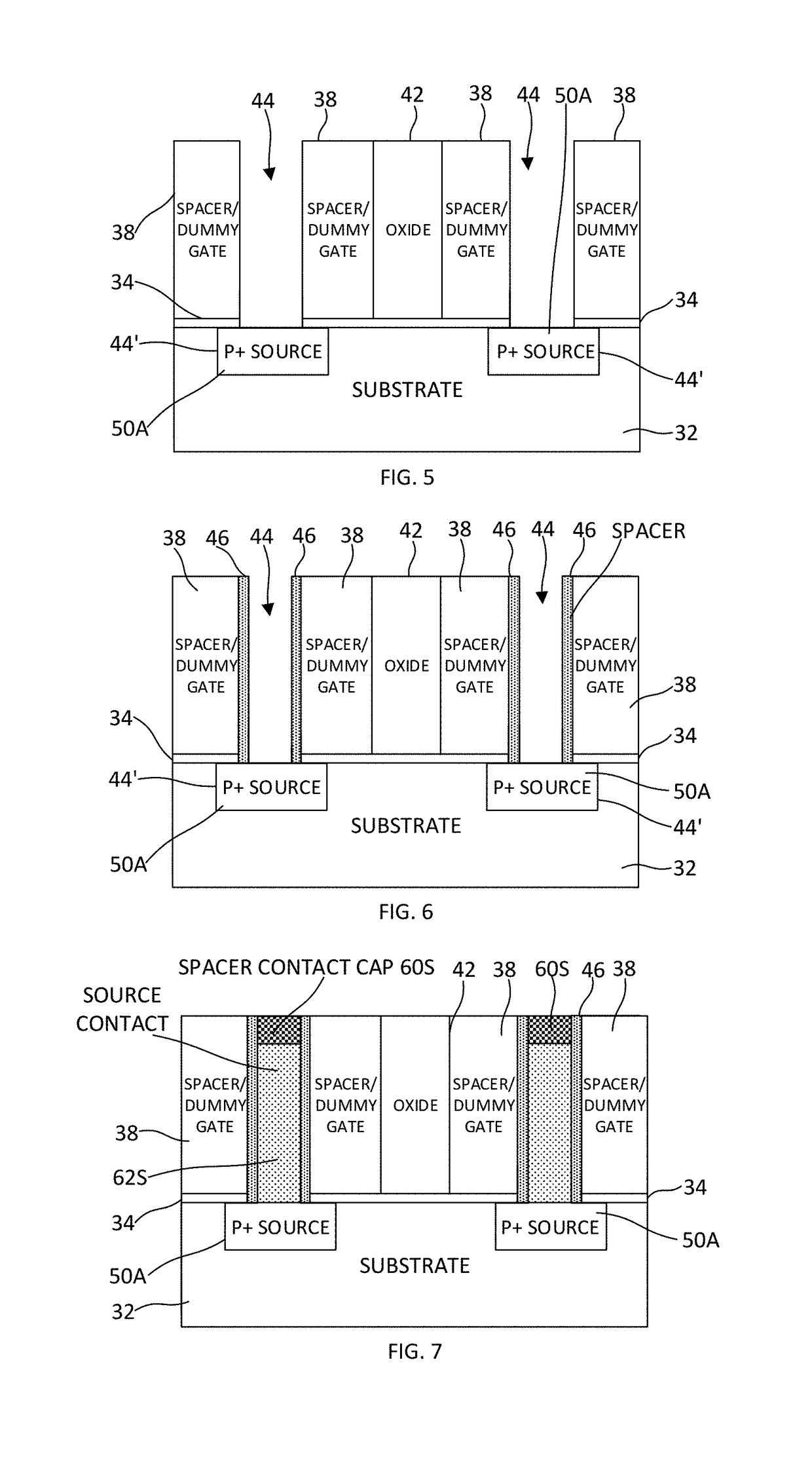
Examples
Embodiment Construction
[0032]Principles of the present invention will be described herein in the context of an illustrative tunnel field-effect transistor fabricated on a silicon substrate. It is to be appreciated, however, that the specific embodiments and / or methods illustratively shown and described herein are to be considered exemplary as opposed to limiting. Moreover, it will become apparent to those skilled in the art given the teachings herein that numerous modifications can be made to the embodiments shown that are within the scope of the claims. That is, no limitations with respect to the embodiments shown and described herein are intended or should be inferred.
[0033]The figures schematically illustrate an exemplary sequence of fabrication steps that may be employed in obtaining a tunnel field-effect transistor (TFET). Although the overall fabrication method and the structures formed thereby are novel, certain individual processing steps required to implement the method may utilize conventional s...
PUM
 Login to View More
 Abstract
Description
Claims
Application Information
 Login to View More