
Pressure compensation label for sticking to a surface, and method
a technology of pressure compensation and label, applied in the direction of identification means, electrical apparatus casings/cabinets/drawers, instruments, etc., can solve the problems of moisture and water not being able to penetrate the housing of the component, similar pressure compensation problems, and a large amount of materials, etc., to achieve simple and cost-effective manner, stable and mechanical resistan
- Summary
- Abstract
- Description
- Claims
- Application Information
AI Technical Summary
Benefits of technology
Problems solved by technology
Method used
Image

Examples
Embodiment Construction
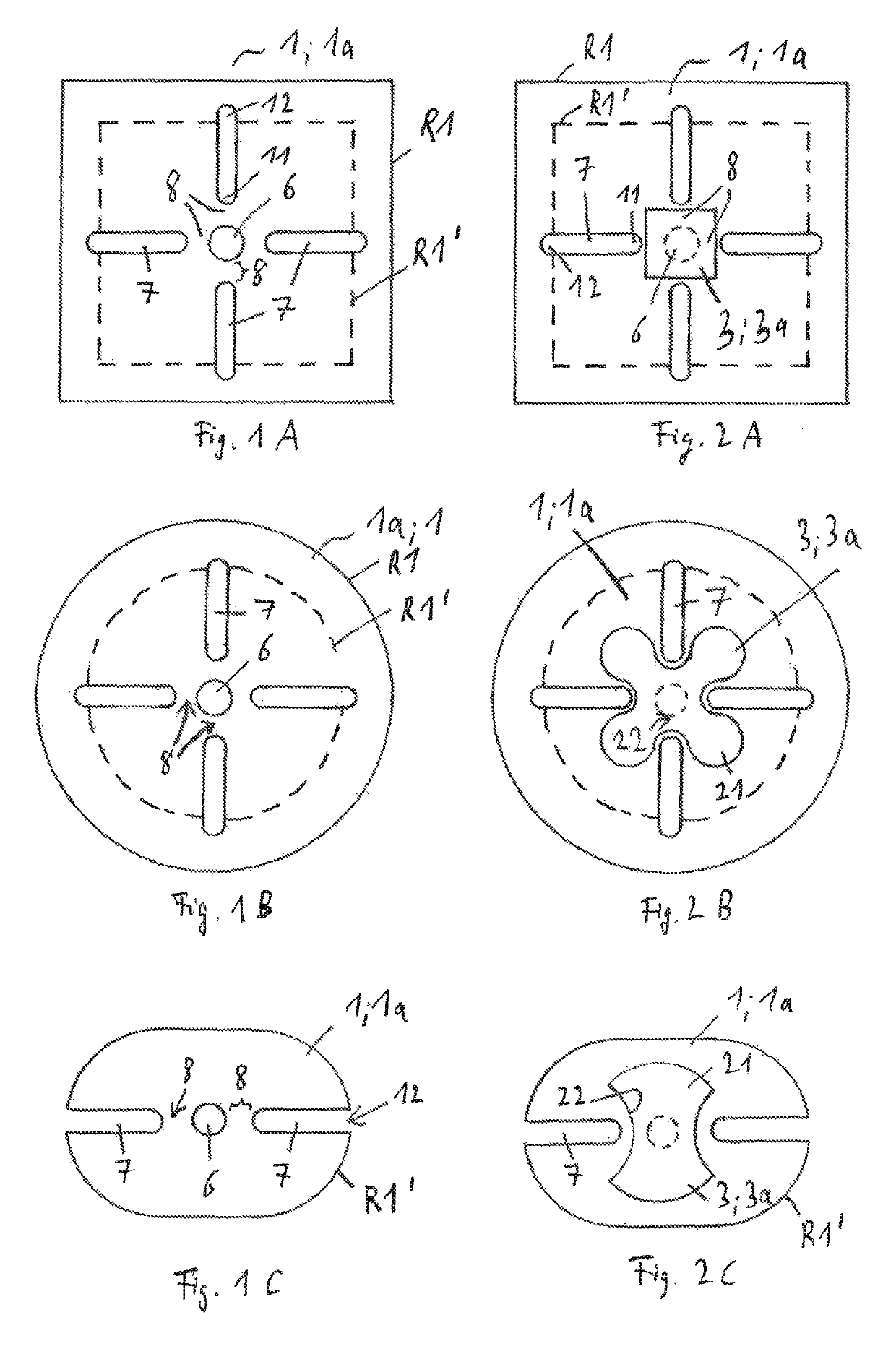
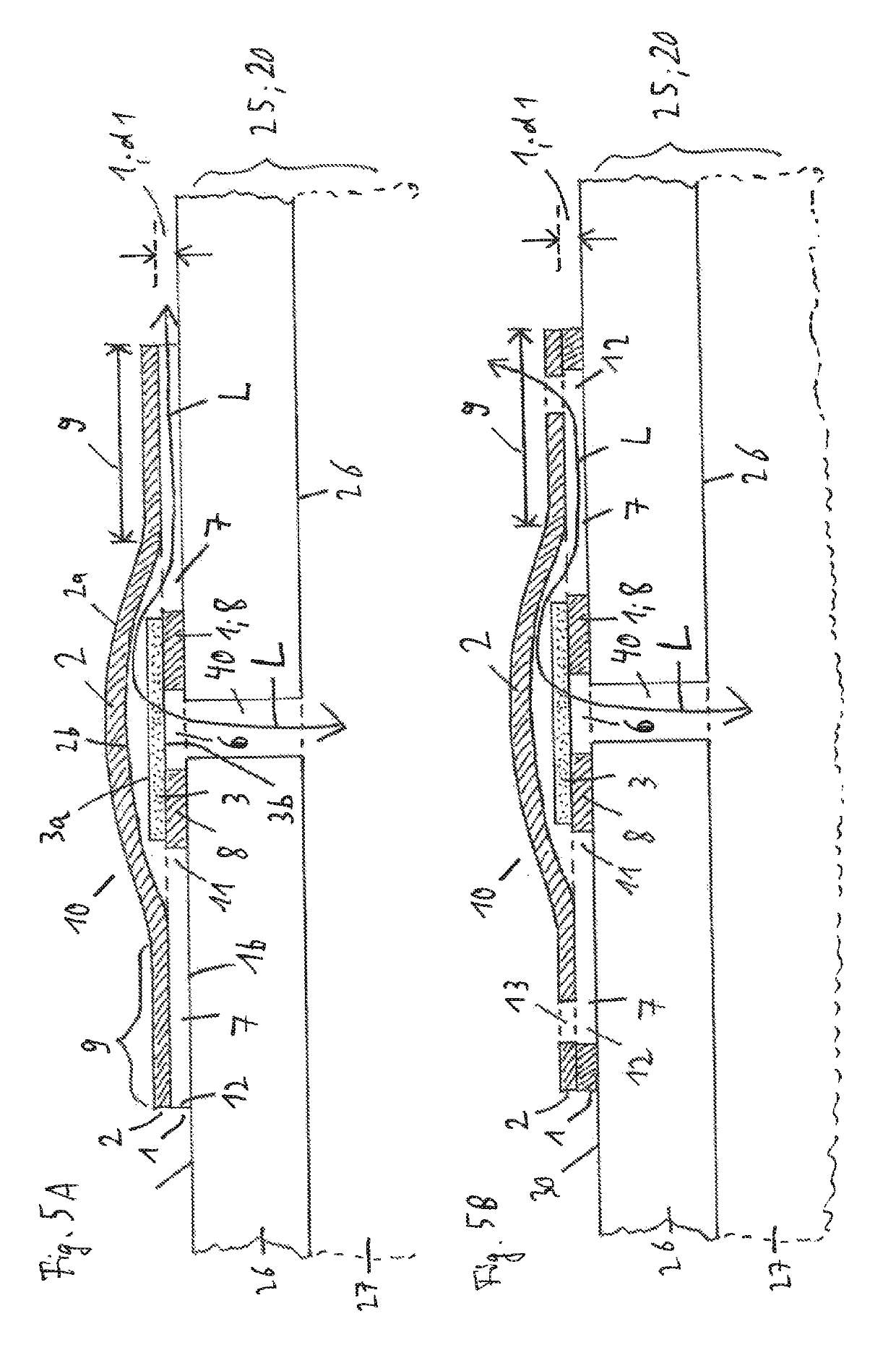
[0038]FIGS. 1A to 1C show some exemplary embodiment patterns for the lower (or inner, i.e. to be adhesively affixed directly to the surface of the device or housing) first film of the pressure compensation label. The views of the first film 1 shown in FIGS. 1A to 1C can be implemented, for example, as a cut pattern or punched pattern; in particular, a number of ventilation channels in the form of gaps or recesses can be configured outside of the central passage openings, above all as punched-out parts of the first film. The height of the ventilation channels then corresponds to the layer thickness d1 of the first film (cf. FIGS. 5A and 5B). However, the ventilation channels in the first film can alternatively be configured also as weakened film regions, particularly thinned in comparison with the remaining film thickness. In the simplest case, however, the first film is simply punched out in the region of the recess for the pressure compensation opening and also in the region of the...
PUM
| Property | Measurement | Unit |
|---|---|---|
| pressure | aaaaa | aaaaa |
| distance | aaaaa | aaaaa |
| air-permeable | aaaaa | aaaaa |
Abstract
Description
Claims
Application Information
 Login to View More