Bis-furan derivatives as transthyretin (TTR) stabilizers and amyloid inhibitors for the treatment of familial amyloid polyneuropathy (FAP)

a technology of transthyretin and stabilizer, which is applied in the direction of nervous disorders, organic active ingredients, non-active ingredients of pharmaceuticals, etc., can solve the problems of poor selectivity, neuronal and/or cellular dysfunction, and inability to use nsaids in long-term treatment of ttr-amyloidoses

US10377729B2Active Publication Date: 2019-08-13BSIM2 BIOMOLECULAR SIMULATIONS SA
11 Cites 2 Cited by

Patent Information

Authority / Receiving Office
US · United States
Patent Type
Patents(United States)
Current Assignee / Owner
Publication Date
2019-08-13

Smart Images

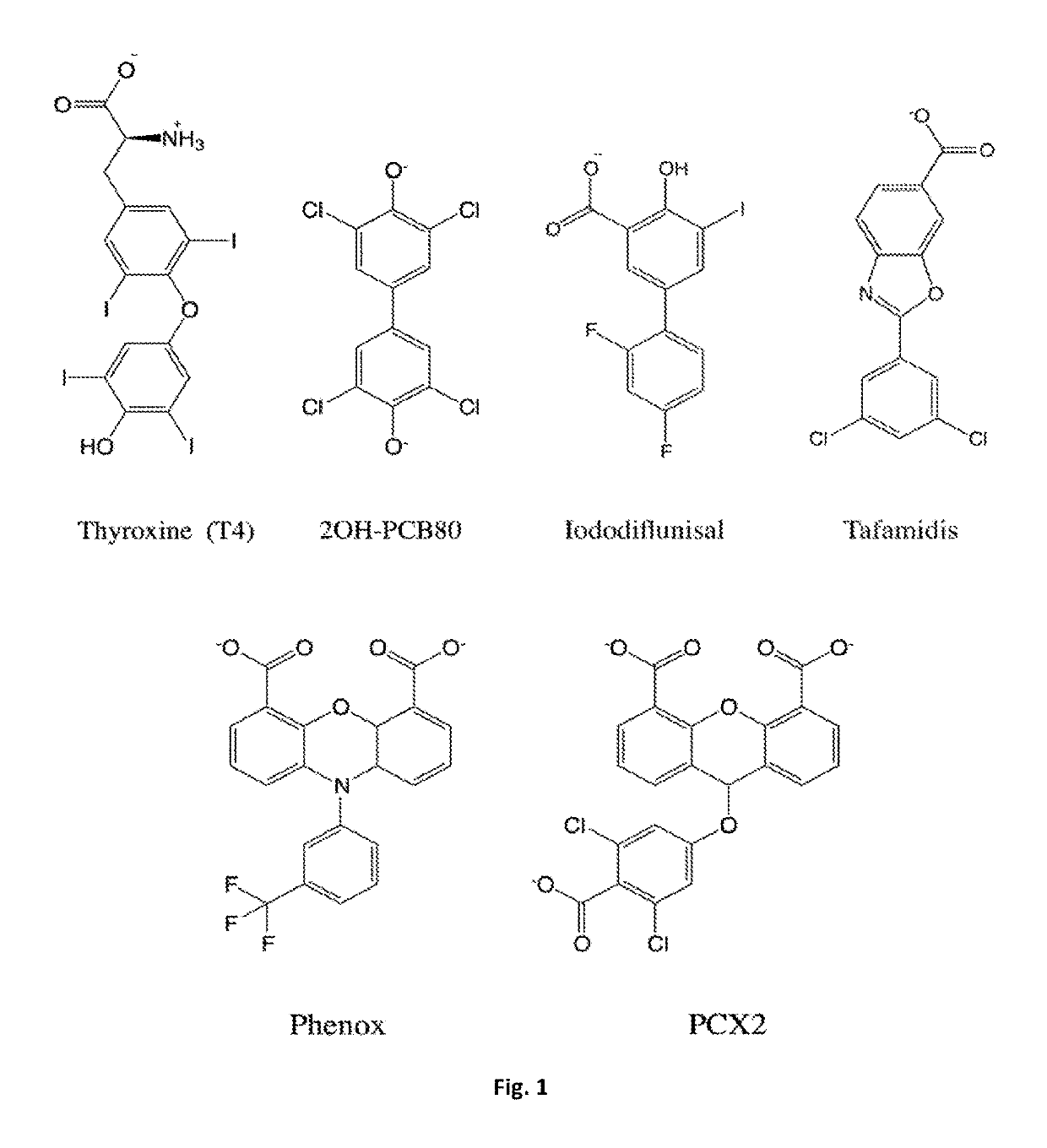
  • Figure 1
    Figure 1
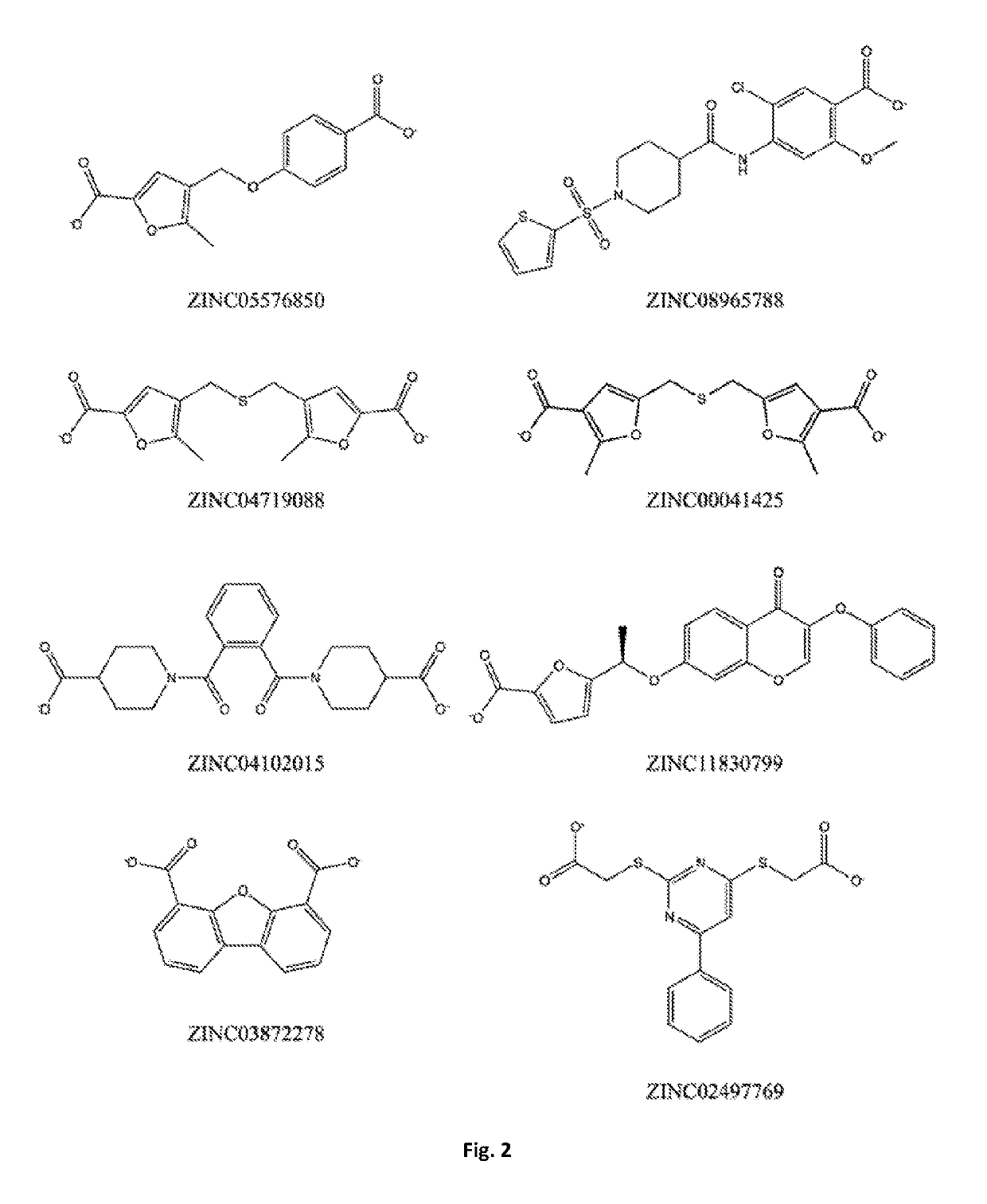
  • Figure 2
    Figure 2
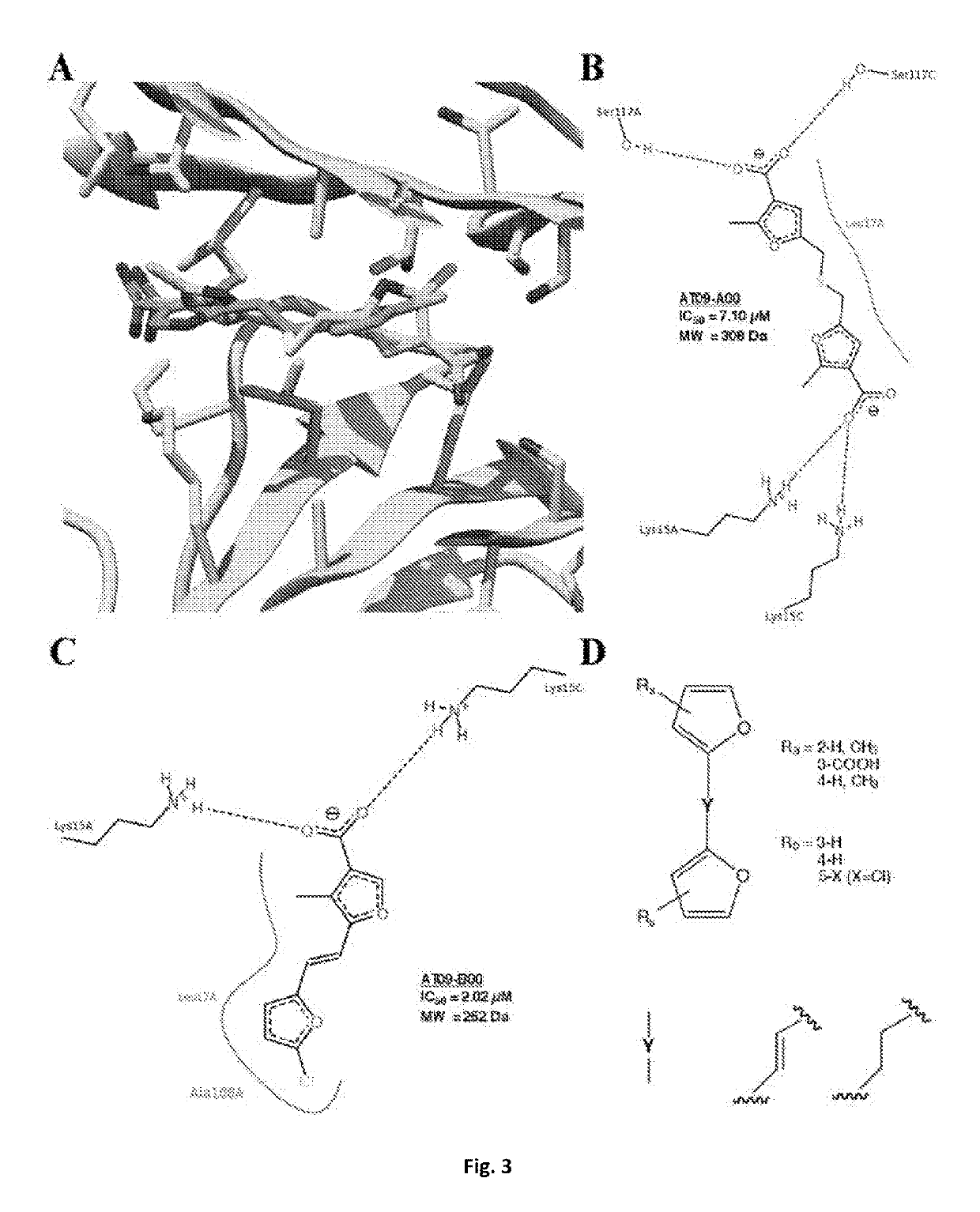
  • Figure 3
    Figure 3
Patent Text Reader

Abstract

The design and synthesis of a novel bis-furan scaffold tailored for high efficiency at inhibiting transthyretin amyloid formation is reported. In vitro results show that the discovered compounds are more efficient inhibitors of amyloid formation than tafamidis, a drug currently used in the treatment of familial amyloid polyneuropathy (FAP), despite their lower molecular weight and lipophilicity. Moreover, ex vivo experiments with the strongest inhibitor in the series, conducted in human blood plasma from normal and FAP Val30Met-transthyretin carriers, disclose remarkable affinity and selectivity profiles. The promises and challenges facing further development of this compound are discussed under the light of increasing evidence implicating transthyretin stability as a key factor not only in transthyretin amyloidoses and several associated co-morbidities, but also in Alzheimer's disease.
Need to check novelty before this filing date? Find Prior Art

Description

RELATED APPLICATIONS

[0001] This application is a national stage filing under 35 U.S.C. § 371 of international PCT application, PCT / IB2016 / 053546, filed Jun. 15, 2016, which claims priority to U.S. provisional applications, U.S. Ser. No. 62 / 204,346, filed on Aug. 12, 2015, and U.S. Ser. No. 62 / 180,036, filed Jun. 15, 2015, under 35 U.S.C. § 119(e), and to Portuguese application, No. 109442, filed Jun. 9, 2016, the entire contents of each of which are incorporated herein by reference.TECHNICAL FIELD

[0002] The present disclosure relates to compound or a pharmaceutical preparation for stabilizing the protein transthyretin (TTR) and inhibiting amyloid fibril formation, and for treating, preventing, or ameliorating one or more symptoms of amyloid diseases. Furthermore, this disclosure also relates to a method for preparing said compound or pharmaceutical preparation and to a method for using such compound or pharmaceutical preparation for inhibiting the formation of TTR amyloid fibrils.BACK...

Examples

Embodiment Construction

[0095]The present disclosure relates to a compound or a pharmaceutical preparation for stabilizing the protein transthyretin (TTR) and inhibiting amyloid fibril formation, and for treating, preventing, or ameliorating one or more symptoms of amyloid diseases. Furthermore, this disclosure also relates to a method for preparing said compound or pharmaceutical preparation and to a method for using such compound or pharmaceutical preparation for inhibiting the formation of TTR amyloid fibrils.

[0096]Protein aggregation and deposition are important pathological hallmarks in neurodegenerative diseases like Alzheimer's, Parkinson's and Huntington's disease, a field overwhelmed by failure of compounds targeting amyloid plaques [1]. Remaining traces of skepticism surrounding the role of amyloids in disease, the so-called “amyloid hypothesis”, may have been shaken when Biogen presented, in March 2015, the results of its phase 1b study with aducanumab, an antibody that binds to deposits of the ...