
Appliance for enteral nutrition
a technology for enteringal nutrition and gastrointestinal tract, applied in the field of enteral nutrition, can solve the problems of limiting the quality of patient monitoring, reducing the time needed for their use, and complicated fact for medical personnel, so as to reduce the time needed for their use. the effect of reducing the time needed for the use of the prob
- Summary
- Abstract
- Description
- Claims
- Application Information
AI Technical Summary
Benefits of technology
Problems solved by technology
Method used
Image

Examples
Embodiment Construction
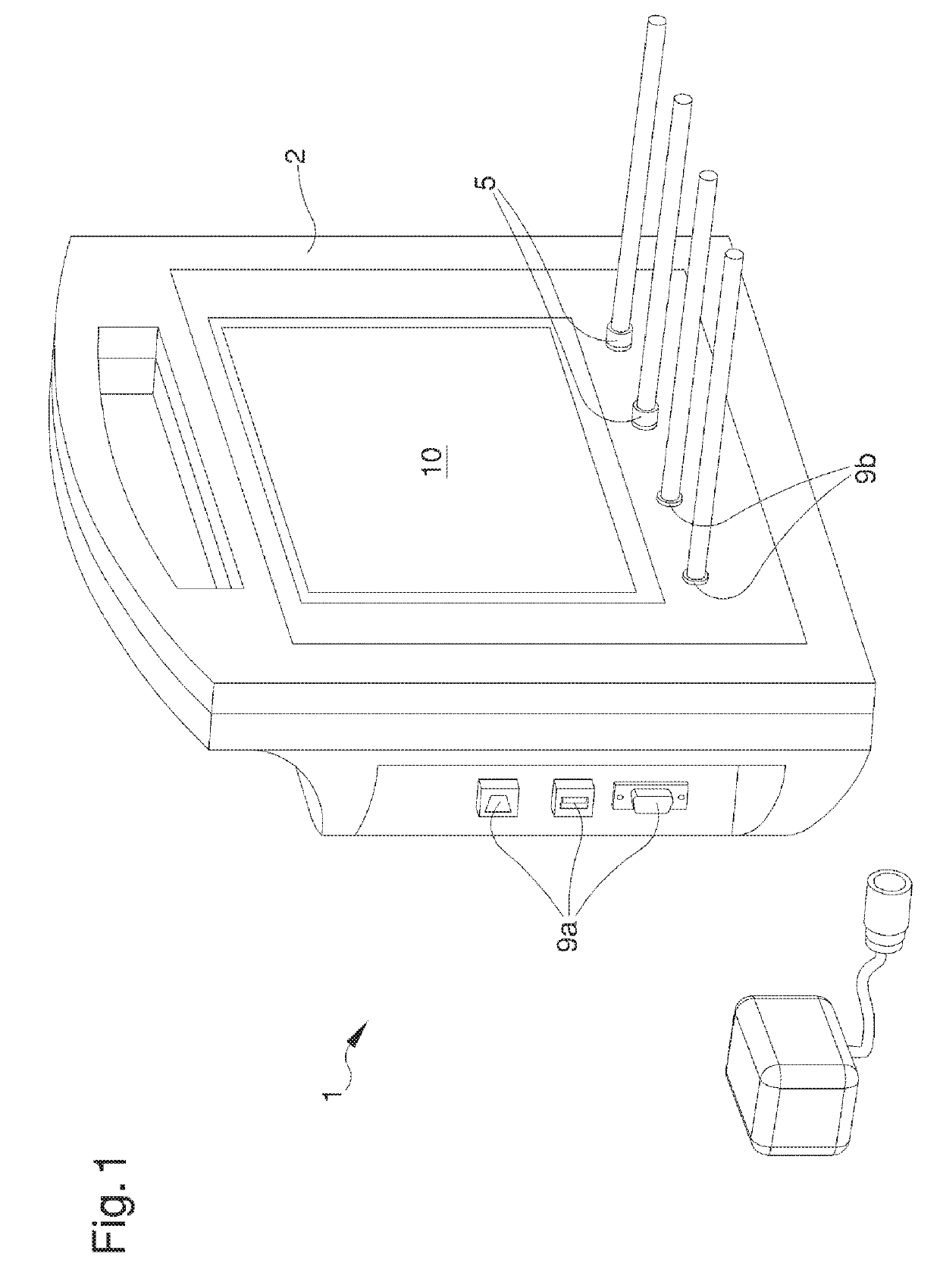
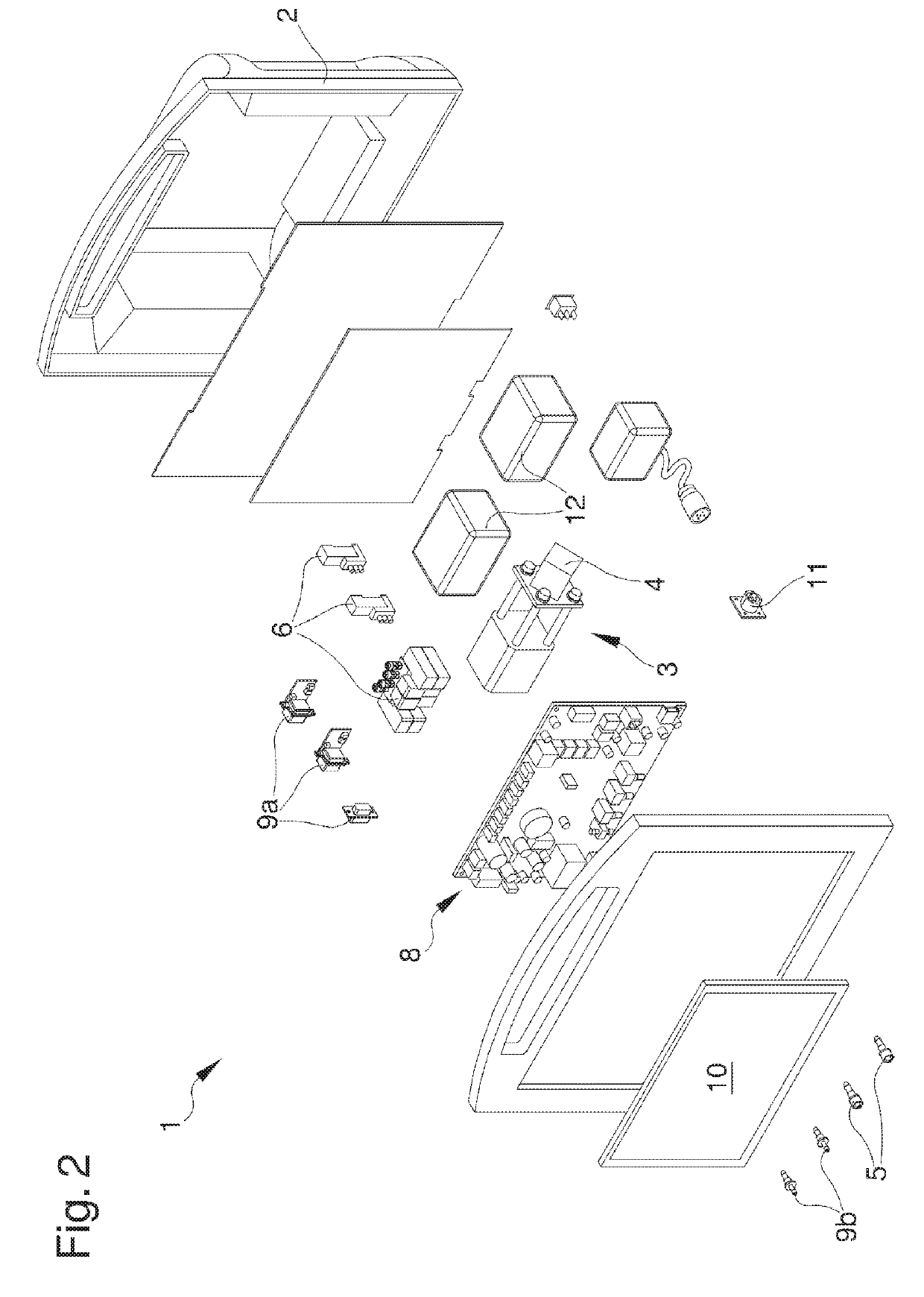
[0026]With particular reference to such figures, reference number 1 globally indicates an appliance for enteral nutrition by means of a probe of the type comprising a tubular element of elongated shape and substantially flexible which defines a feeding channel open at the extremities for the introduction of nutritional substances or drugs in the stomach of a patient or the aspiration of fluids from same.
[0027]The probes used, not shown in the enclosed illustrations, may be of two types.
[0028]The first type envisages the presence of a first inflatable balloon for detecting the pressure inside the patient's oesophagus, where the tubular element comprises at least a first air inlet / outlet mouth in / from the first balloon.
[0029]The second type envisages the presence of a first and a second inflatable balloon for detecting the patient's oesophageal and gastric pressure, where the tubular element comprises a first and a second air inlet / outlet mouth in / from the first and second balloon res...
PUM
 Login to View More
 Abstract
Description
Claims
Application Information
 Login to View More