
Flexible torsion shaft and an arrangement using it and a cleaning device for air-conditioning ducts
a technology of flexible torsion shaft and cleaning device, which is applied in the direction of shaft for rotary movement, cleaning of hollow articles, brushes, etc., can solve the problems of steel cable weight as much as several tens of kilograms, and achieve the effect of reducing friction and stiffness and tensile strength
- Summary
- Abstract
- Description
- Claims
- Application Information
AI Technical Summary
Benefits of technology
Problems solved by technology
Method used
Image

Examples
Embodiment Construction
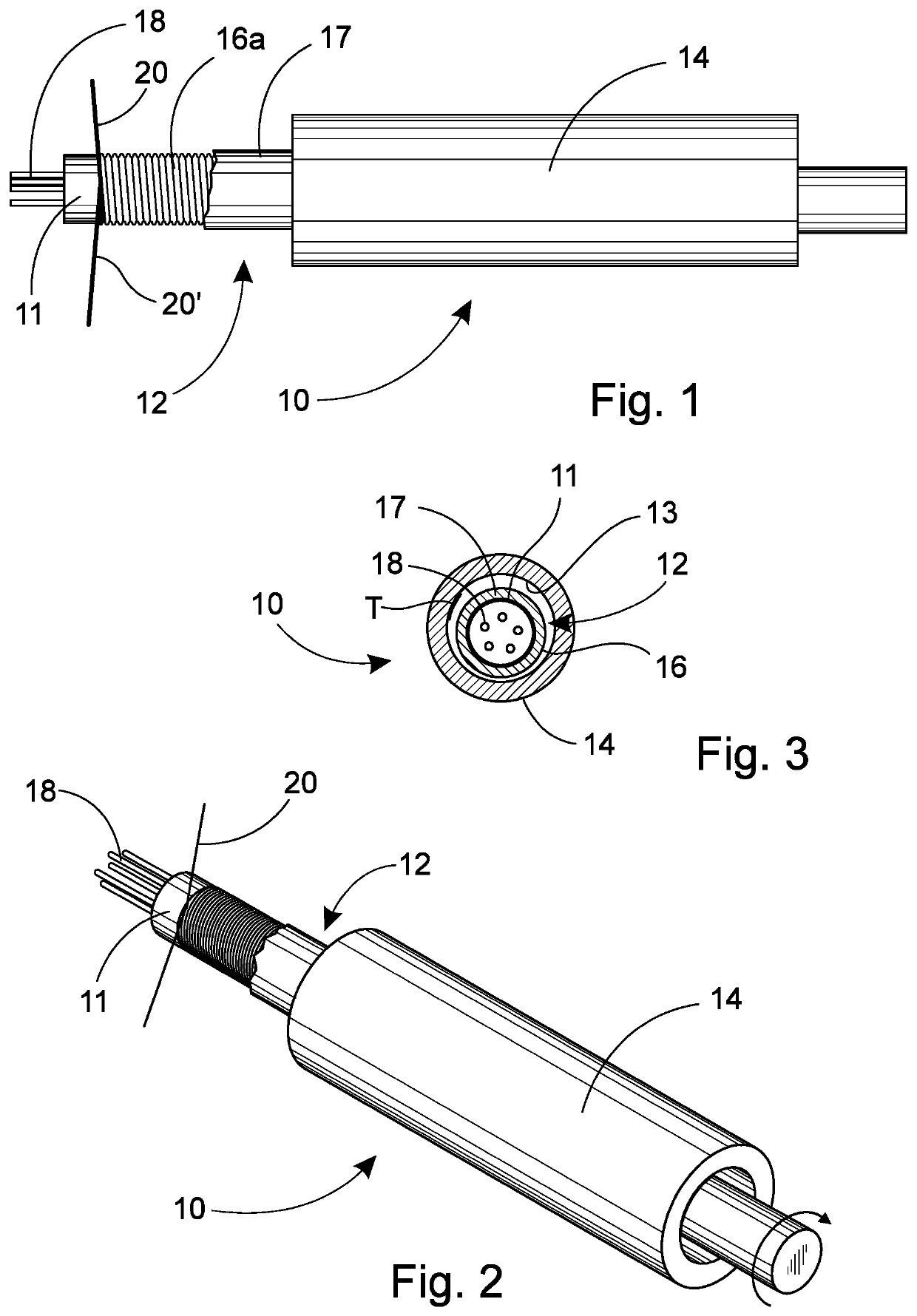
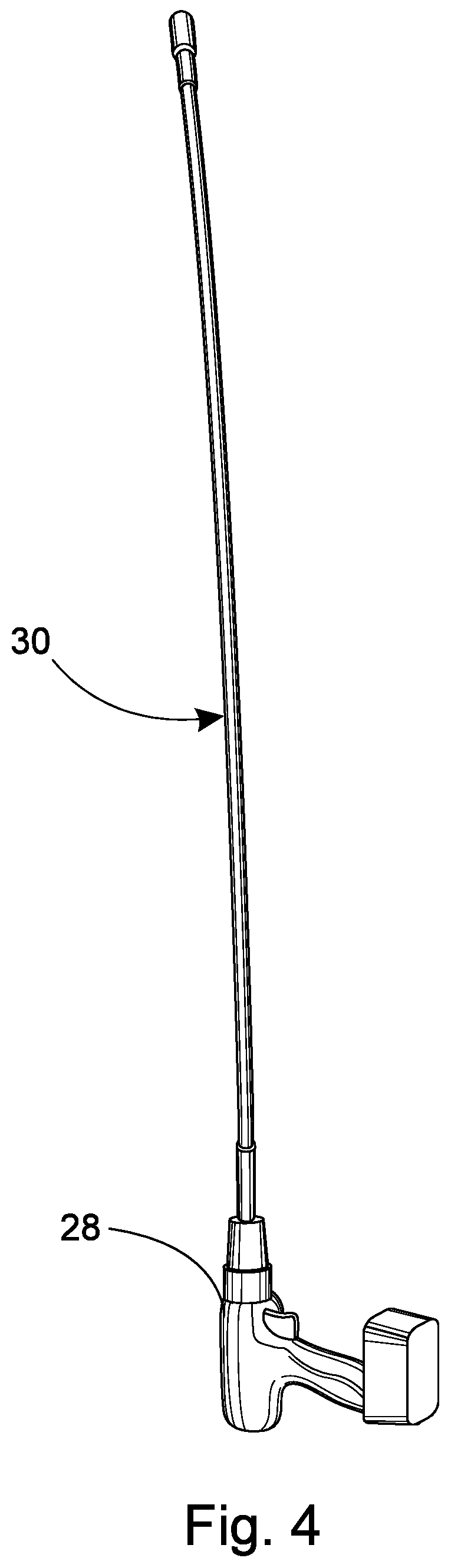
[0024]The components of the flexible shaft arrangement 10 are a casing tube 14 and the torsion shaft 12 itself. The length of the shaft arrangement can be 1-40 m and the diameter of the torsion shaft 12, 4-20 mm.
[0025]The casing tube 14 is typically of polyamide and is intended to protect structures by keeping the rotating torsion shaft 12 away from, e.g. the duct structures. Polyamide has a low coefficient of friction with most of the polymers binding the reinforcing fibers, such as epoxy or polyurethane. A particularly advantageous totality is achieved if the flexible shaft is coated with polytetrafluorethylene, i.e. PTFE (Teflon®). Alternatively, the inner surface 13 of the protective tube is covered with a layer T of PTFE (FIG. 3).
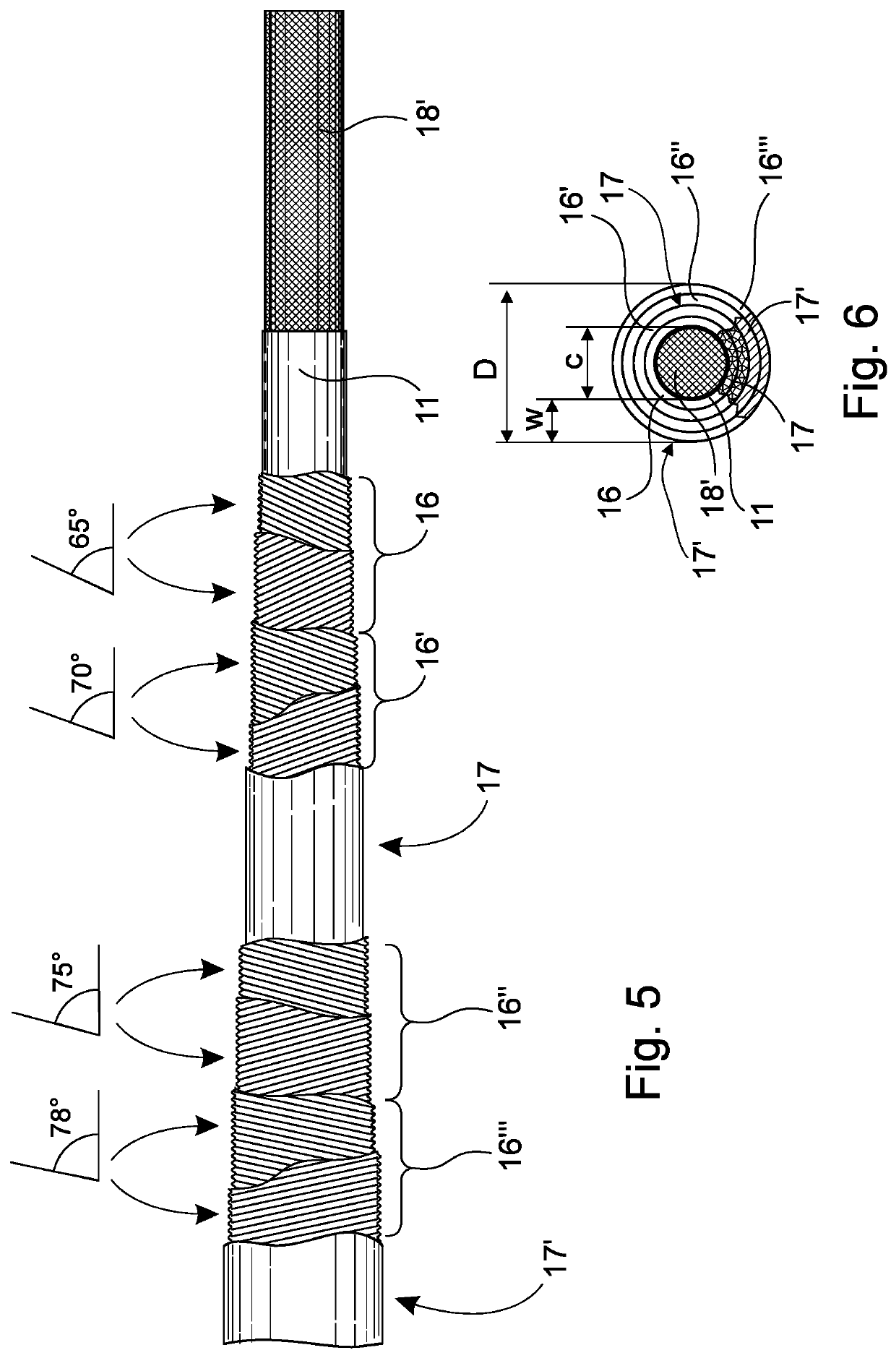
[0026]The body of the torsion shaft 12 of FIG. 1 is of epoxy and filament wires 20, 20′, generally of glass fiber, are wound on top of it in two directions. In this case, the core is a bunch of fibers 18 and a polyethylene membrane 11 is on top of it. ...
PUM
| Property | Measurement | Unit |
|---|---|---|
| elongation | aaaaa | aaaaa |
| diameter | aaaaa | aaaaa |
| winding angle | aaaaa | aaaaa |
Abstract
Description
Claims
Application Information
 Login to View More