

Superconducting dot/Anti-dot flux qubit based on time-reversal symmetry breaking effects
a time-reversal symmetry and qubit technology, applied in computing models, dissimilar materials junction devices, instruments, etc., can solve problems such as long-range electric interactions, degenerate base states, and efforts to expand such systems to a commercially useful number of qubits, and achieve the effect of suppressing decoherence processes
- Summary
- Abstract
- Description
- Claims
- Application Information
AI Technical Summary
Benefits of technology
Problems solved by technology
Method used
Image

Examples
Embodiment Construction
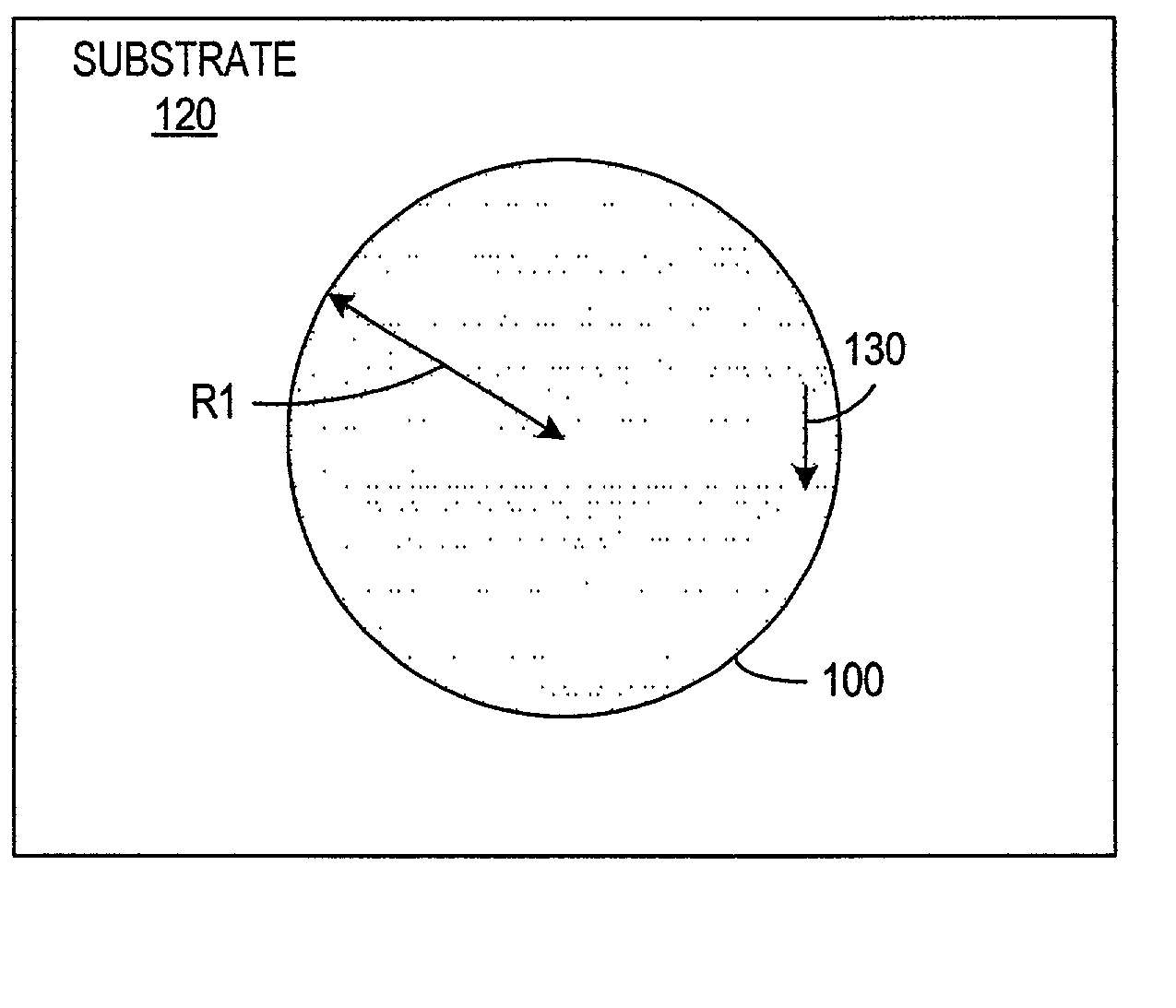
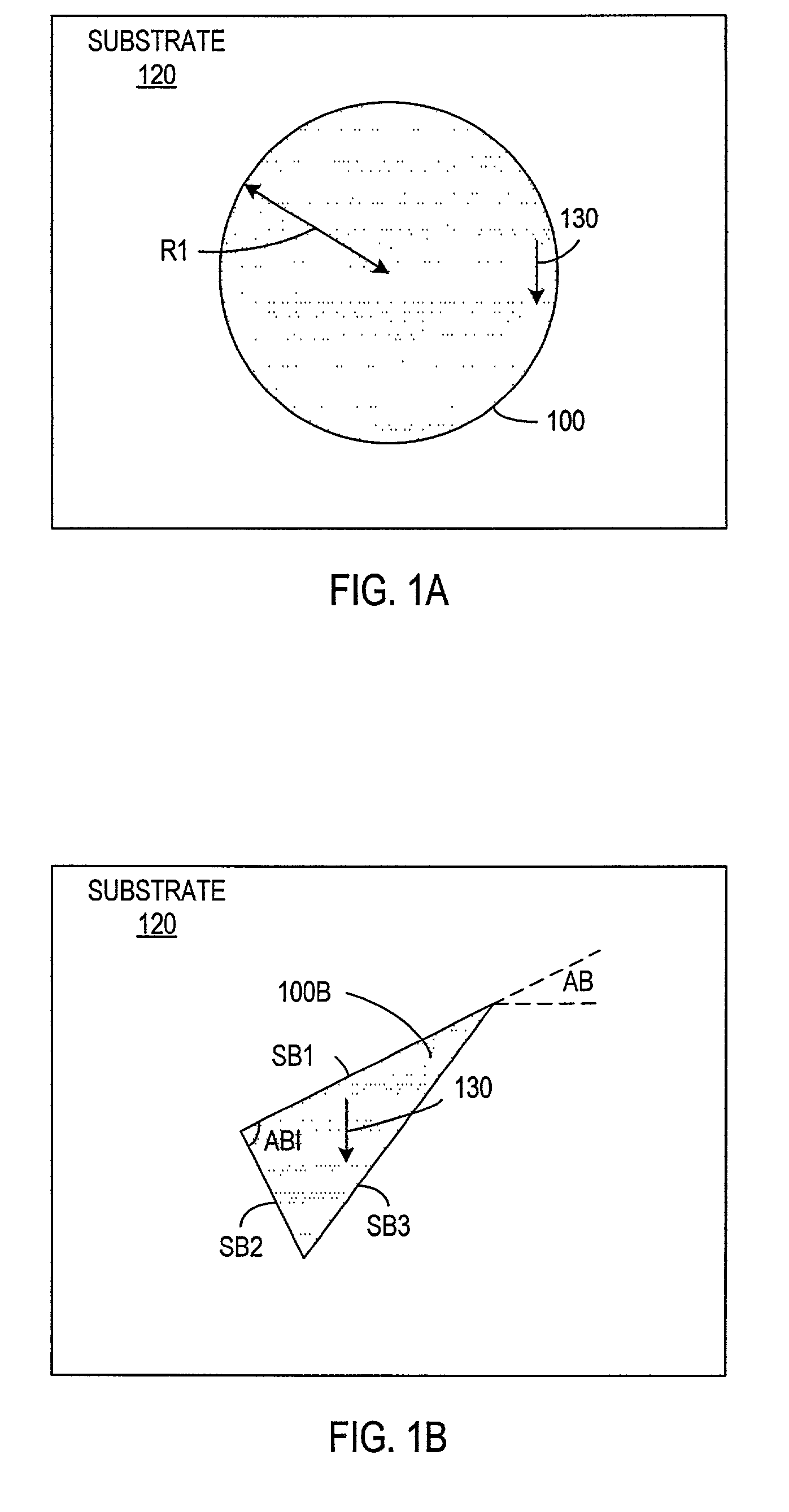
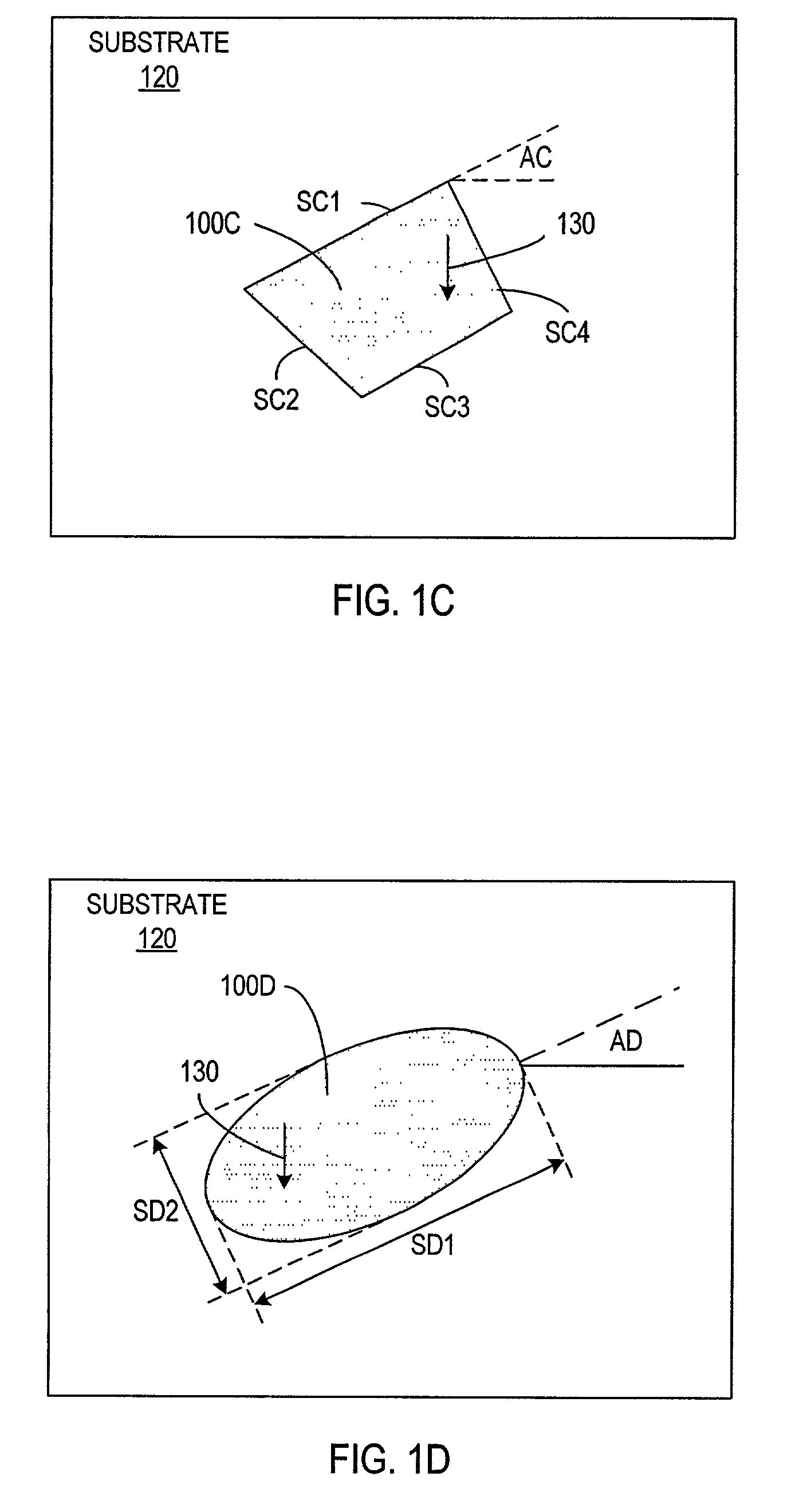
[0031] In accordance with an aspect of the invention, quantum computing uses qubits based on the degenerate ground states of the supercurrent that arises due to time-reversal symmetry breaking effects in superconductors. These effects occur, for example, in d-wave superconductors when the dominant order parameter symmetry in a superconductor is suppressed and the superconductor possesses a subdominant component. Furthermore, p-wave superconductors exhibit a double degeneracy in the pairing symmetry of the order parameters and thus exhibit similar yet less sensitive behavior to that of the d-wave superconductor. These effects in d-wave superconductors may occur at boundaries such as grain boundaries, (see U.S. patent application Ser. No. 09 / 452749, entitled "Permanent Readout Superconducting Qubit" by A. M. Zagoskin, which is hereby incorporated by reference in its entirety) and at defects (see F. Tafuri and J. R. Kirtley, "Spontaneous Magnetic Moments in YBCO Thin Films," Phys. Rev....
PUM
 Login to View More
 Abstract
Description
Claims
Application Information
 Login to View More