Piezoelectric ceramic-reinforced metal matrix composites

a technology of ceramic reinforced metal and composite materials, applied in the direction of generators/motors, instruments, devices, etc., can solve the problems of poor vibration damping characteristics of many materials used in various structural applications, and achieve the effects of high structural strength, improved combination of structural strength and vibration damping, and exceptional passive damping capabilities

a technology of ceramic reinforced metal and composite materials, applied in the direction of generators/motors, instruments, devices, etc., can solve the problems of poor vibration damping characteristics of many materials used in various structural applications, and achieve the effects of high structural strength, improved combination of structural strength and vibration damping, and exceptional passive damping capabilities

US20050073222A1Inactive Publication Date: 2005-04-07VIRGINIA TECH INTPROP INC

Image

Smart Image Click on the blue labels to locate them in the text.
Viewing Examples
Smart Image
  • Piezoelectric ceramic-reinforced metal matrix composites
  • Piezoelectric ceramic-reinforced metal matrix composites
  • Piezoelectric ceramic-reinforced metal matrix composites

Examples

Experimental program
Comparison scheme
Effect test

example 1

A composite was made by blending Cu, Sn and BaTiO3, followed by liquid phase sintering at 820° C. for 6 minutes. FIG. 6 is a photomicrograph of the resultant composite material.

example 2

A composite was made by blending 61.5 w % Ni, 15.4 w % Cr and 22.5 w % BaTiO3, mechanical alloying for 24 h, and heat treating at 600° C. for 5 h in argon. The resulting metal matrix composite had a composition of (Ni−20 w % Cr)+30v % BaTiO3. FIG. 7 is a photomicrograph of the composite material.

example 3

Synthesis of a binary piezoelectric compound, ZnO, directly within copper and iron matrices was conducted. Blends of elemental or compound powder precursors were formulated in proportions appropriate to create composites comprised of 20, 25, 30, 40 and 50 volume percent ZnO in copper; and 30, 40, 50 and 60 volume percent ZnO in iron. FIG. 8 is a photomicrograph of the Cu+30 v % ZnO composite material after reaction synthesis.

The precursor reactants and the intended synthesis reactions assumed to occur were:

(1+x) Cu+Cu2O+Zn→(3+x) Cu+ZnO   (1)

(1+x) Fe+Fe3O4+4 Zn→(4+x) Fe+4 ZnO   (2)

In reactions (1) and (2), additional Cu or Fe is added in a proportion appropriate to create the desired composite composition. The blended powders were cold-compacted and reactively synthesized within flowing argon. The synthesis event was initiated within an induction furnace, and proceeded in a self-sustaining fashion to completion.

Following synthesis, the as-reacted sponge was characterized met...

the structure of the environmentally friendly knitted fabric provided by the present invention; figure 2 Flow chart of the yarn wrapping machine for environmentally friendly knitted fabrics and storage devices; image 3 Is the parameter map of the yarn covering machine
Login to View More

PUM

PropertyMeasurementUnit
volume percentaaaaaaaaaa
particle sizeaaaaaaaaaa
Login to View More

Abstract

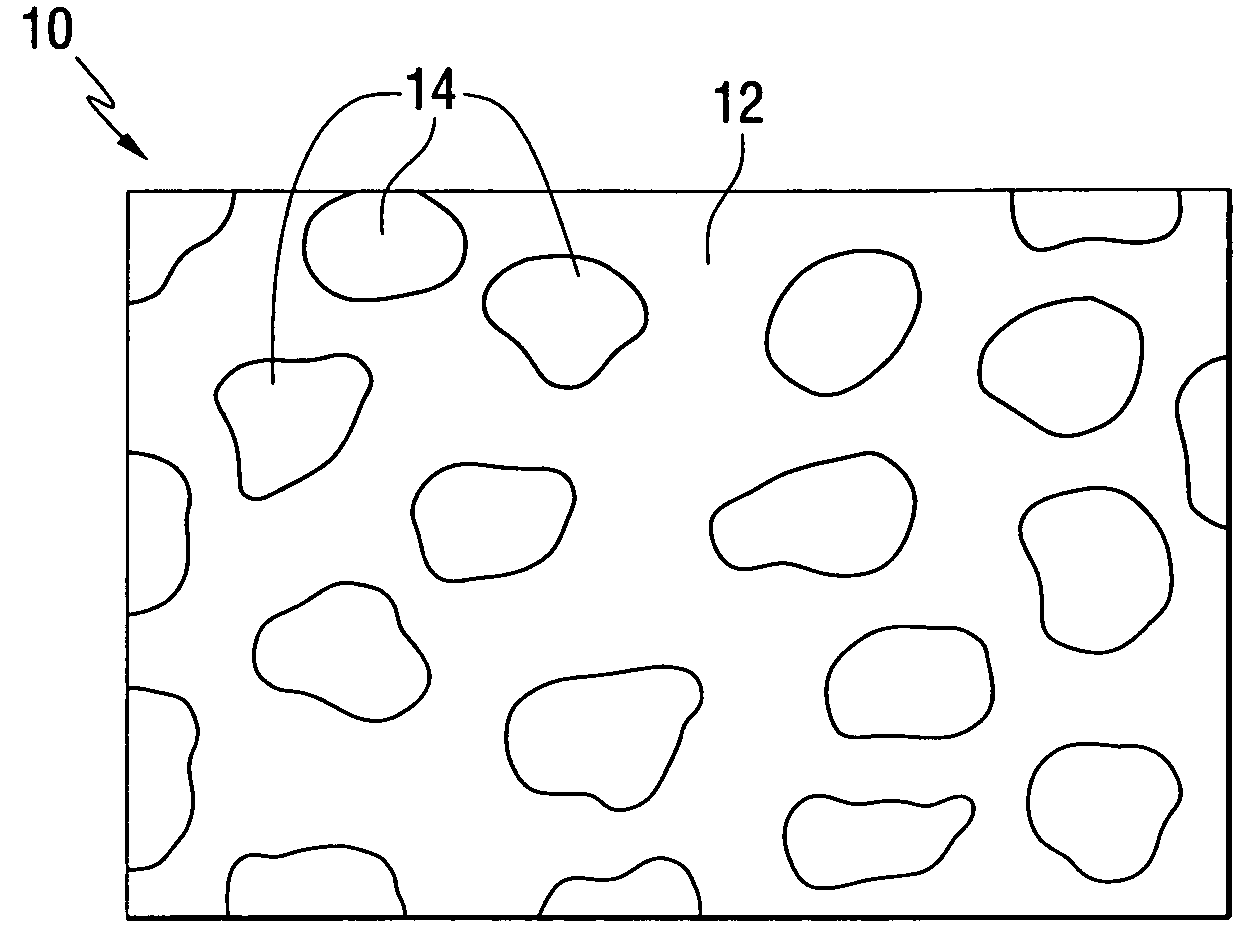
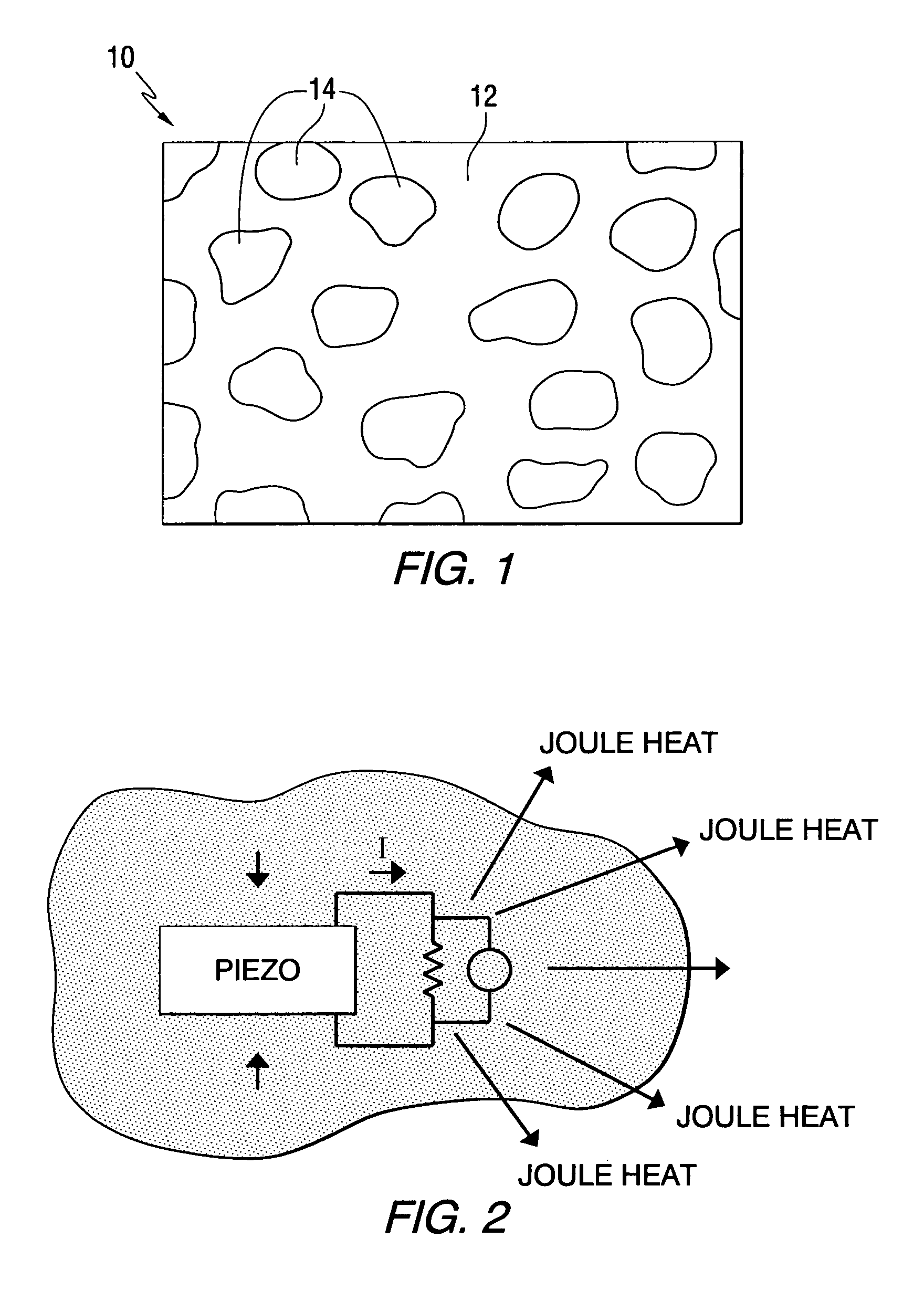
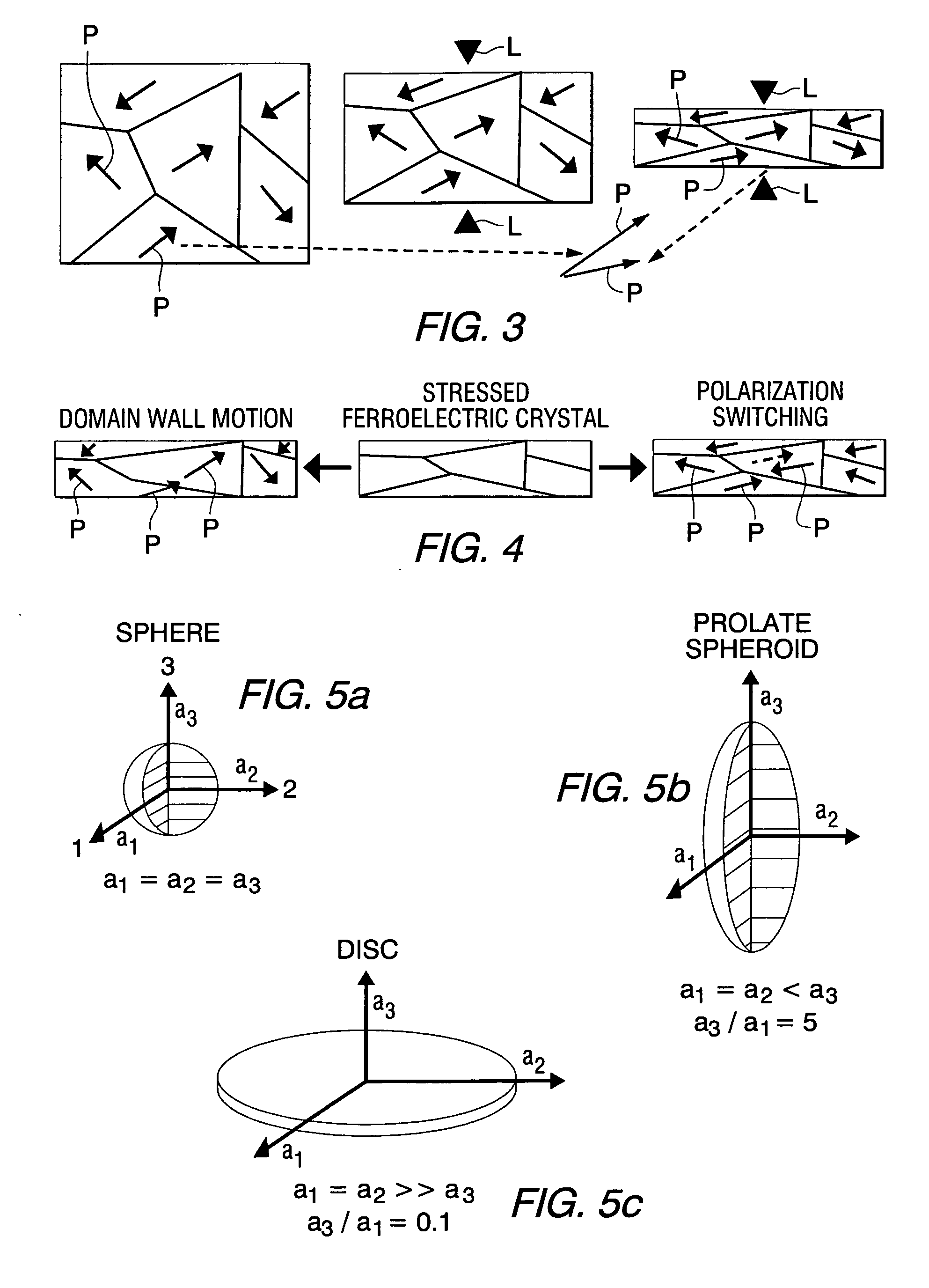
Composite materials comprising piezoelectric ceramic particulates dispersed in a metal matrix are capable of vibration damping. When the piezoelectric ceramic particulates are subjected to strain, such as the strain experienced during vibration of the material, they generate an electrical voltage that is converted into Joule heat in the surrounding metal matrix, thereby dissipating the vibrational energy. The piezoelectric ceramic particulates may also act as reinforcements to improve the mechanical properties of the composites. The composite materials may be used in various structural components in vehicles, aircraft, spacecraft, buildings and tools.

Description

FIELD OF THE INVENTION The present invention relates to piezoelectric ceramic-reinforced metal matrix composite materials which are useful for structural applications, and which are capable of passively damping vibrations. BACKGROUND INFORMATION Structural materials and components that would benefit from vibration damping include automobile components, aircraft components, marine components, building components, hand tools, sports equipment, propulsion units, space structures, platforms and the like. Many materials used in various structural applications possess relatively poor vibration damping characteristics. Vibration damping in structural high-load components is currently achieved through the use of external components such as elastomeric mounting materials or actively controlled vibration dampers. Vibration reduction is thus achieved through the use of damping materials and components that are often added on top of the existing structure. The present invention has been dev...

Claims

the structure of the environmentally friendly knitted fabric provided by the present invention; figure 2 Flow chart of the yarn wrapping machine for environmentally friendly knitted fabrics and storage devices; image 3 Is the parameter map of the yarn covering machine
Login to View More

Application Information

Patent Timeline
07 Apr 2005
Publication
US20050073222A1
IPC
H10N30/85; H10N30/00
CPC
H01L41/18; C22C32/00; G10K11/165; H10N30/852
Inventors
KAMPE, STEPHEN L.; SCHULTZ, JEFFREY PATRICK