
Minimally invasive valve replacement system
a valve replacement and minimally invasive technology, applied in the field of physiological valve replacement devices and systems, can solve the problems of increased hydrostatic pressure, changes in skin color, pain, swelling and edema, etc., and achieve the effects of reducing the time spent in surgery, reducing the need for suturing, and reducing the risk of surgery
- Summary
- Abstract
- Description
- Claims
- Application Information
AI Technical Summary
Benefits of technology
Problems solved by technology
Method used
Image

Examples
Embodiment Construction
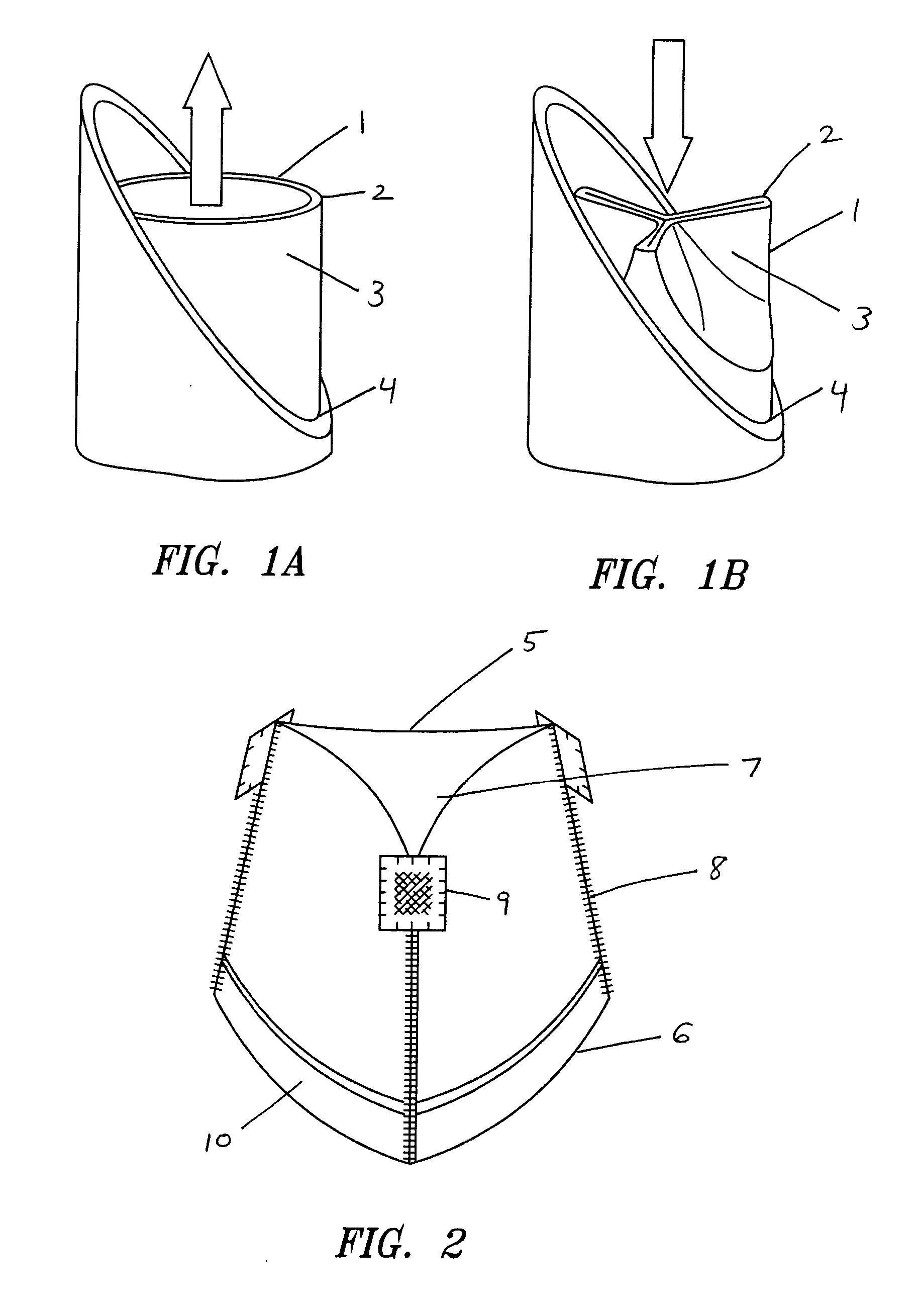
[0078] The present invention relates to valve replacement systems and devices. As illustrated in FIG. 1, a valve (1) comprises a distal or outflow end (2), leaflets (3) and a proximal or inflow end (4). A typical valve functions similar to a collapsible tube in that it opens widely during systole or in response to muscular contraction, to enable unobstructed forward flow across the valvular orifice (FIG. 1A). In contrast, at the end of systole or contraction, as illustrated in FIG. 1B, as forward flow decelerates, the walls of the tube are forced centrally between the sites of attachment to the vessel wall and the valve closes completely.
[0079] Replacement Valves
[0080] A preferred valve (5) for use with the systems and devices of the present invention is illustrated in FIG. 2 and is comprised of a body having a proximal end or inflow ring (6) and a distal end or outflow ring (7). The body is comprised of multiple leaflets of valve tissue joined by seams (8), wherein each seam is f...
PUM
 Login to View More
 Abstract
Description
Claims
Application Information
 Login to View More