
Image sensor module
- Summary
- Abstract
- Description
- Claims
- Application Information
AI Technical Summary
Benefits of technology
Problems solved by technology
Method used
Image

Examples
Embodiment Construction
[0047] The desirable embodiments of the present invention are hereunder described detail in reference to the figures.
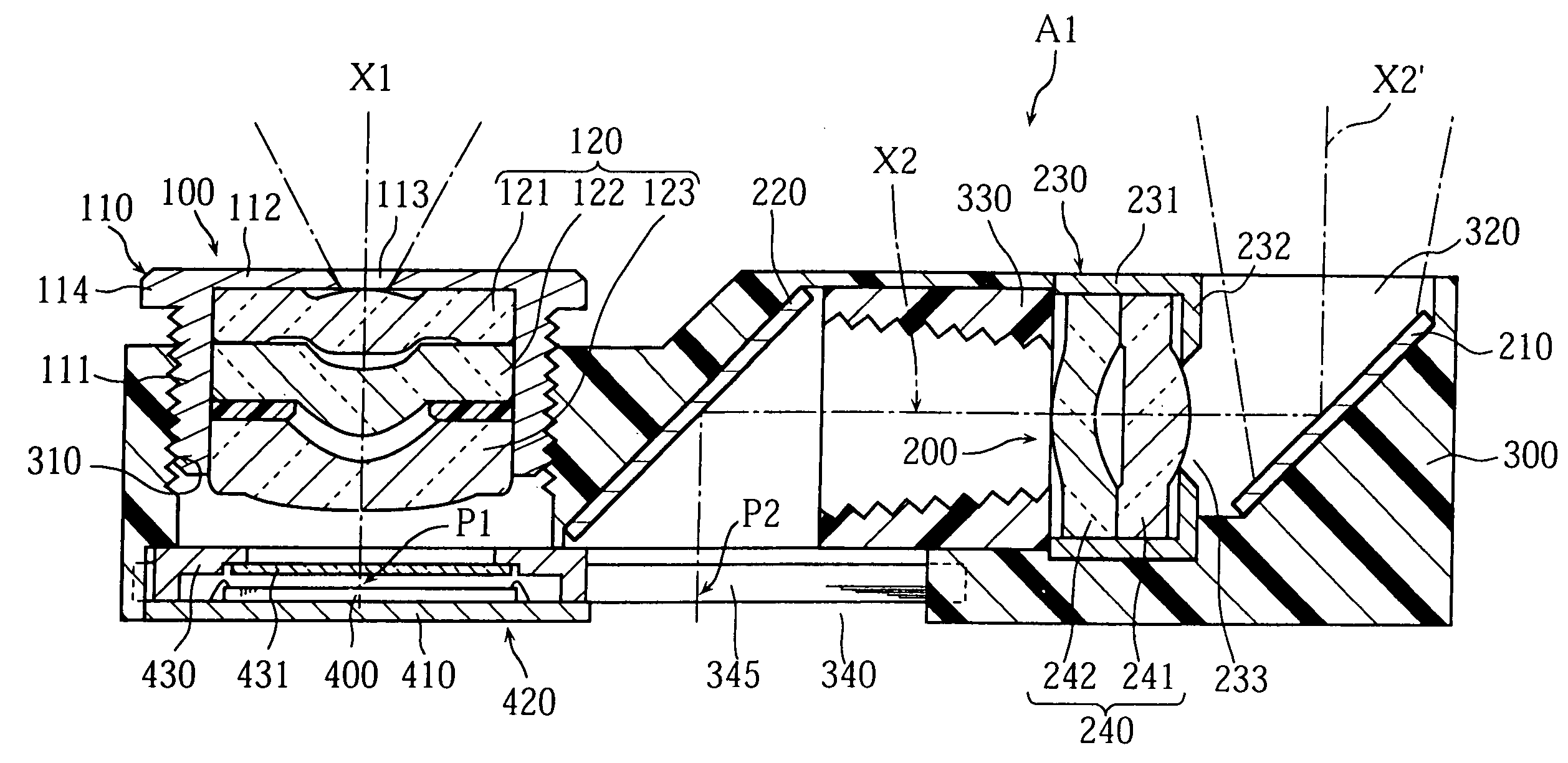
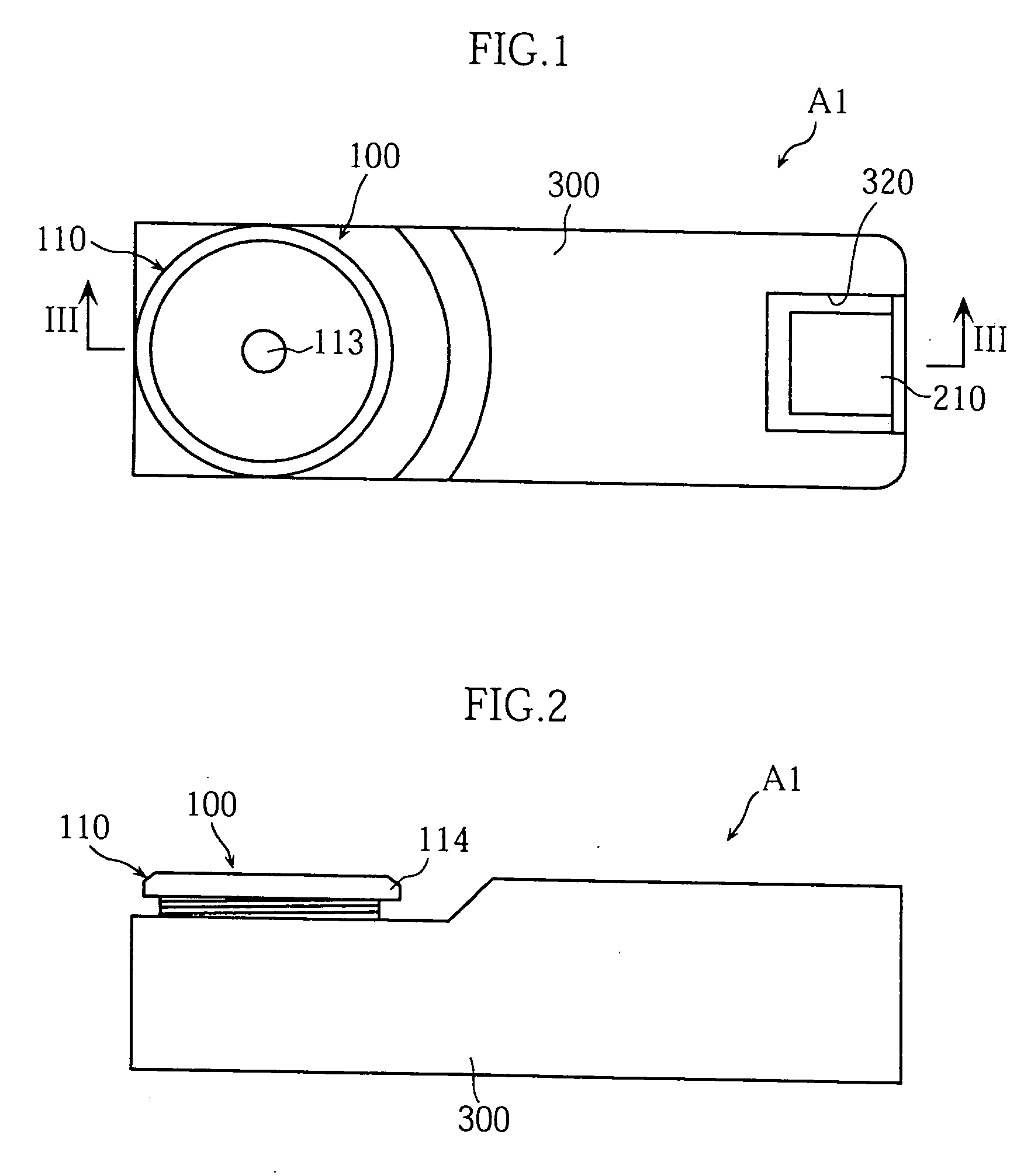
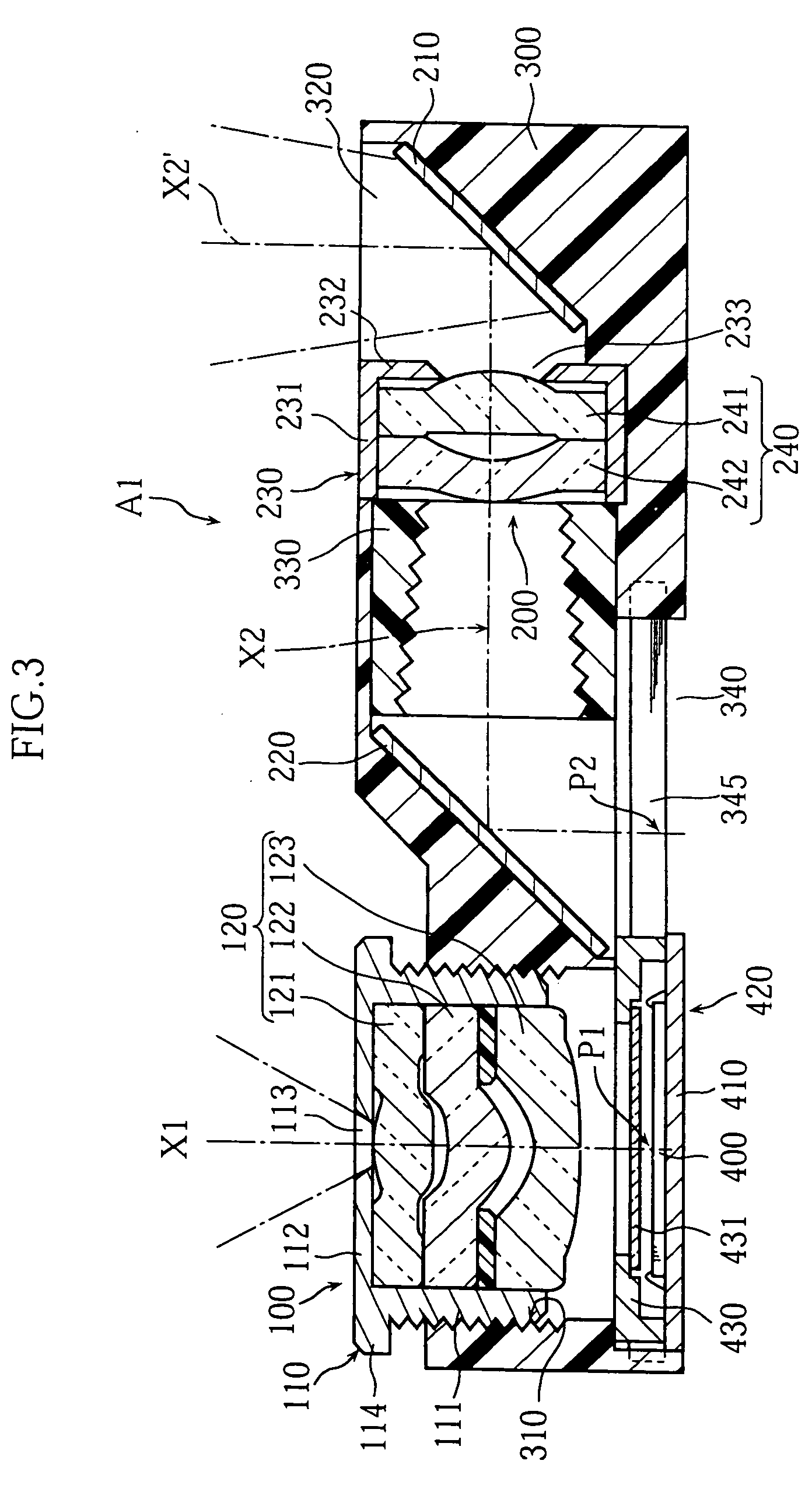
[0048]FIG. 1 through FIG. 4 show embodiments of the image sensor module according to the present invention. As clearly shown in FIG. 3, the image sensor module A1 of the present embodiment is comprised of a case 300, first and second optical units 100 and 200, an image sensor chip 400, and an operating mechanism 420.
[0049] The case 300 is of synthetic resin, and is rectangular in shape in plan view. The first optical unit 100 is provided at one end in the longitudinal direction of the case 300, and has an image-forming lens 120. This image-forming lens 120 is a compound lens comprising three simple lenses 121, 122, and 123 stacked together within a cap 110. The simple lenses 121 and 122 are convex lenses, while the simple lens 123 is a concave lens. According to this structure, distortion can be reduced, and achromatization is also possible. The cap 110 has a tubula...
PUM
 Login to View More
 Abstract
Description
Claims
Application Information
 Login to View More