
Secondary map in digital mapping system
a digital mapping and second map technology, applied in the field of digital mapping systems, can solve the problems that the area outside the zoomed area cannot be scened or otherwise referenced by the user, and limit the amount of flexibility available to the user
- Summary
- Abstract
- Description
- Claims
- Application Information
AI Technical Summary
Benefits of technology
Problems solved by technology
Method used
Image

Examples
Embodiment Construction
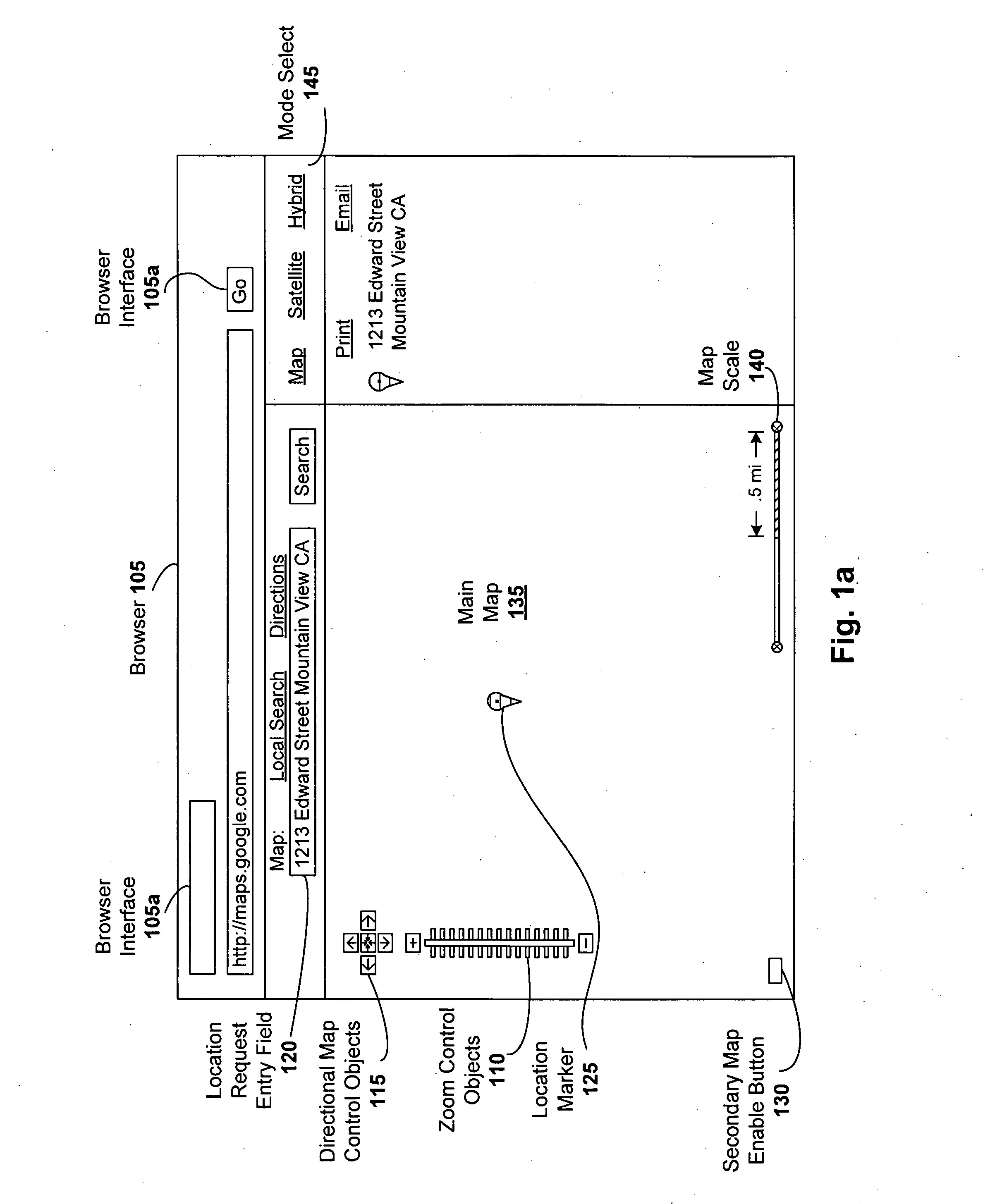
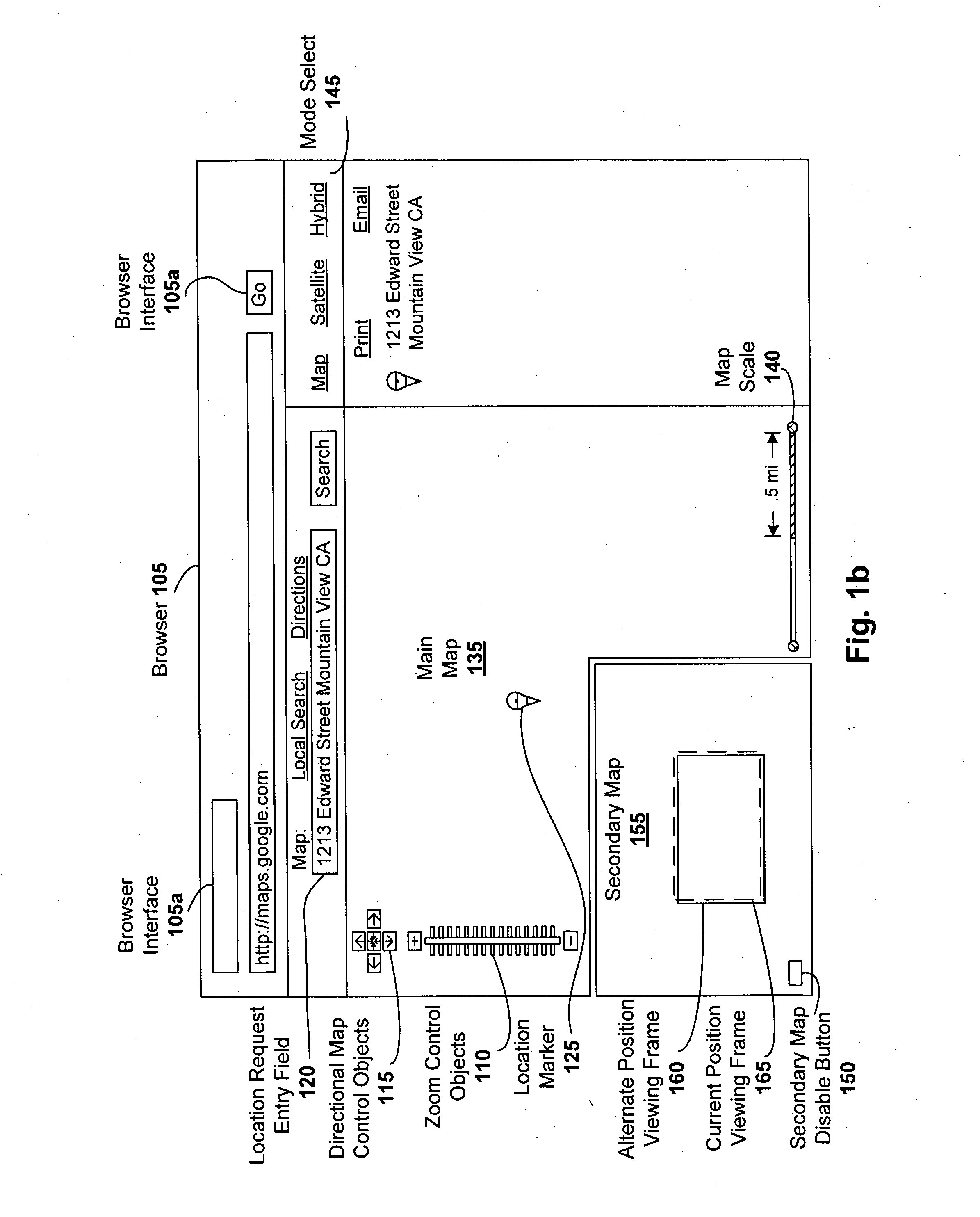
[0019] Digital mapping techniques are disclosed that provide more flexibility to the user through the use of multiple views of map information, including a main map and a secondary map, which can be located, for instance, in a corner of the main map.
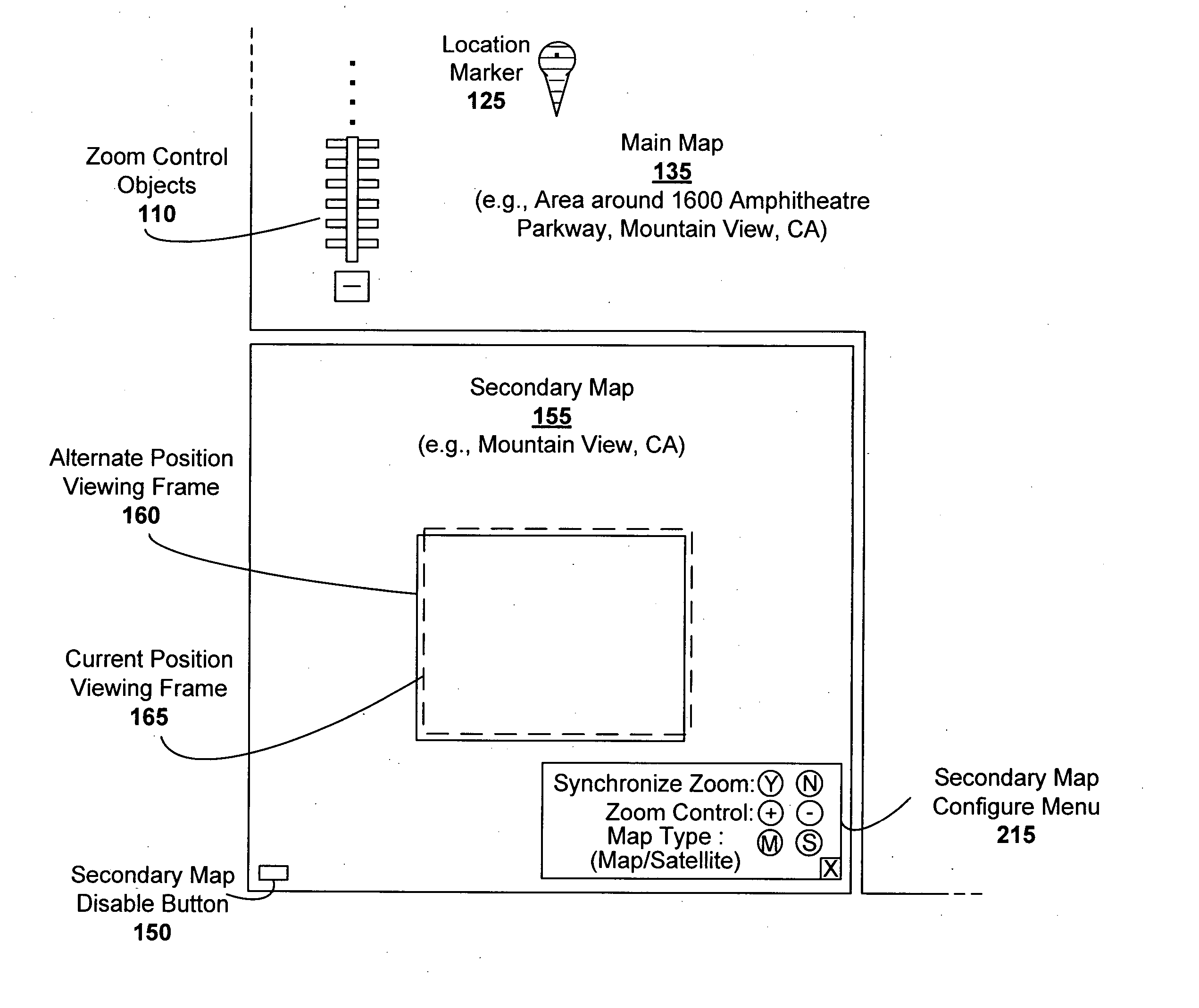
[0020] The secondary map can provide the user with either a zoomed out map view (relative to the main map) for orientation (e.g., so as to enable informed panning), a zoomed in map view for specific area details, or a different type of map view relative to the main map view (e.g., main map can be a traditional drawn map and secondary map can be a satellite image or a hybrid of both traditional drawn map and satellite images). The secondary map can be turned on and off by the user. In cases where the secondary map shows a larger geographic area than the main map, the secondary map may include one or more viewing frames. For instance, one viewing frame may show the current position of the main map view, and another viewing frame can show ...
PUM
 Login to View More
 Abstract
Description
Claims
Application Information
 Login to View More