

Optimizing multi-user detection
a multi-user detection and optimization technology, applied in the field of wireless communication, can solve the problems of increasing system delay, wasting computation power, and delay in the received signal path, and achieve the effect of eliminating redundant calculations
- Summary
- Abstract
- Description
- Claims
- Application Information
AI Technical Summary
Benefits of technology
Problems solved by technology
Method used
Image

Examples
Embodiment Construction
)
[0022] Although the preferred embodiments are described in conjunction with a preferred TDD / CDMA or time division multiple access (TDMA) / CDMA communication system, some aspects are also applicable to CDMA systems in general. However, the invention in its broad form is envisaged to be applicable to other systems of transmission also, without limitation.
[0023] Hereafter, a wireless transmit / receive unit (WTRU) includes but is not limited to a user equipment, mobile station, fixed or mobile subscriber unit, pager, or any other type of device capable of operating in a wireless environment. When referred to hereafter, a base station includes but is not limited to a base station, Node-B, site controller, access point or other interfacing device in a wireless environment.
[0024] Although the preferred implementation of the present invention is at a WTRU, it can also be adapted for use at a base station.
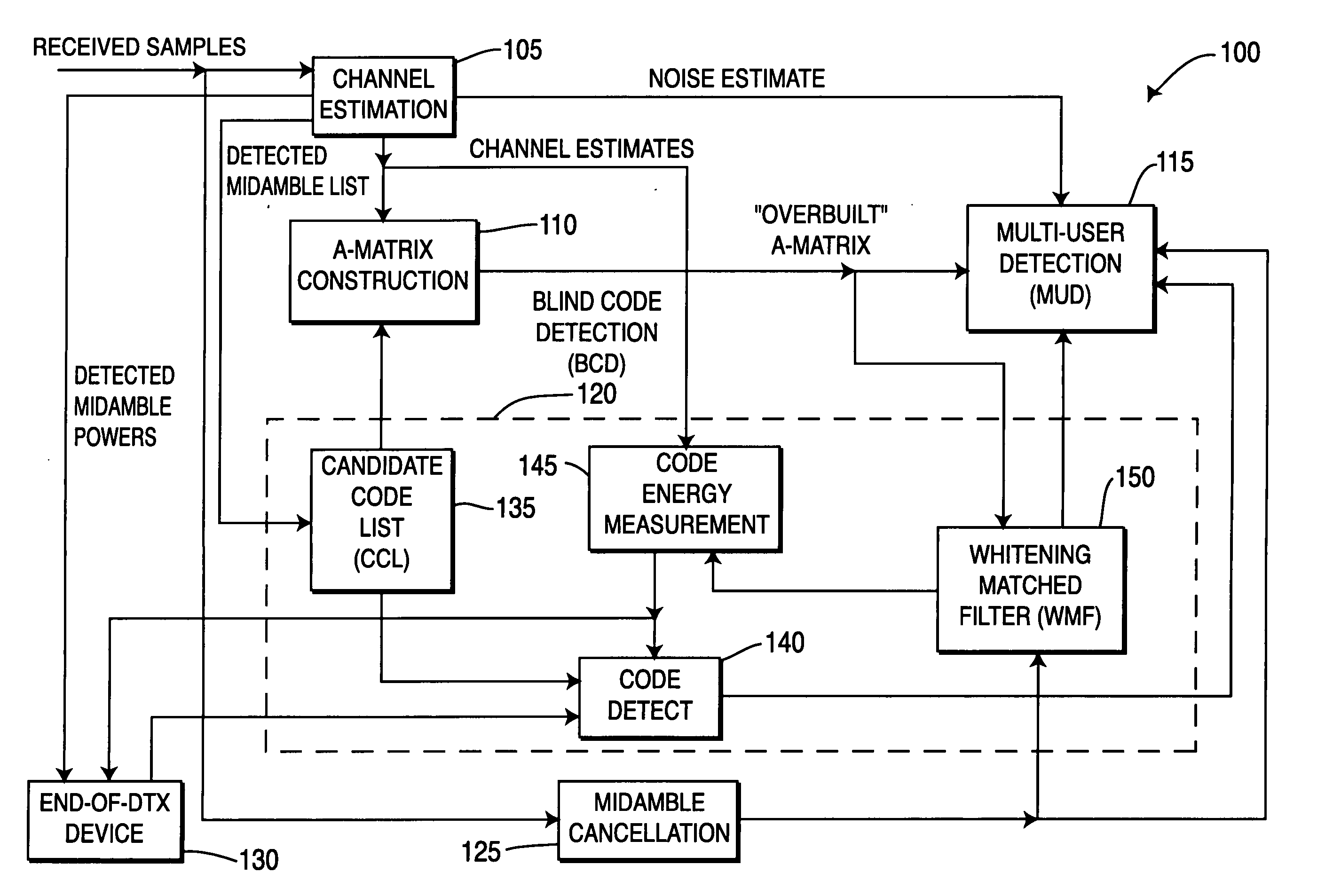
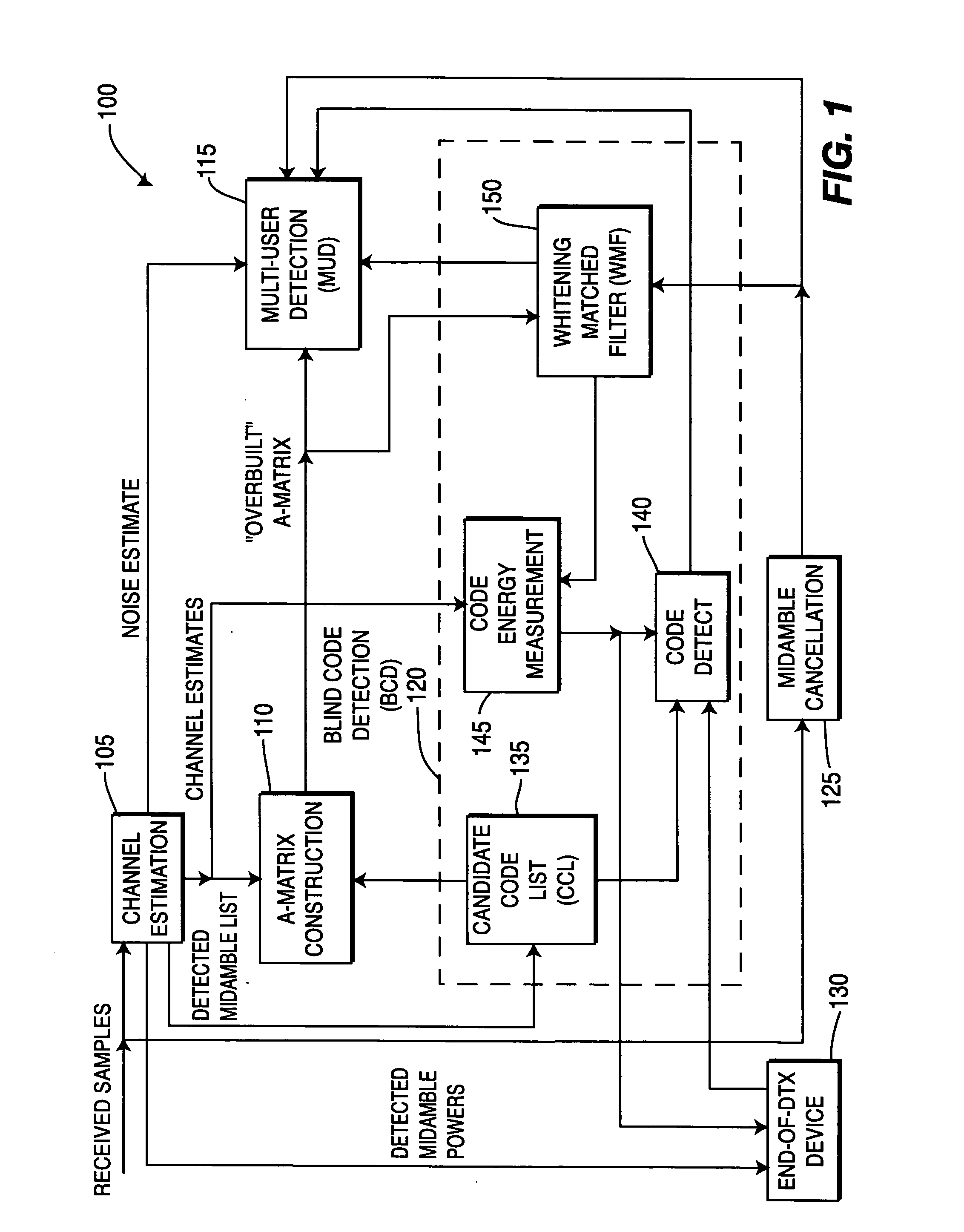
[0025]FIG. 1 shows a preferred embodiment of a wireless receiver system 100. The wire...
PUM
 Login to View More
 Abstract
Description
Claims
Application Information
 Login to View More