Context-adaptive content distribution to handheld devices
- Summary
- Abstract
- Description
- Claims
- Application Information
AI Technical Summary
Benefits of technology
Problems solved by technology
Method used
Image

Examples
Embodiment Construction
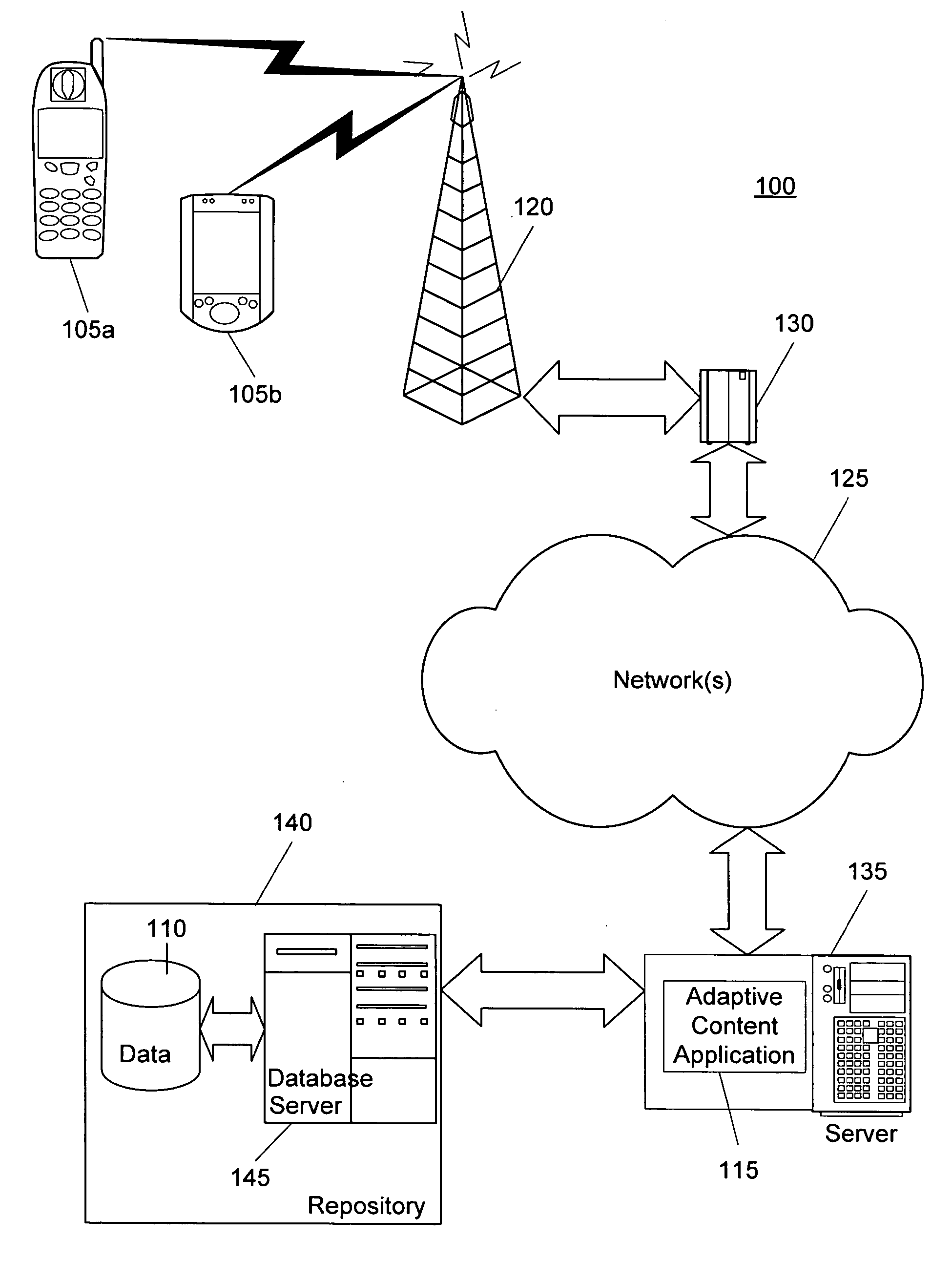
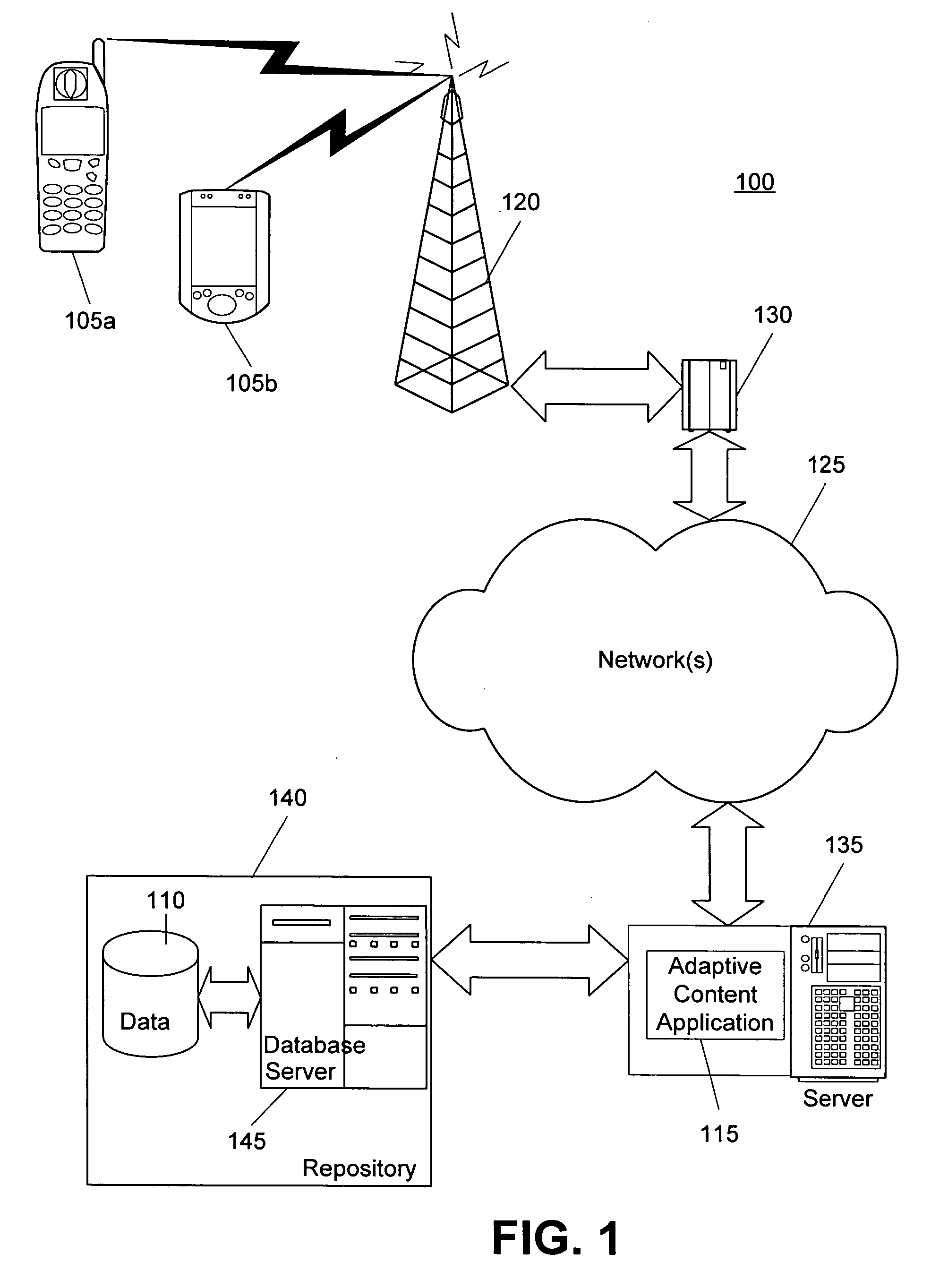
[0014]FIG. 1 illustrates a system 100 that can be used for context-adaptive content distribution to handheld devices. In general overview, a user uses a handheld device (generally referred to as 105), such as a mobile telephone 105a or a PDA 105b, to retrieve information of interest. This information (also referred to as content) is stored in one or more databases. The one or more databases are represented in FIG. 1 as database 110. The content stored in database 110 that is available to a user is generally quite large. Due to the limitation of the screen size of the handheld devices 105, the retrieval process uses an adaptive content application 115 to sort the available content according to the context of the retrieval.
[0015] For example, if the user had been previously navigating to financial web pages and pages on buying stock, the adaptive content application 115 saves this navigation information and associates it with the user. When a subsequent request for information on the...
PUM
 Login to View More
 Abstract
Description
Claims
Application Information
 Login to View More
 - R&D
- Intellectual Property
- Life Sciences
- Materials
- Tech Scout
- Unparalleled Data Quality
- Higher Quality Content
- 60% Fewer Hallucinations
Browse by: Latest US Patents, China's latest patents, Technical Efficacy Thesaurus, Application Domain, Technology Topic, Popular Technical Reports.
© 2025 PatSnap. All rights reserved.Legal|Privacy policy|Modern Slavery Act Transparency Statement|Sitemap|About US| Contact US: help@patsnap.com