
Motion estimation with fast search block matching
- Summary
- Abstract
- Description
- Claims
- Application Information
AI Technical Summary
Benefits of technology
Problems solved by technology
Method used
Image

Examples
Embodiment Construction
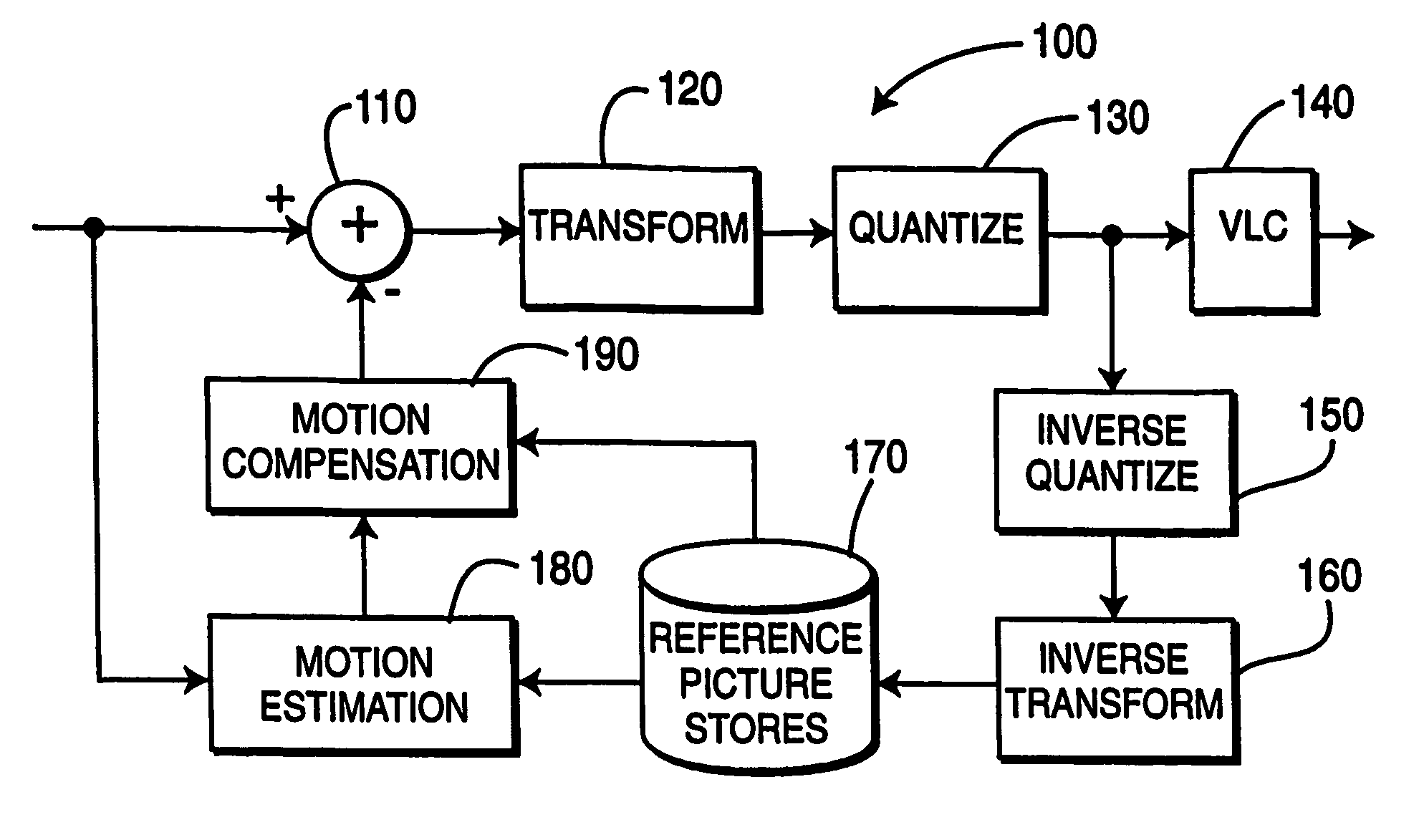
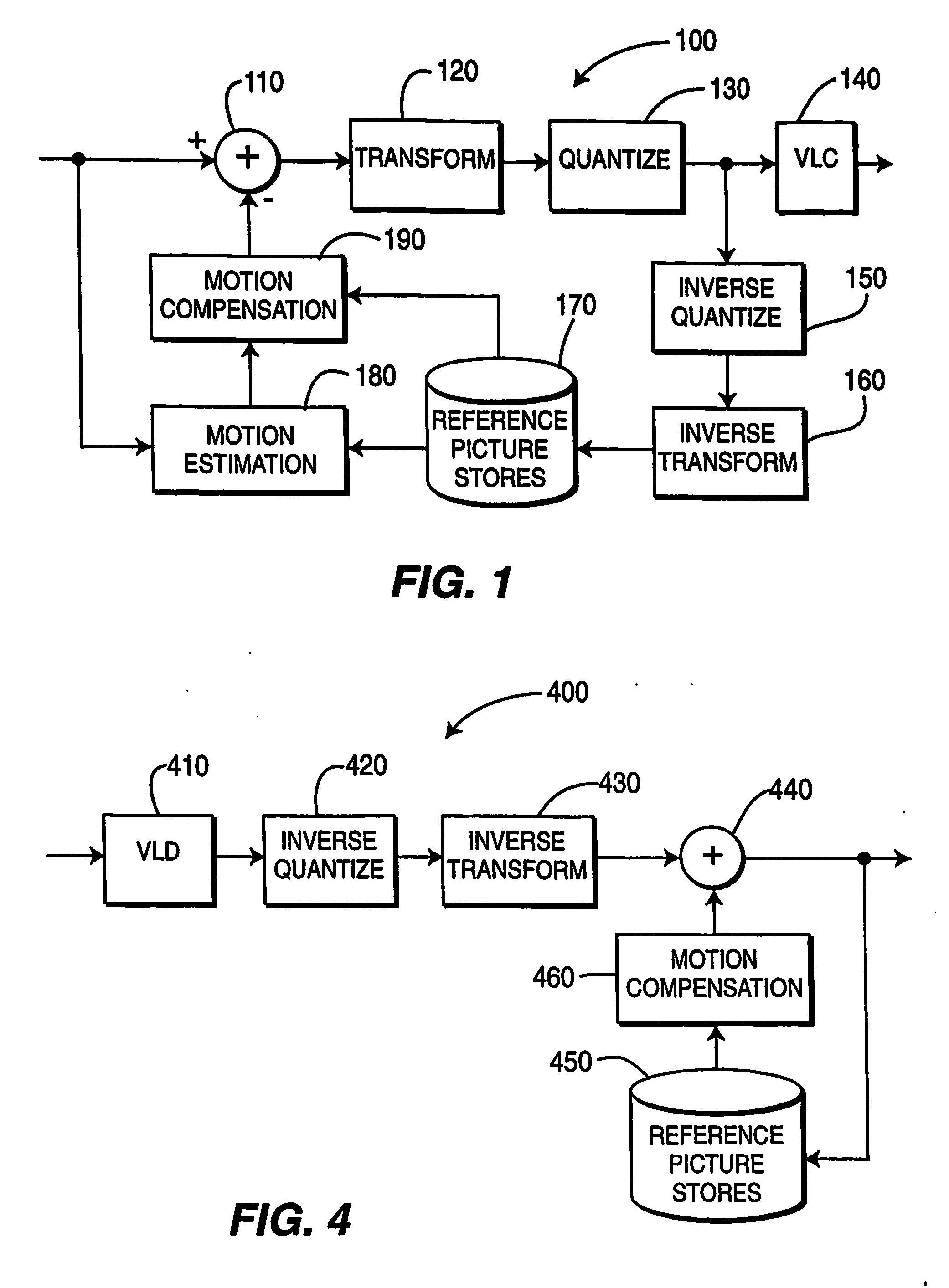
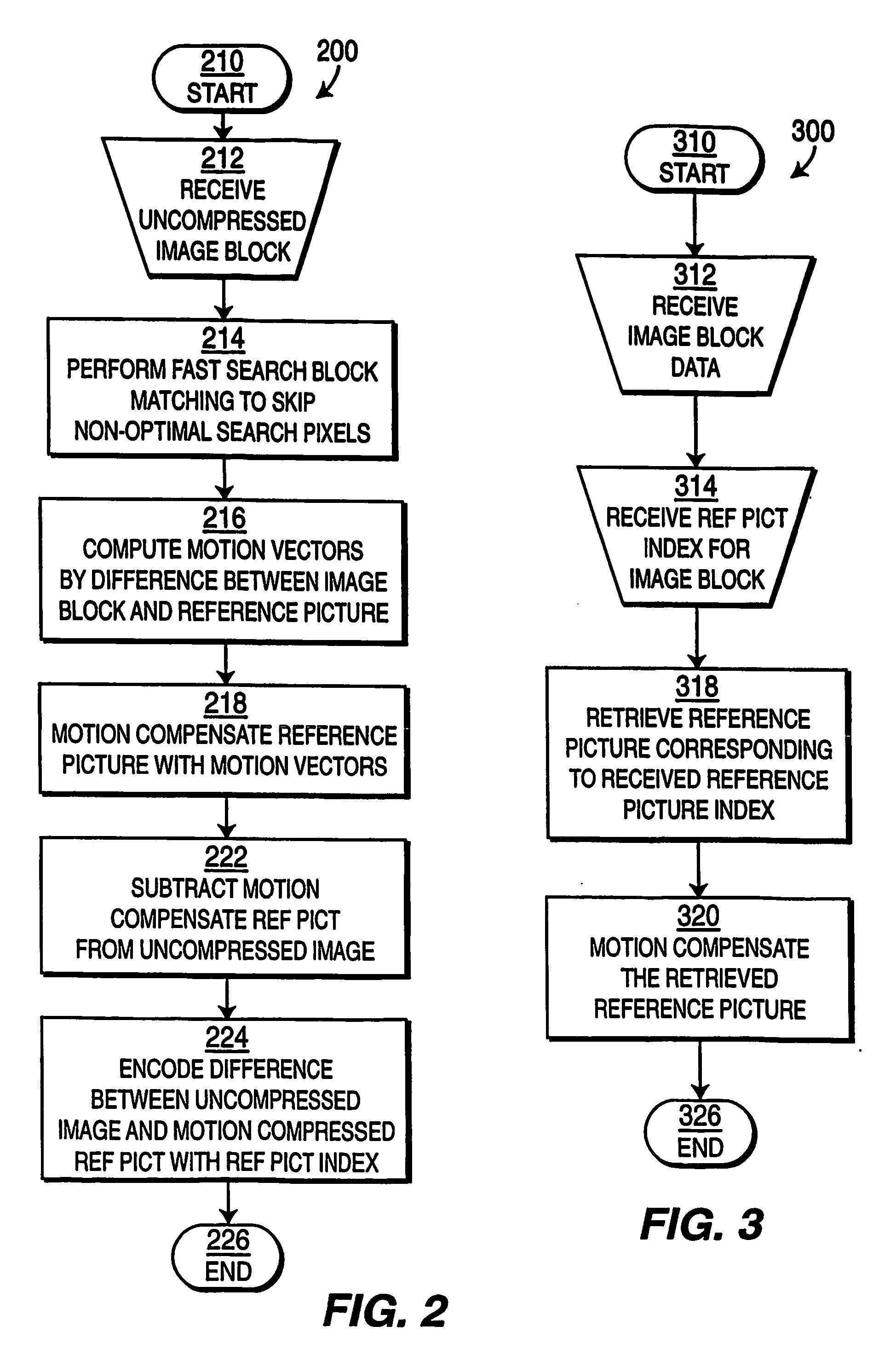
[0018] The present invention performs motion estimation using fast search block matching. Embodiments of the present invention use successive elimination to discard the non-optimal searching points and use pre-computed data to save computations without sacrificing the optimality of the full search method.
[0019] Motion estimation techniques have been widely studied. For each motion block of a picture being coded, a motion vector is chosen that represents a displacement of the motion block from a reference picture. In an exhaustive search method within a search region, every displacement within a pre-determined range of offsets relative to the motion block position is tested. The test includes calculating the sum of the absolute difference (“SAD”) or mean squared error (“MSE”) of each pixel in the motion block in the current picture with the displaced motion block in a reference picture. The offset with the lowest SAD or MSE is selected as the motion vector. Numerous variations on th...
PUM
 Login to View More
 Abstract
Description
Claims
Application Information
 Login to View More