
Internal digital TV antennas for hand-held telecommunications device
- Summary
- Abstract
- Description
- Claims
- Application Information
AI Technical Summary
Benefits of technology
Problems solved by technology
Method used
Image

Examples
first embodiment
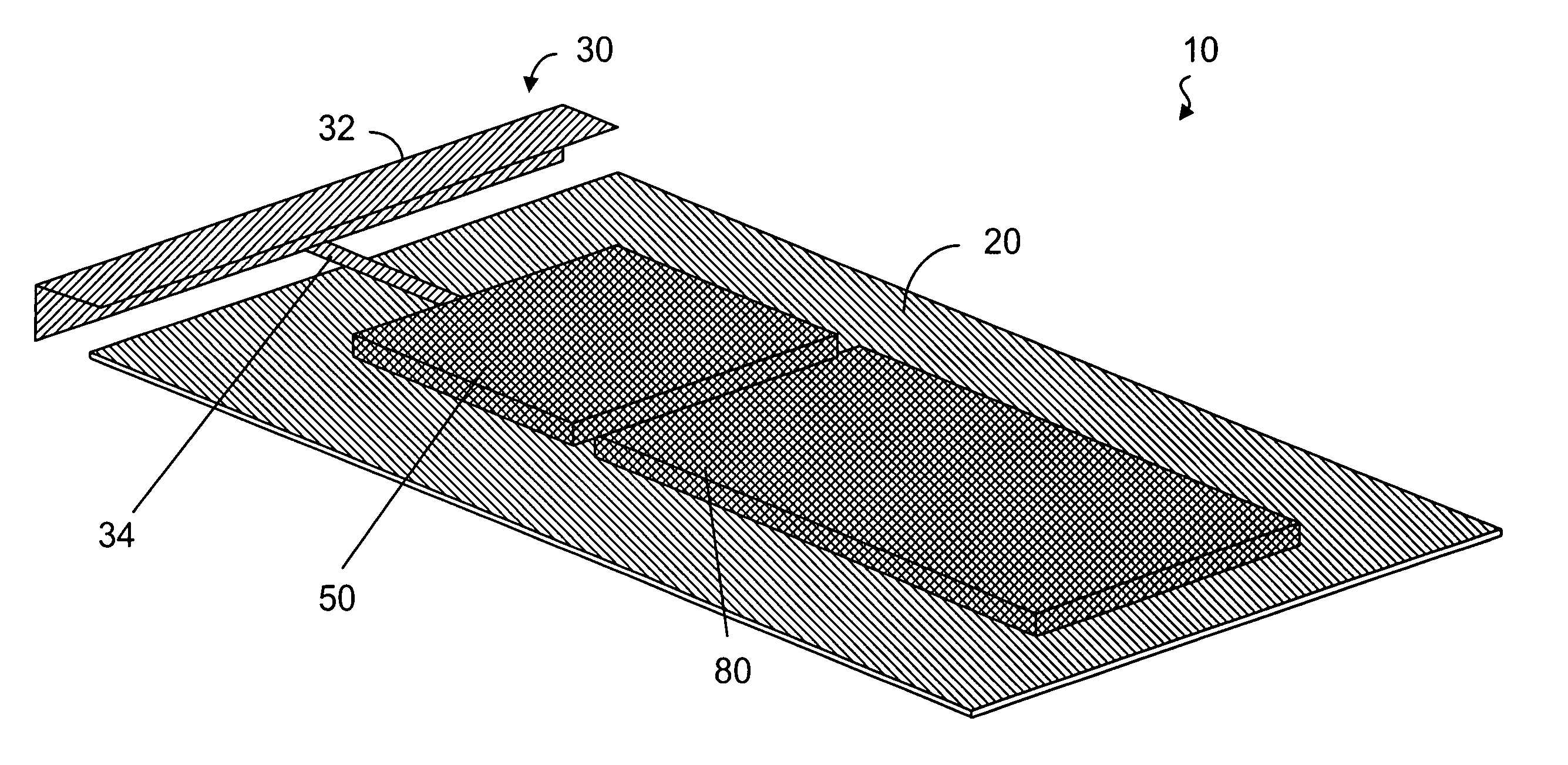
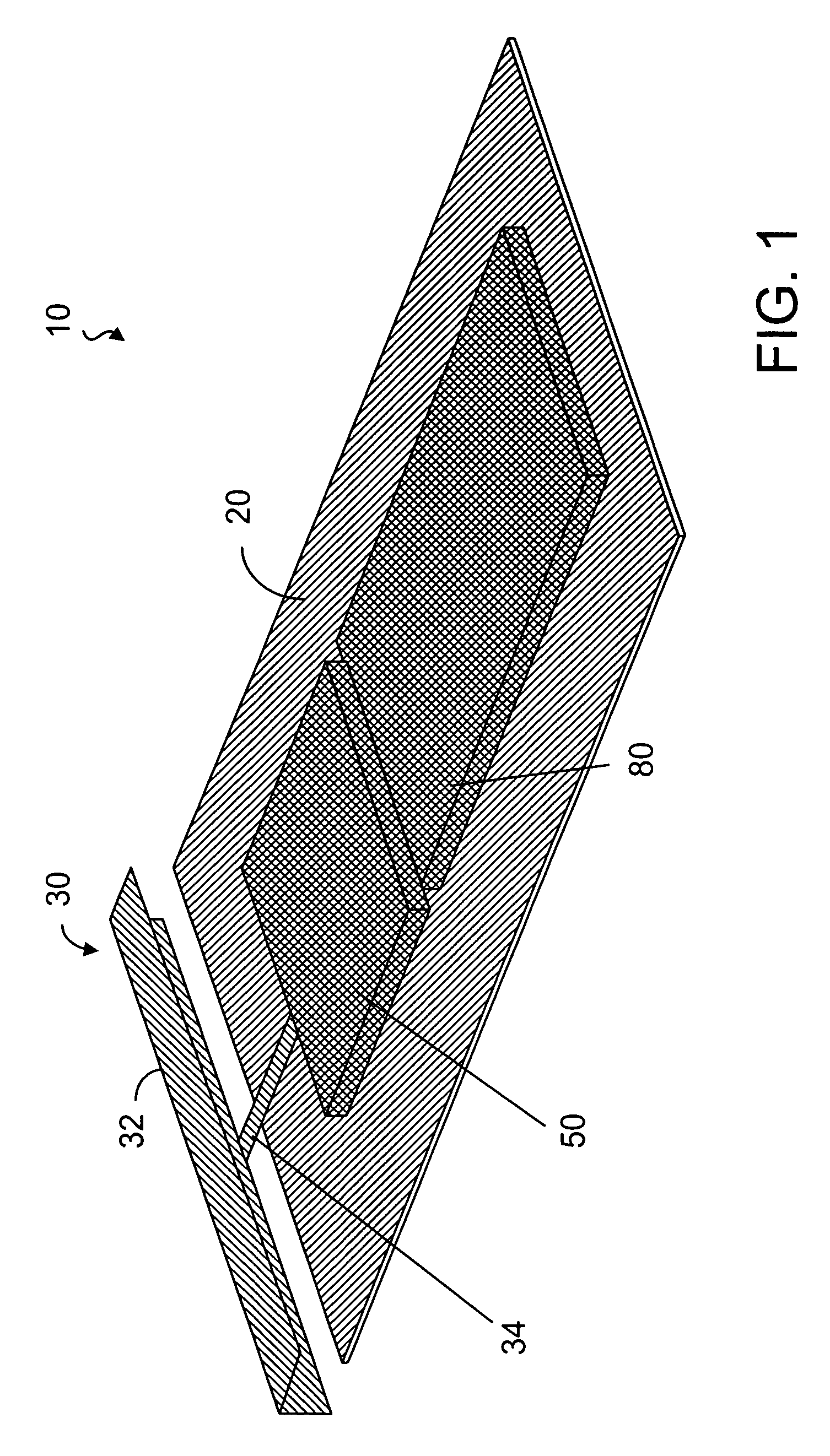
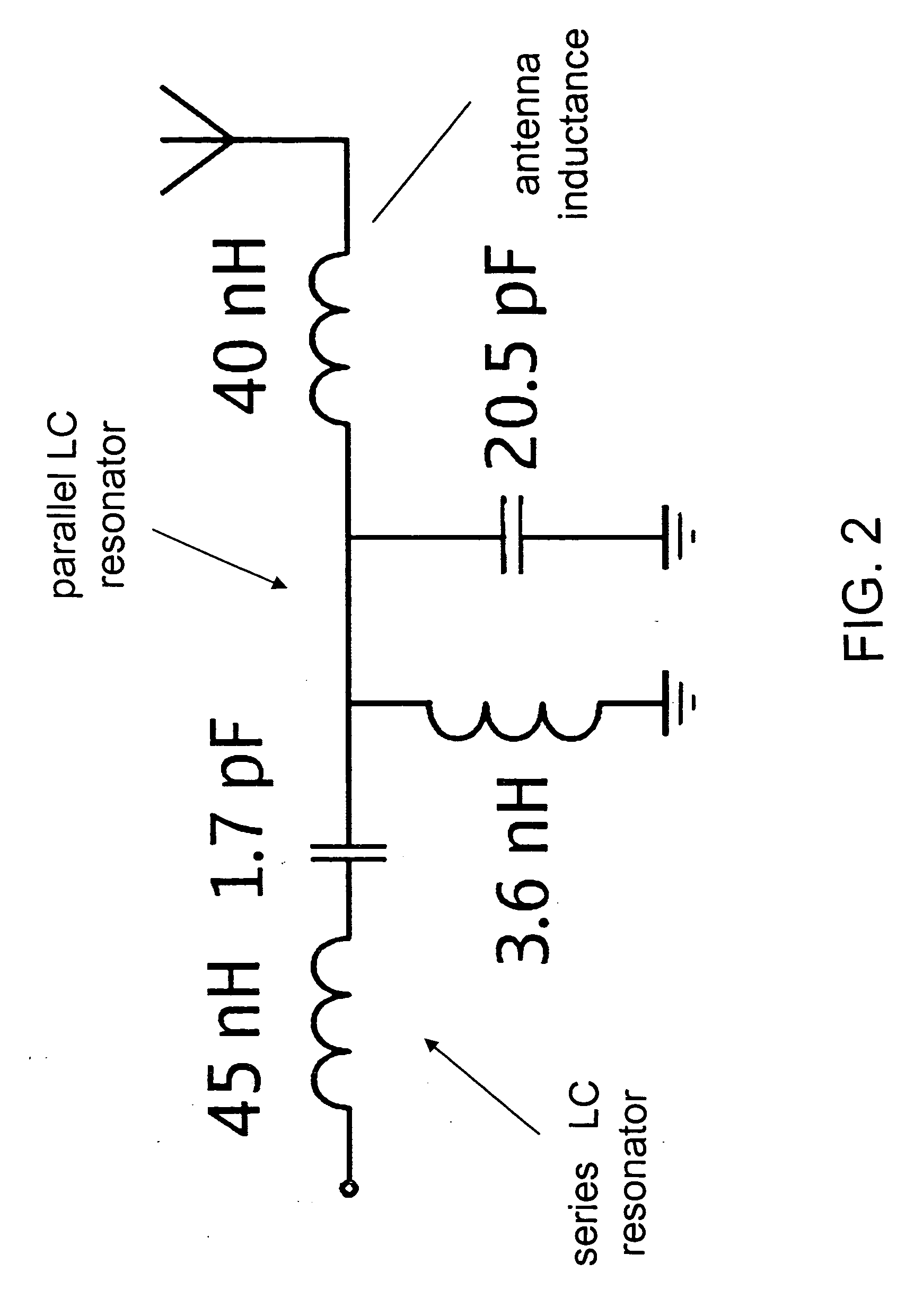
[0035] The first embodiment of the present invention is based on a non-resonant antenna structure. The radiative element of the antenna can be a metal plate folded to have a better fit to the geometry of a mobile terminal, as shown in FIG. 1. FIG. 1 illustrates a circuit board 10 having a printed wire board (PWB) 20 with a ground plane for implementing an unbalanced antenna 30 with a folded radiative element 32 and an antenna feed 34 connected between the radiative element 32 and the PWB 20. The physical and electrical lengths of the radiative element 32 are smaller than λ / 4 at the frequencies of interest (470-702 MHz). The antenna feed 34 is a narrow strip of electrically conductive material connected to a section of the radiative element 32. The antenna is resonated with an external matching circuit, which makes the antenna dual-resonant or multi-resonant and which can be integrated to the antenna module if necessary. As shown in FIG. 1, a matching circuit 50 is connected in serie...
second embodiment
[0038] The second embodiment of the present invention is based on a resonant antenna. The radiative element is an elongated strip of electrically conductive material folded at two sides, as shown in FIG. 5. FIG. 5 illustrates a circuit board 10′ having a PWB 20 with a ground plane for implementing an unbalanced antenna 40 with a folded radiative element 42 and an antenna feed 44 connected between the radiative element 42 and the PWB 20. The physical length of the radiative element is smaller than λ / 4 at the frequencies of interest (470-702 MHz), but the electrical length is about λ / 4. In one embodiment, the electrical length is λ / 4 at 586 MHz (in the middle of the band). The antenna is made dual-resonant or multi-resonant with a matching circuit, which can be integrated to the antenna module, if necessary. For example, it is possible to include the first inductor in the antenna structure as a meandered metal line, as shown in FIG. 5. As shown in FIG. 5, a matching circuit 50 is conn...
PUM
 Login to View More
 Abstract
Description
Claims
Application Information
 Login to View More