
Brushed motor position control based upon back current detection
a technology of position control and back current, applied in the direction of motor/generator/converter stopper, dynamo-electric converter control, instruments, etc., can solve the problem of relatively insensitive methods to environmental changes, and achieve accurate indication of then number
- Summary
- Abstract
- Description
- Claims
- Application Information
AI Technical Summary
Benefits of technology
Problems solved by technology
Method used
Image

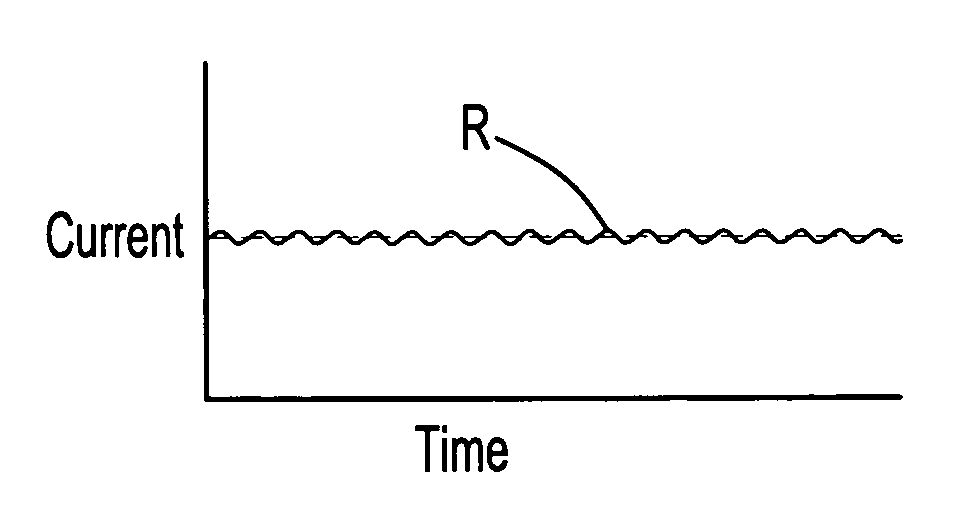
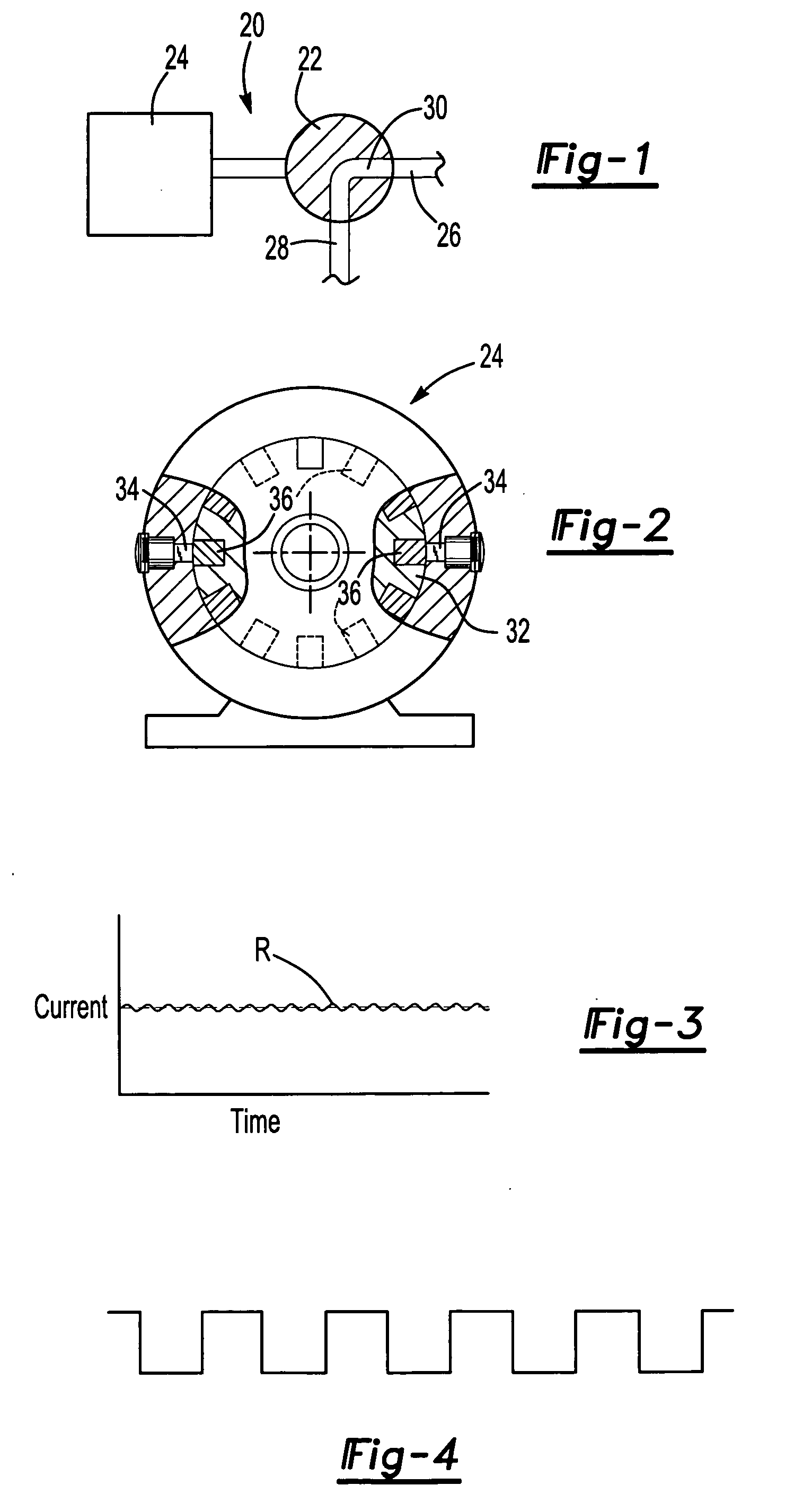
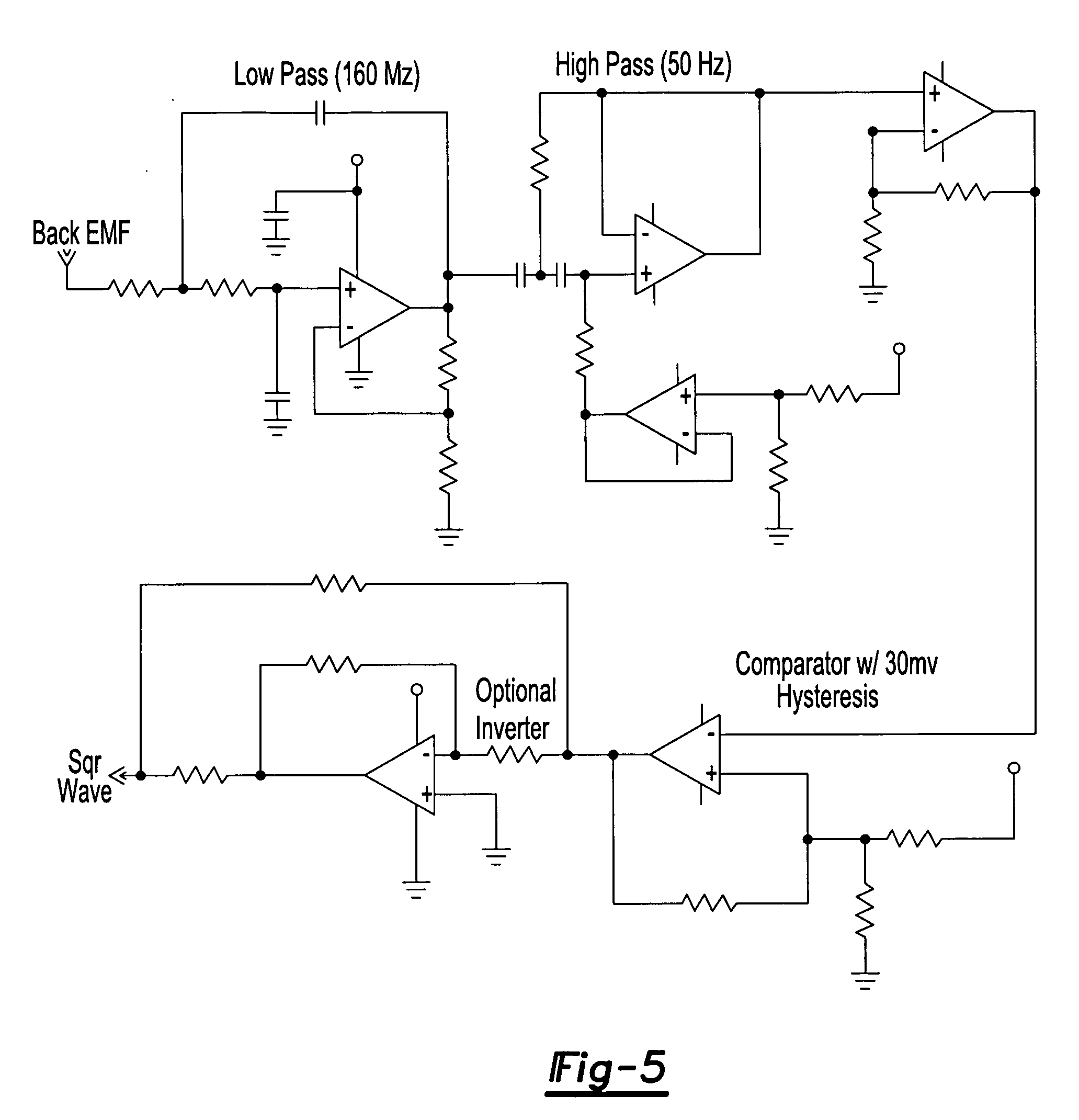
Examples
Embodiment Construction
[0013] An electric motor-driven water valve system 20 is illustrated in FIG. 1 highly schematically. As shown, a valve 22 can be rotated by a brushed DC electric motor 24. The valve 22 has a path 30 that selectively communicates a water supply 26 to a downstream user line 28. As the valve 22 is rotated, more and more of the flow path 30 communicates the inlet 26 to the outlet 28. The valve can be rotated to a fully blocked flow position and to a fully open position. Moreover, the valve can be moved to any number of intermediate locations. The valve is shown schematically, and any number of rotary valves are known in the art to provide this basic function.
[0014]FIG. 2 shows a known feature of brushed DC electric motors, which would be true of the brushed DC electric motor 24. As shown, a rotor 32 is driven to rotate by a current induced in a surrounding stator. Brushes 34 periodically contact a commutator portion 36 on the rotor 32. The brushes serve to communicate an electric curre...
PUM
 Login to View More
 Abstract
Description
Claims
Application Information
 Login to View More