

Diagnosis of cell-to-cell variability in water holdup via dynamic voltage sensor pattern in response to a cathode flow pulse
- Summary
- Abstract
- Description
- Claims
- Application Information
AI Technical Summary
Benefits of technology
Problems solved by technology
Method used
Image

Examples
Embodiment Construction
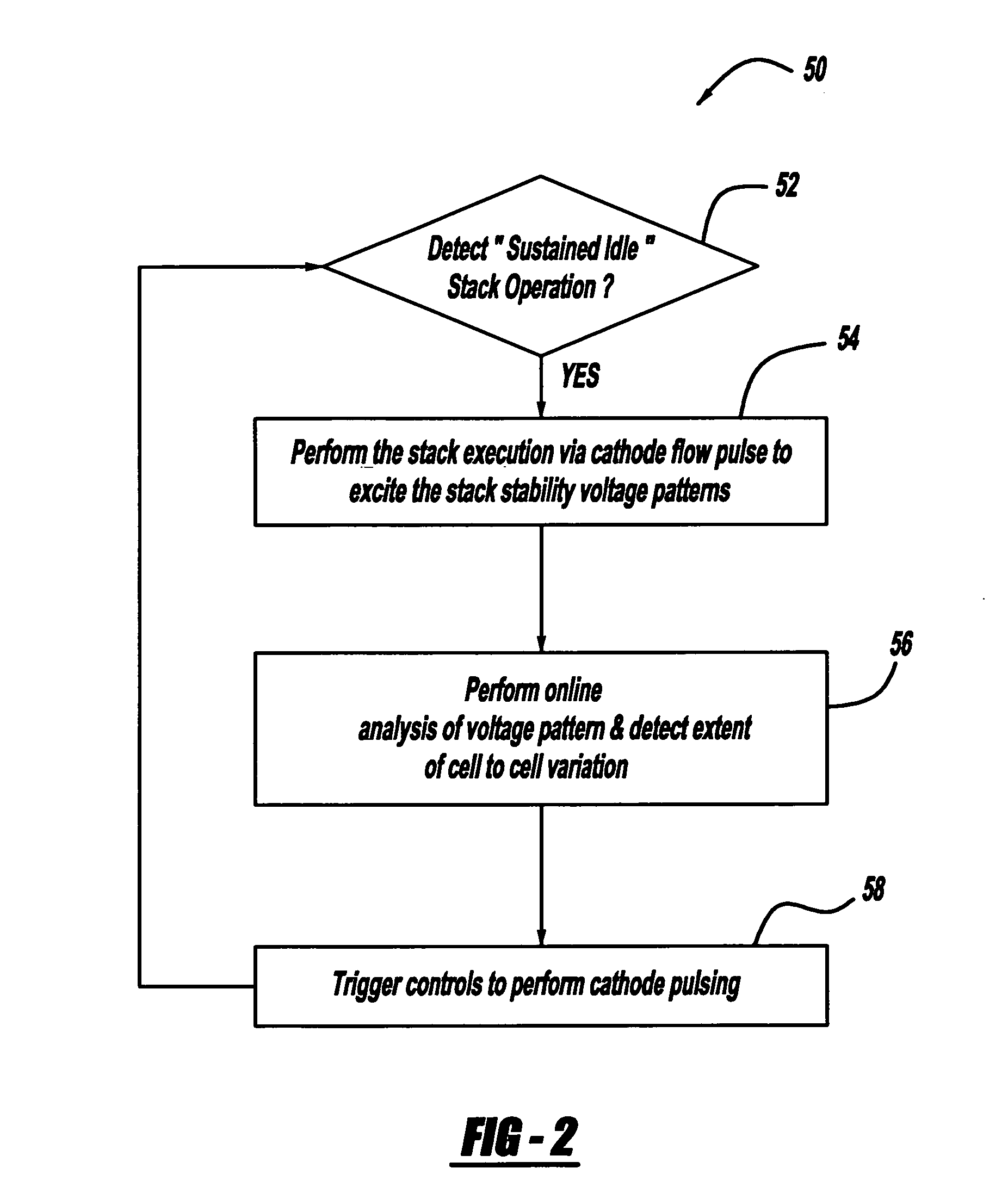
[0020] The following discussion of the embodiments of the invention directed to a method for determining cell output voltage variability in a fuel cell stack to determine how often the cathode airflow will be pulsed during extended low power operating conditions to remove water from the cathode flow channels is merely exemplary in nature, and is in no way intended the limit the invention or its applications or uses.
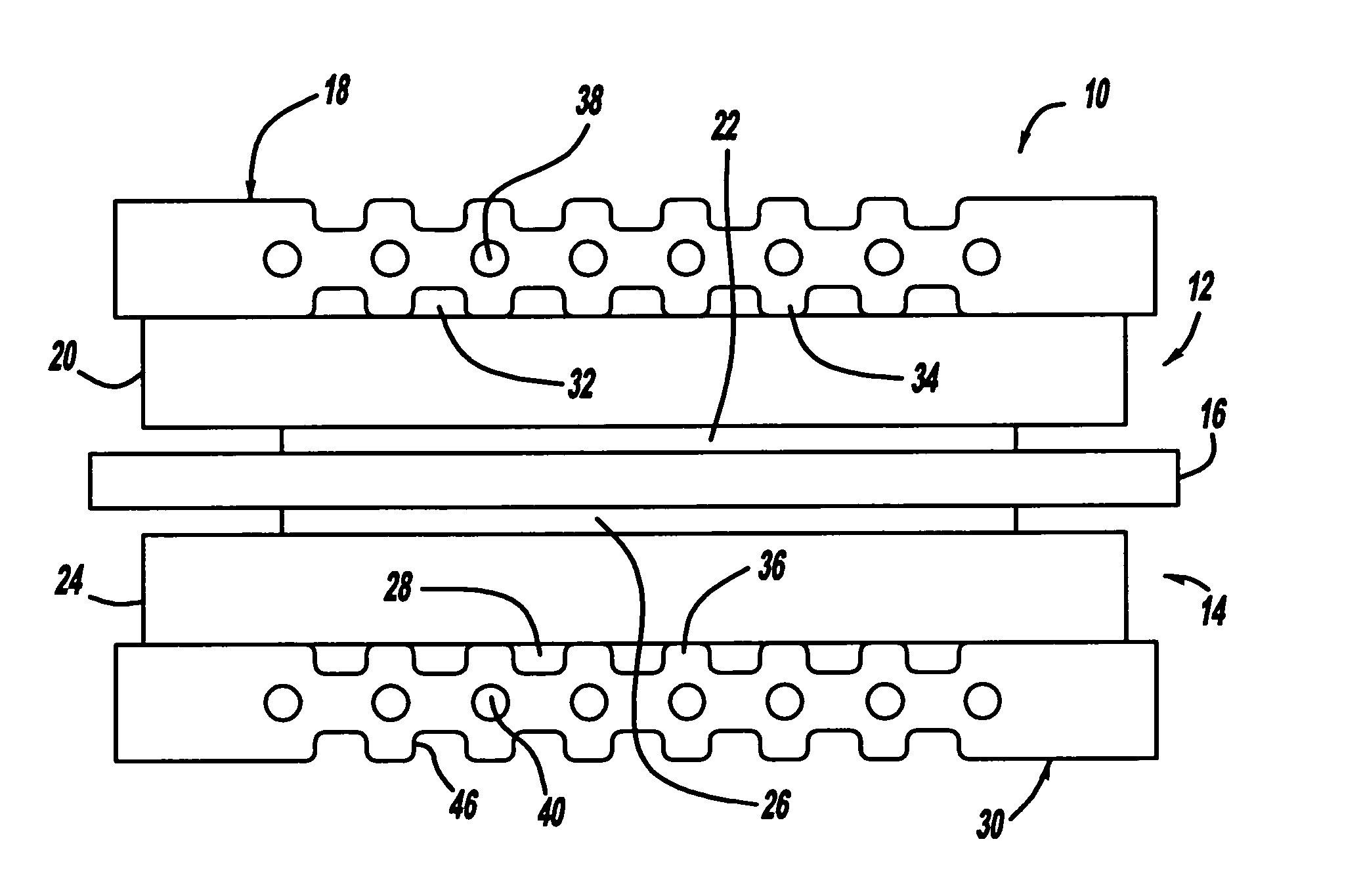
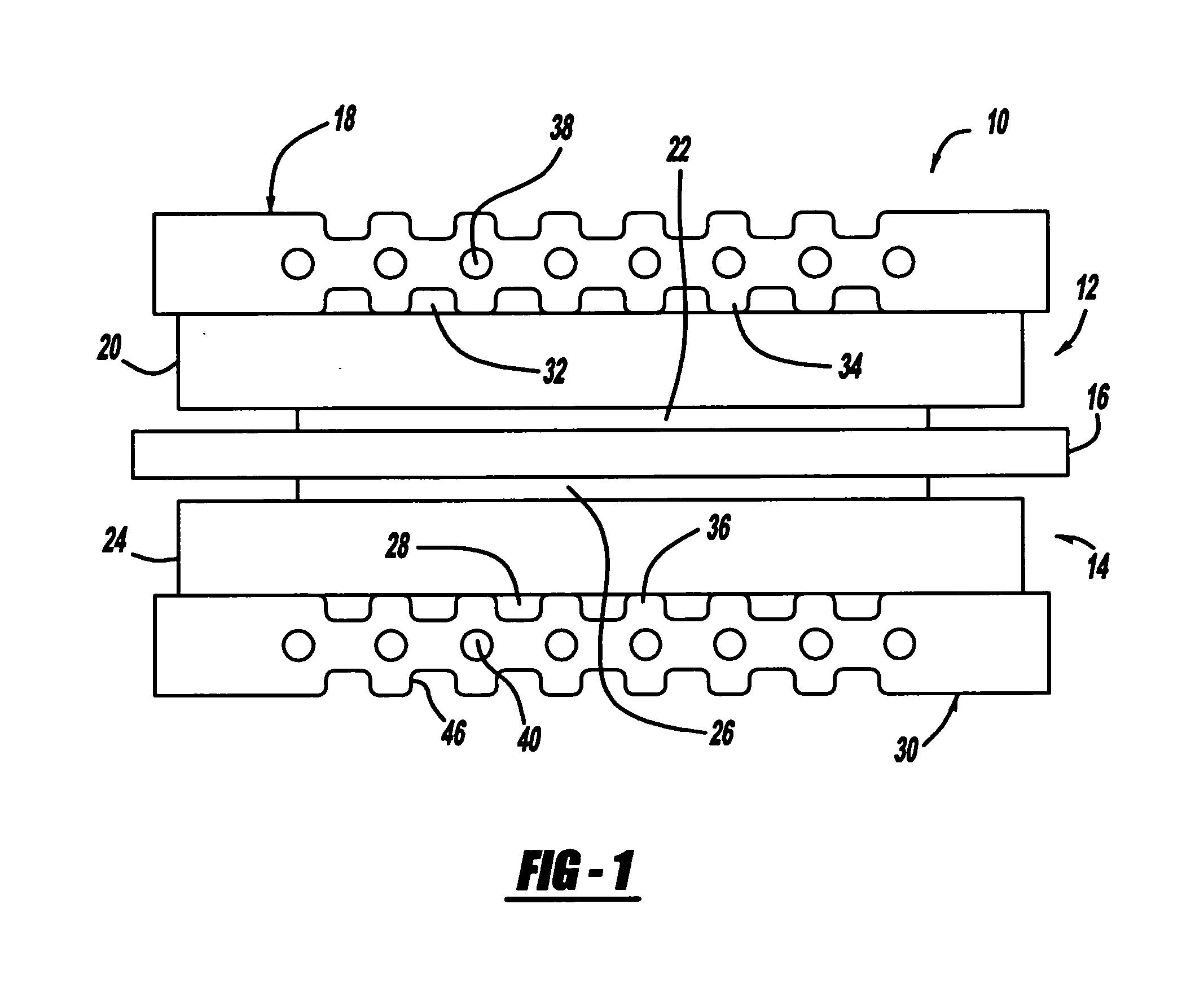
[0021]FIG. 1 is a cross-sectional view of a fuel cell 10 that is part of a fuel cell stack of the type discussed above. The fuel cell 10 includes a cathode side 12 and an anode side 14 separated by an electrolyte membrane 16. A cathode side diffusion media layer 20 is provided on the cathode side 12, and a cathode side catalyst layer 22 is provided between the membrane 16 and the diffusion media layer 20. Likewise, an anode side diffusion media layer 24 is provided on the anode side 14, and an anode side catalyst layer 26 is provided between the membrane 16 and the diffu...
PUM
 Login to View More
 Abstract
Description
Claims
Application Information
 Login to View More