
Tokencode Exchanges for Peripheral Authentication
a token and peripheral technology, applied in the field of cryptographic techniques for authentication, can solve the problems of low security features of simple devices, difficulty in implementing public-key access cryptographic functions, and high cost of cryptographic functions required for public-key access implementation, etc., to achieve less communication bandwidth, less circuit area, computation time and power consumption, and avoid purchase and management of digital certificates
- Summary
- Abstract
- Description
- Claims
- Application Information
AI Technical Summary
Benefits of technology
Problems solved by technology
Method used
Image

Examples
Embodiment Construction
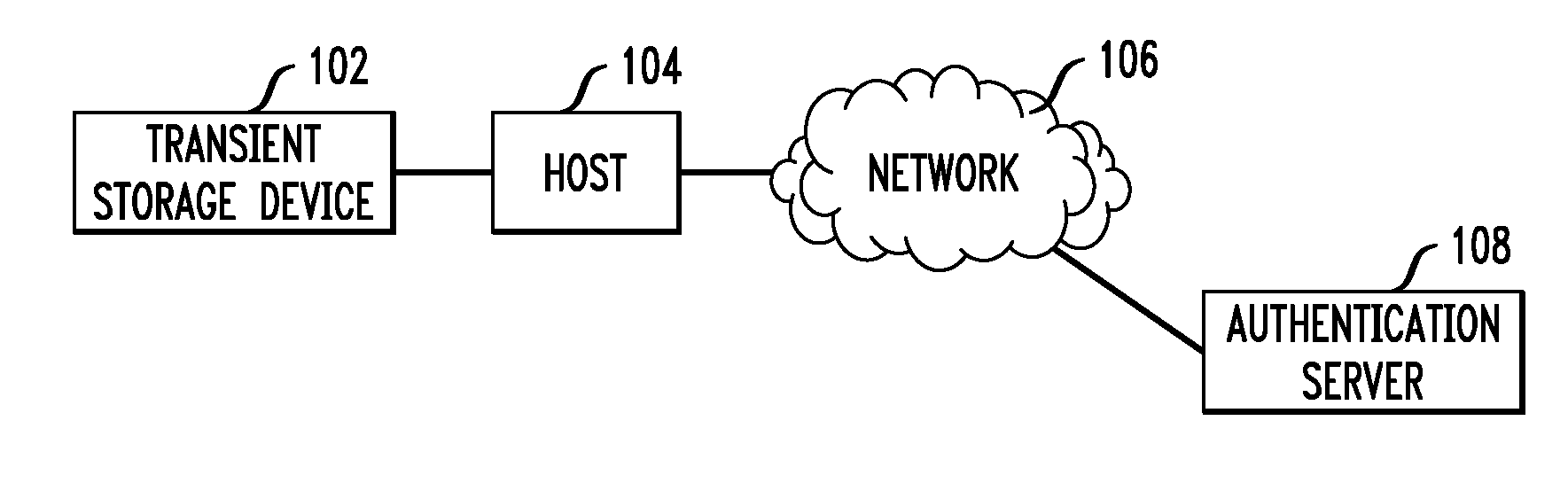
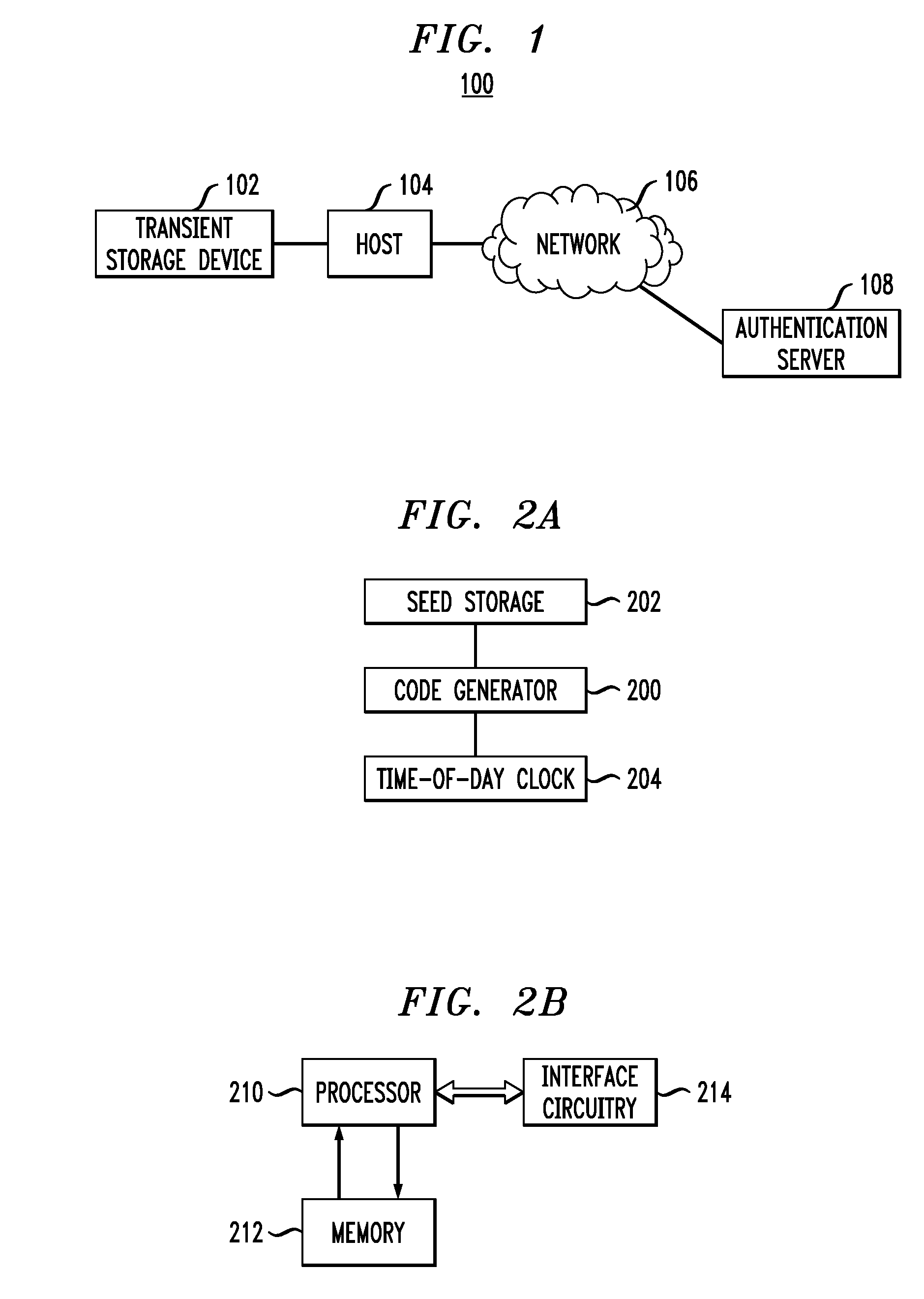
[0020] The present invention will be described herein with reference to an example communication system in which a TSD connects to a computer or other host device and the host device communicates over a network with an authentication server. It is to be appreciated, however, that the invention is not restricted to use in this or any other particular system configuration.
[0021] Additional details regarding certain conventional cryptographic techniques referred to herein may be found in, e.g., A. J. Menezes et al., Handbook of Applied Cryptography, CRC Press, 1997, which is incorporated by reference herein.
[0022] The term “code” as used herein is intended to include authentication information such as one-time passwords or other tokencodes, or more generally any other information that a user may be required to submit in order to obtain access to an access-controlled application or other resource. Although the illustrative embodiments will be described below in the context of tokencod...
PUM
 Login to View More
 Abstract
Description
Claims
Application Information
 Login to View More