

Fixation suture device and method
- Summary
- Abstract
- Description
- Claims
- Application Information
AI Technical Summary
Benefits of technology
Problems solved by technology
Method used
Image

Examples
fifth embodiment
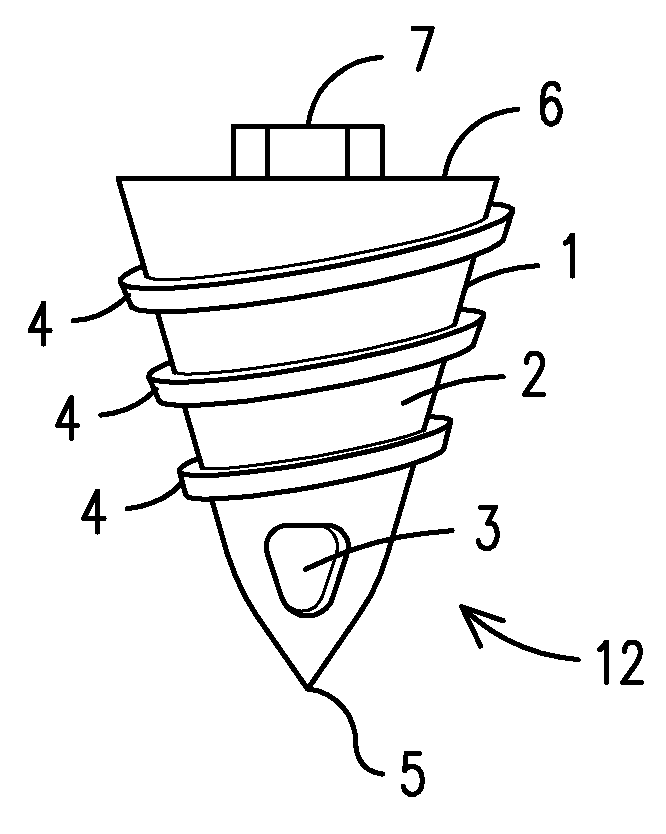
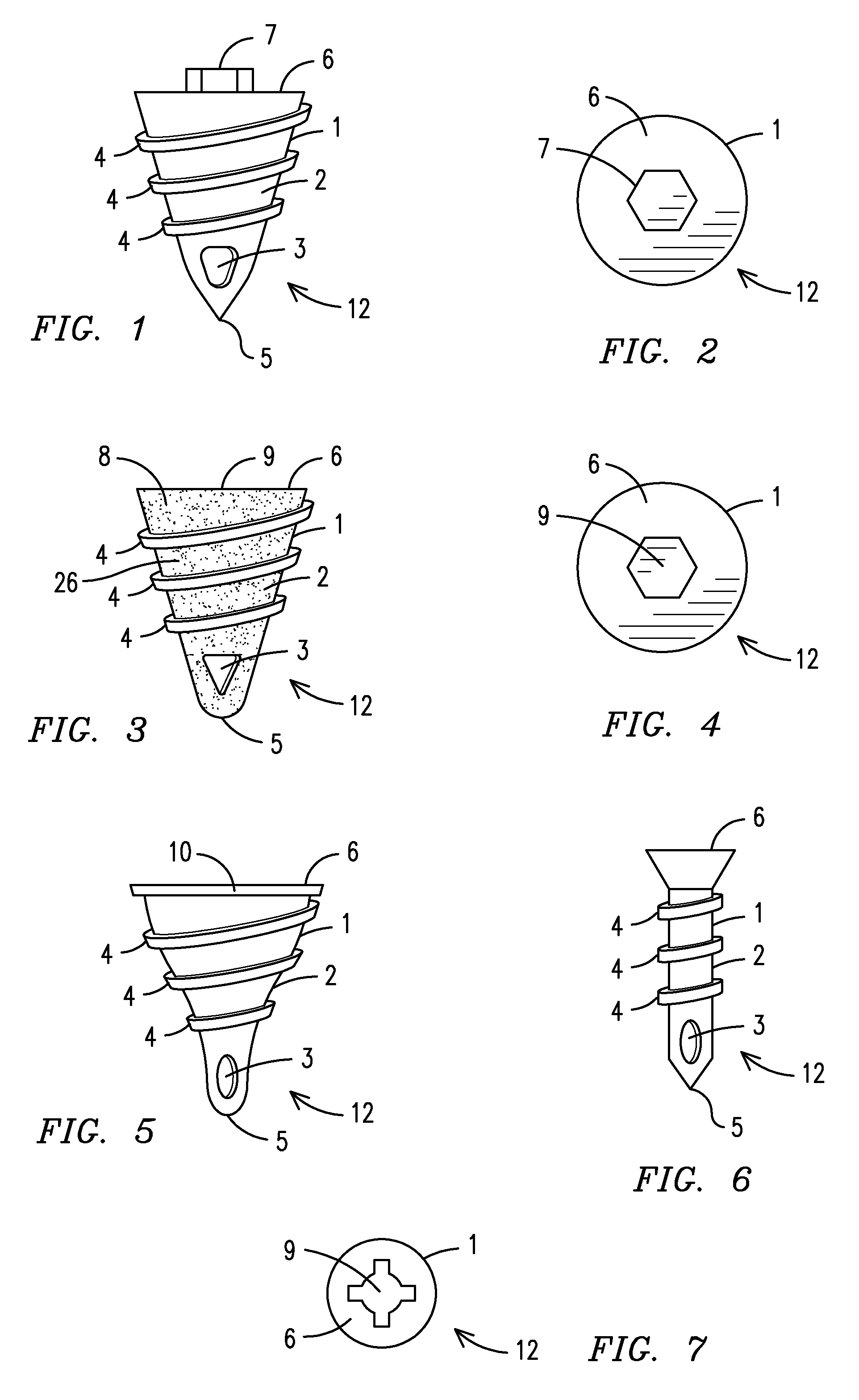
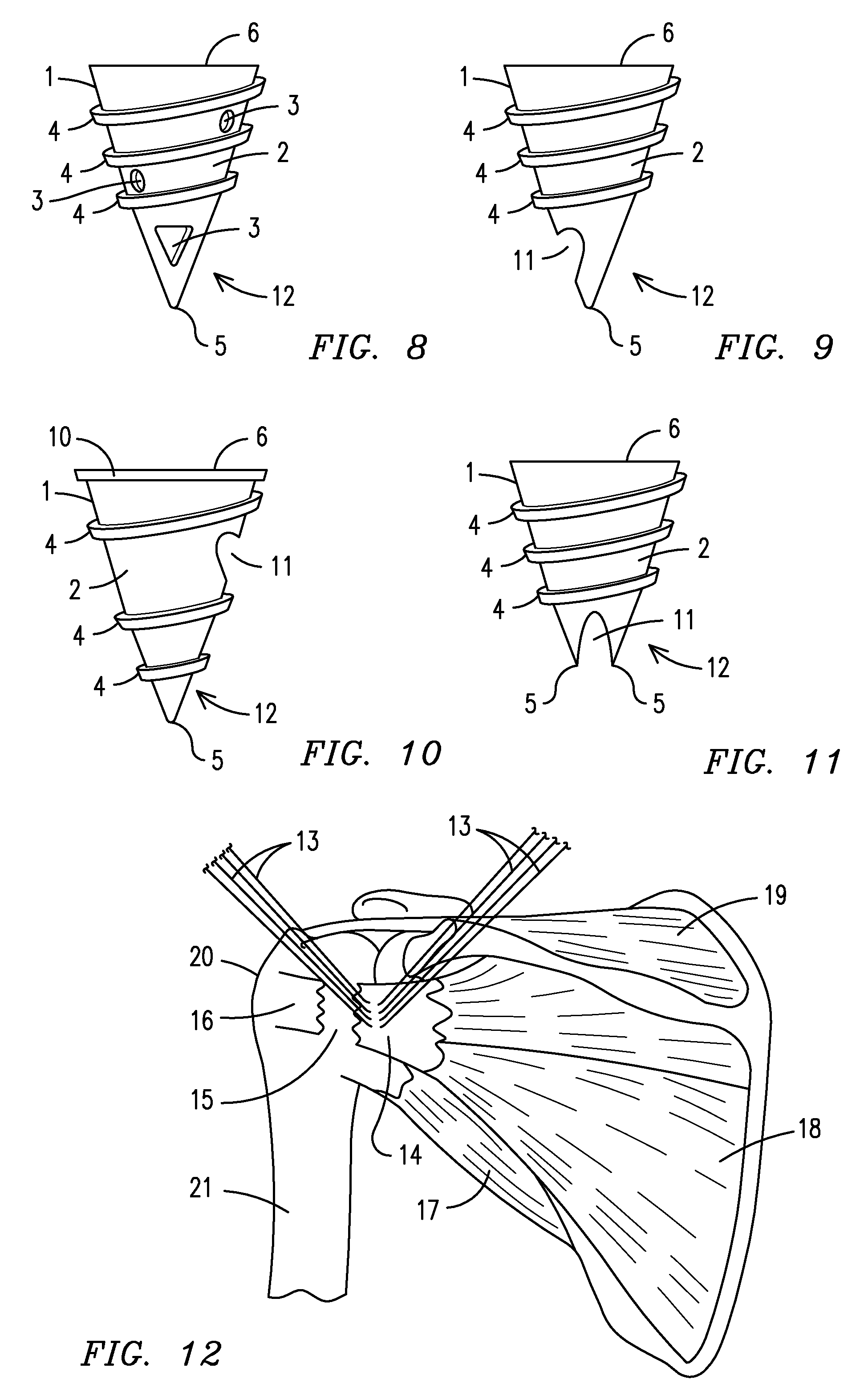
[0053]With reference to FIG. 8, a side perspective view of the fixation suture device of the present invention is shown. Rather than having one anchor aperture 3 located on the anchor tip 5, a plurality of anchor apertures 3 are located on the anchor core 2, as well as on the anchor tip 5.
eighth embodiment
[0054]FIGS. 9-10 show perspective views a sixth, seventh and eighth embodiment of the fixation suture device of the present invention. Rather than having at least one anchor aperture 3, these embodiments of the fixation suture device 12 include at least one notch 11 located at various places on the anchor 1, including adjacent to the tip 5 (see FIG. 9), on the anchor core 2 (see FIG. 10) and on the anchor tip 5 (see FIG. 10). Similar to the aforementioned embodiments wherein at least one suture 13 is threaded through the apertures 3, at least one suture 13 is threaded through the notch 11 in these embodiments (not shown).
[0055]Next, FIG. 12 shows a posterior plan view of a plurality of sutures being passed through a rotator cuff tendon. The muscles located on the back of a person include the supia spinatus 19, the infra spinatus 18 and the teres minor 17 wherein a rotator cuff tendon 14 is attached to the humeral head 20 of a humerus 21 (not shown). A rotator cuff tear 15 commonly o...
PUM
 Login to View More
 Abstract
Description
Claims
Application Information
 Login to View More