
System and method for correcting errors in depth for measurments made while drilling
a technology of depth correction and drilling, applied in the field of drilling, can solve problems such as gaps or lost data
- Summary
- Abstract
- Description
- Claims
- Application Information
AI Technical Summary
Benefits of technology
Problems solved by technology
Method used
Image

Examples
Embodiment Construction
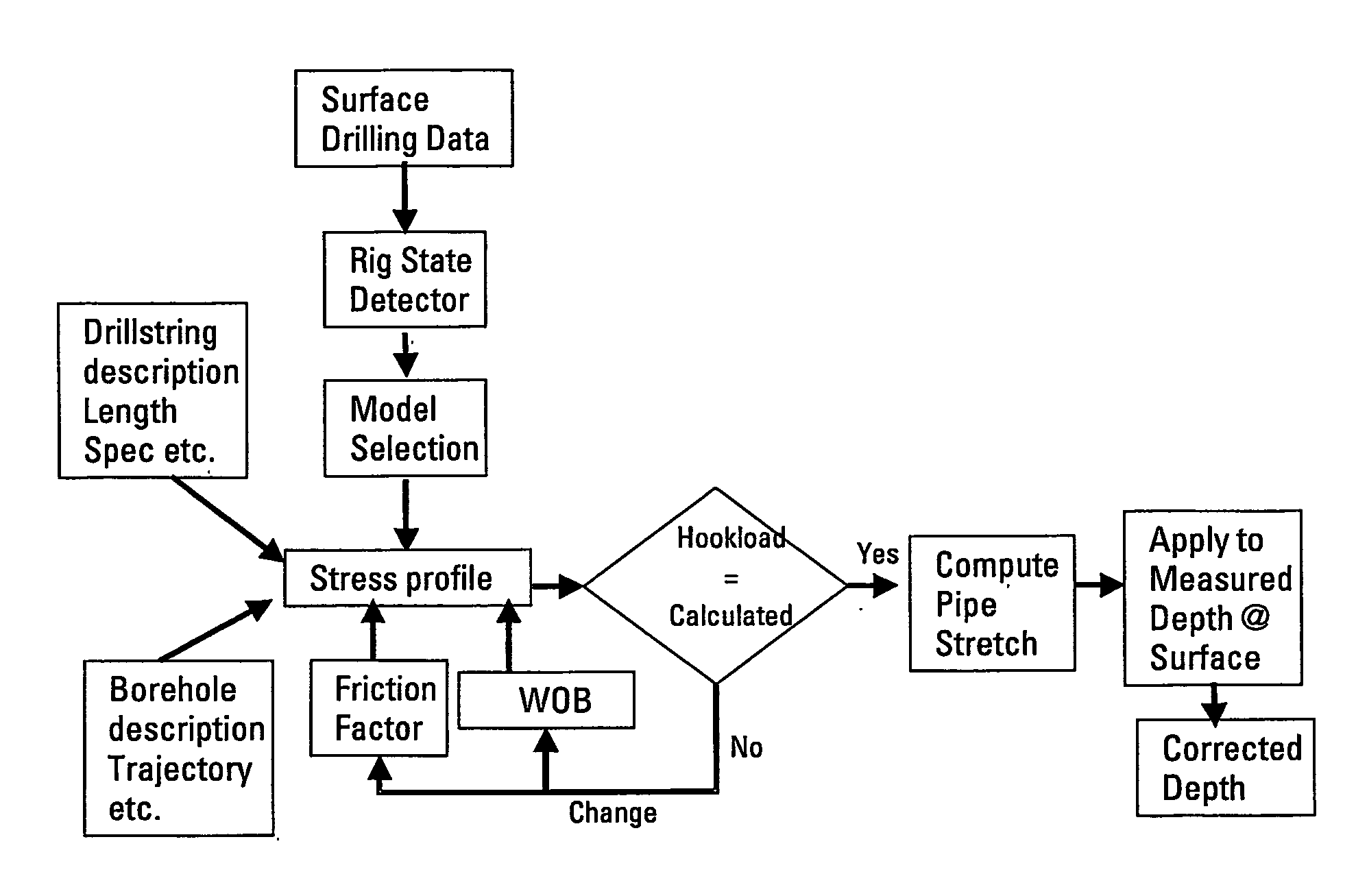
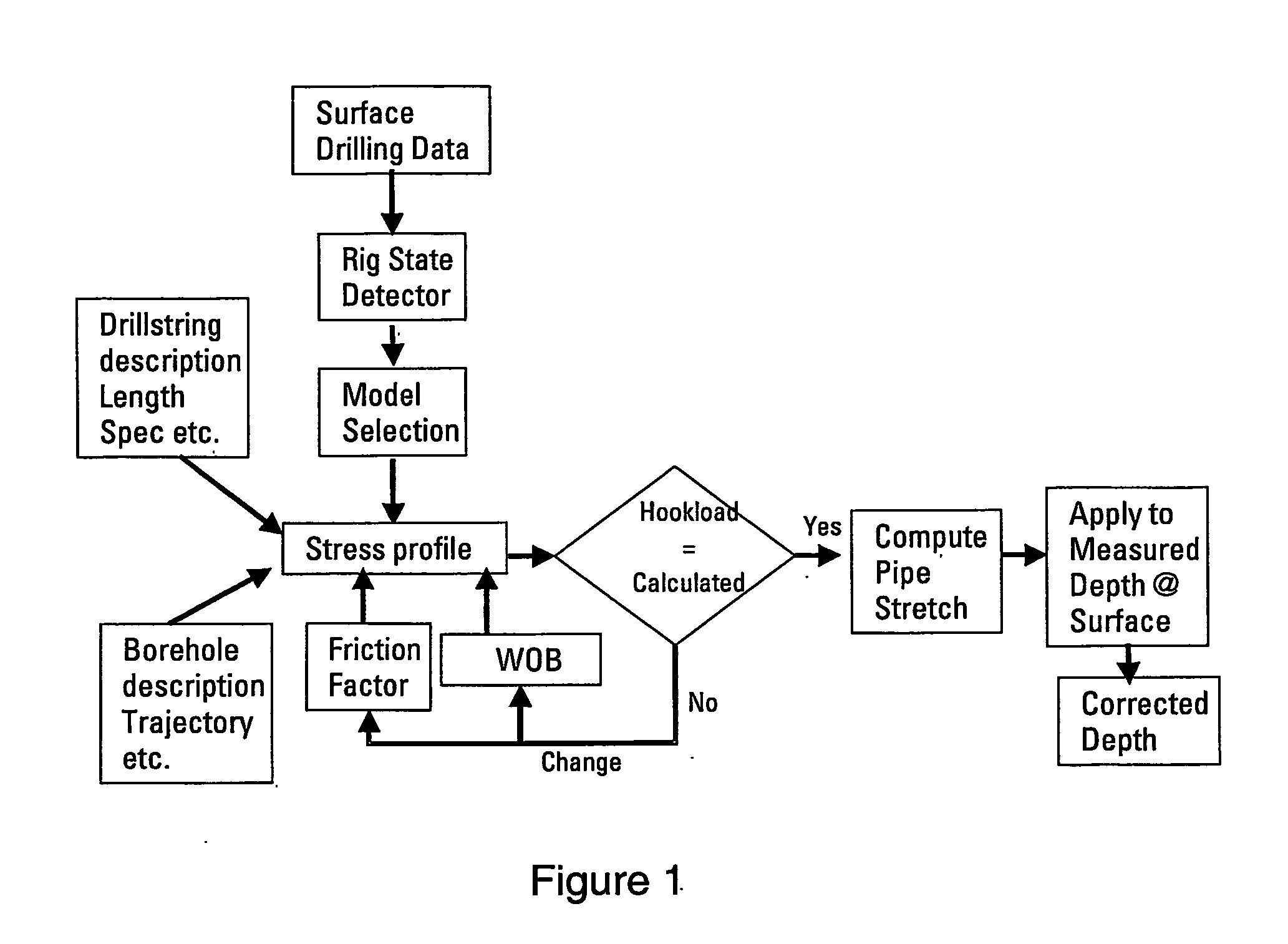
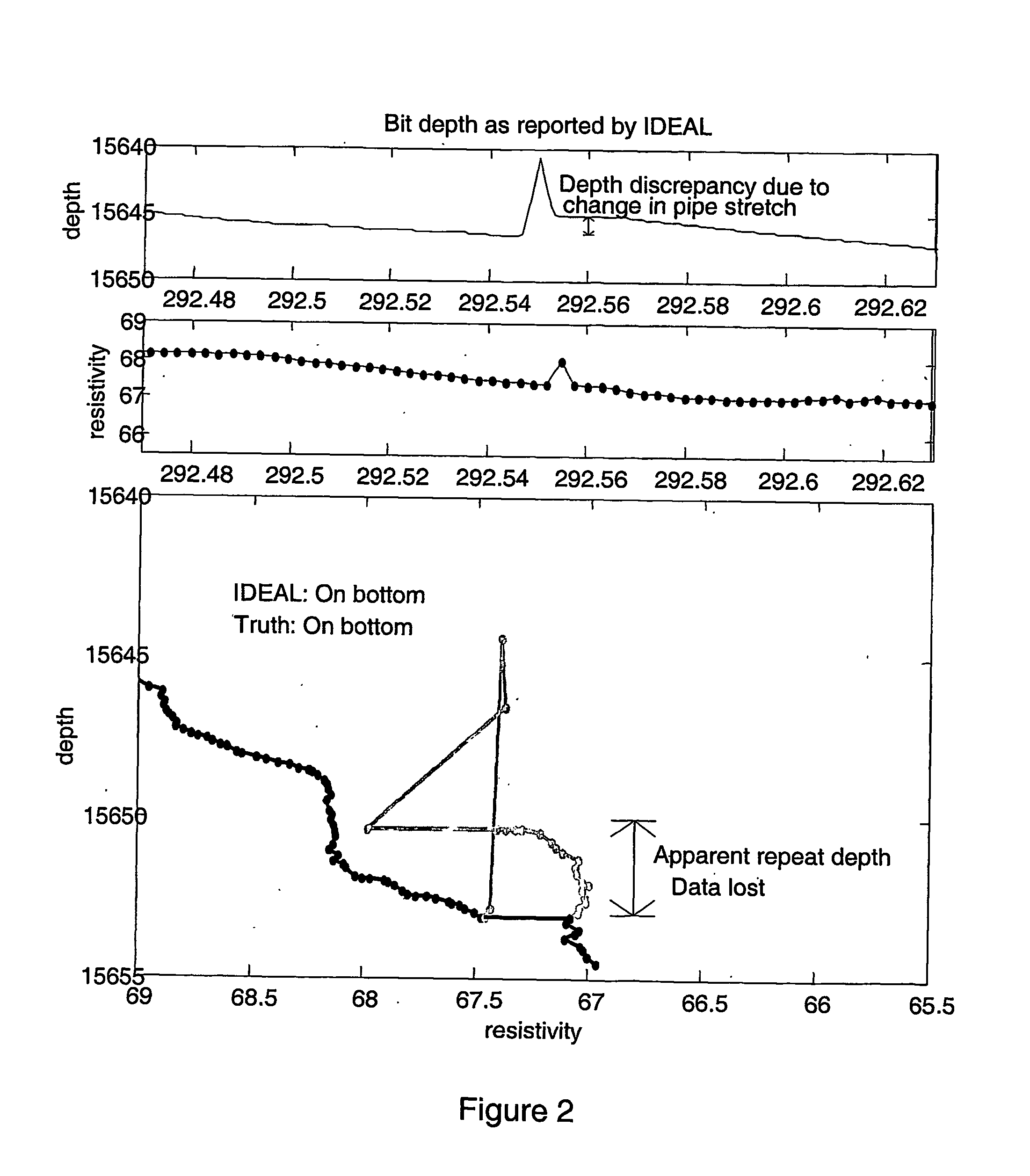
[0007]The length of the drillstring in the borehole is used to estimate the measured depth (or along hole length) of a borehole. According to the invention, the depth is corrected. For real drill strings the assumption that the drillstring is inelastic is not valid. The length of the drillpipe is a function of several parameters including temperature, pressure, and stress. According to the invention, corrections are calculated based on at least the stress on the drillstring. In particular, a correction is calculated based on the un-deformed length of the drillstring and the stress due to the buoyant drillstring weight, weight on bit and frictional forces due to contact with the borehole acting along the length of the drillstring. Two of these parameters, friction factor and weight on bit vary depending on the rig operation and the drillers input at surface. According to the invention, a method is provided for correcting the measurement of depth at surface for these parameters. The c...
PUM
 Login to View More
 Abstract
Description
Claims
Application Information
 Login to View More