

System and method for removing seam artifacts
a technology of artifact removal and seam artifact, applied in the field ofgraphics processing, can solve the problems of breaking affecting the visual continuity of the image, and the model would be very complex and time-consuming to process and display, so as to reduce the amount of artifacts and reduce the effect of seam artifacts
- Summary
- Abstract
- Description
- Claims
- Application Information
AI Technical Summary
Benefits of technology
Problems solved by technology
Method used
Image

Examples
Embodiment Construction
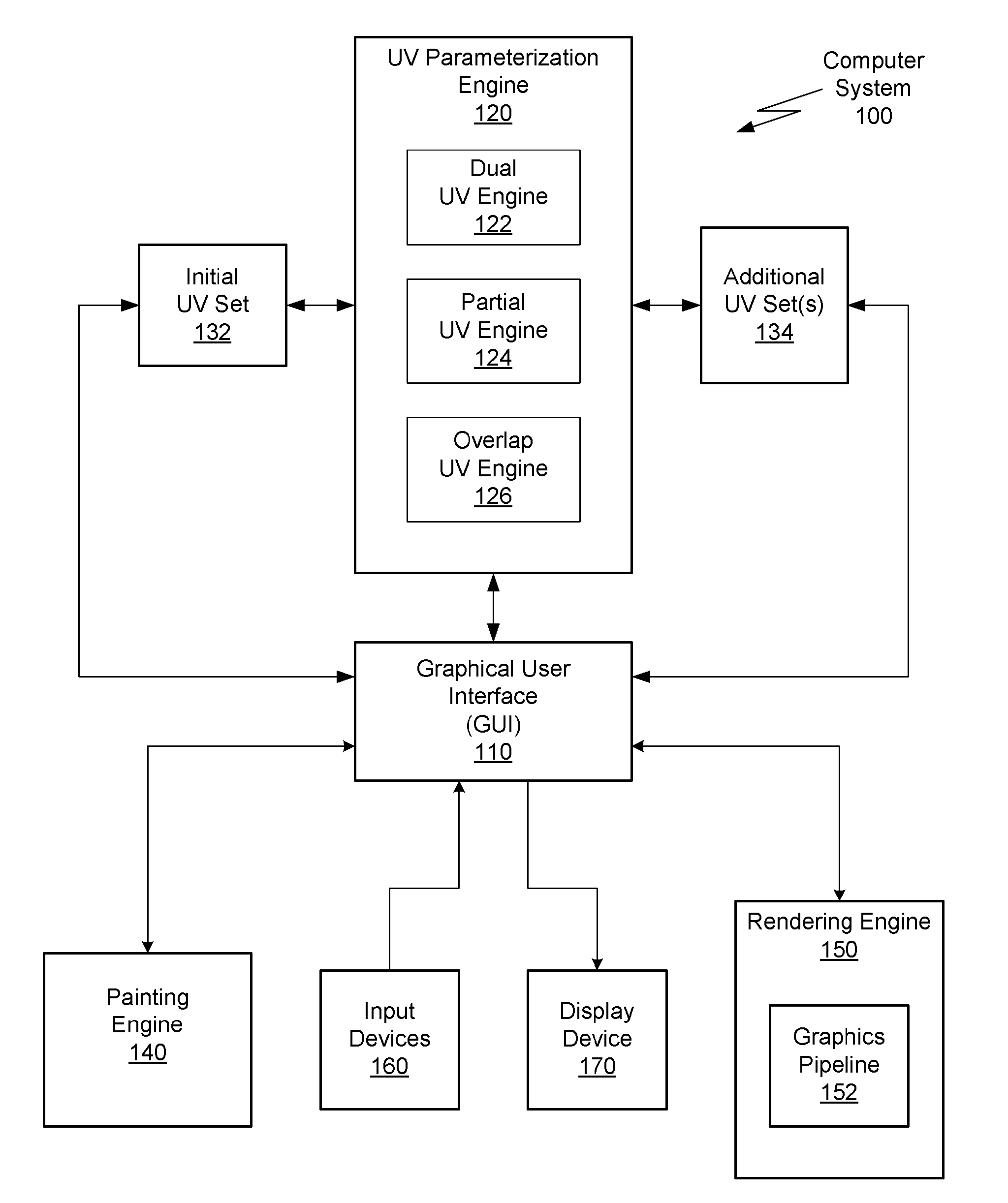
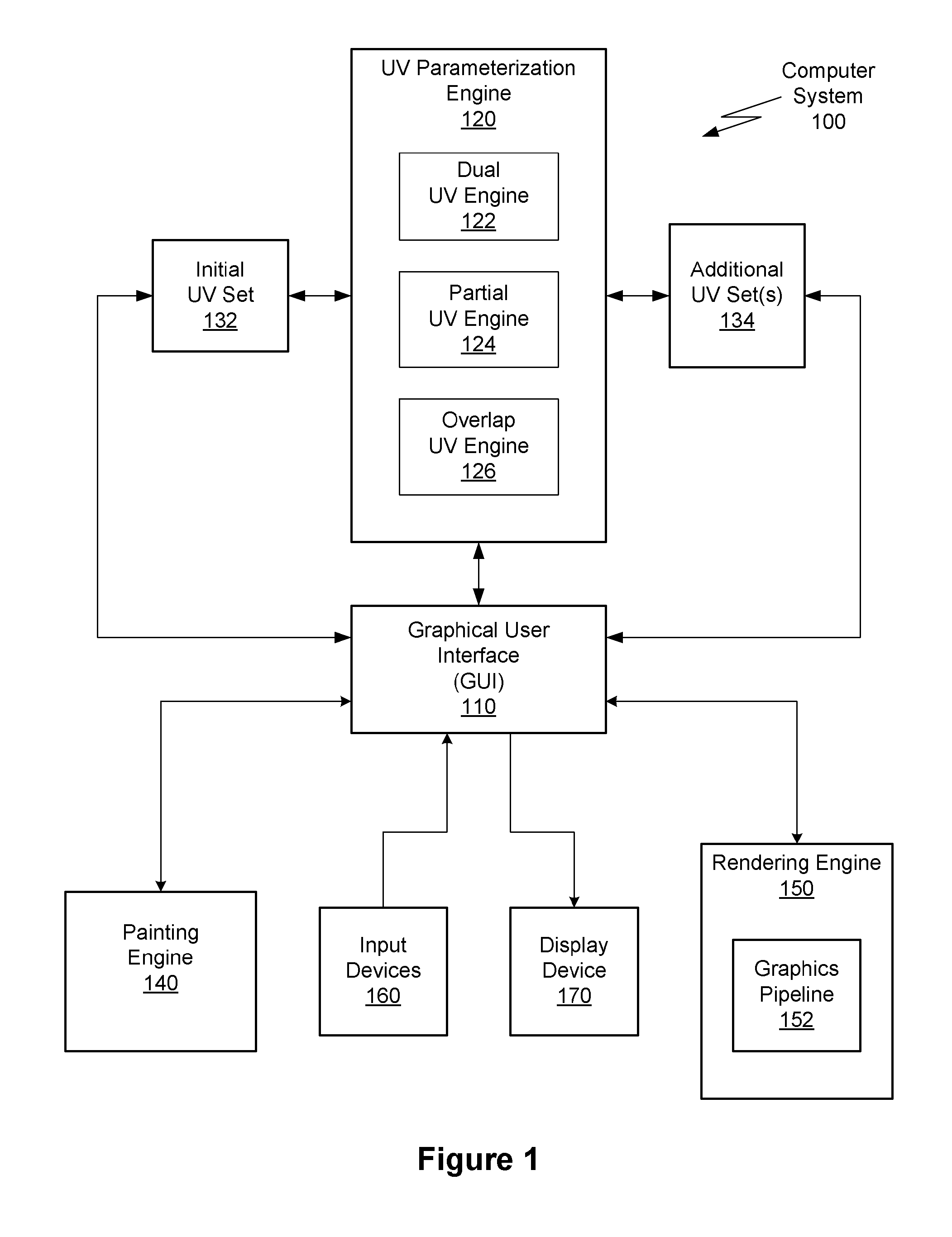
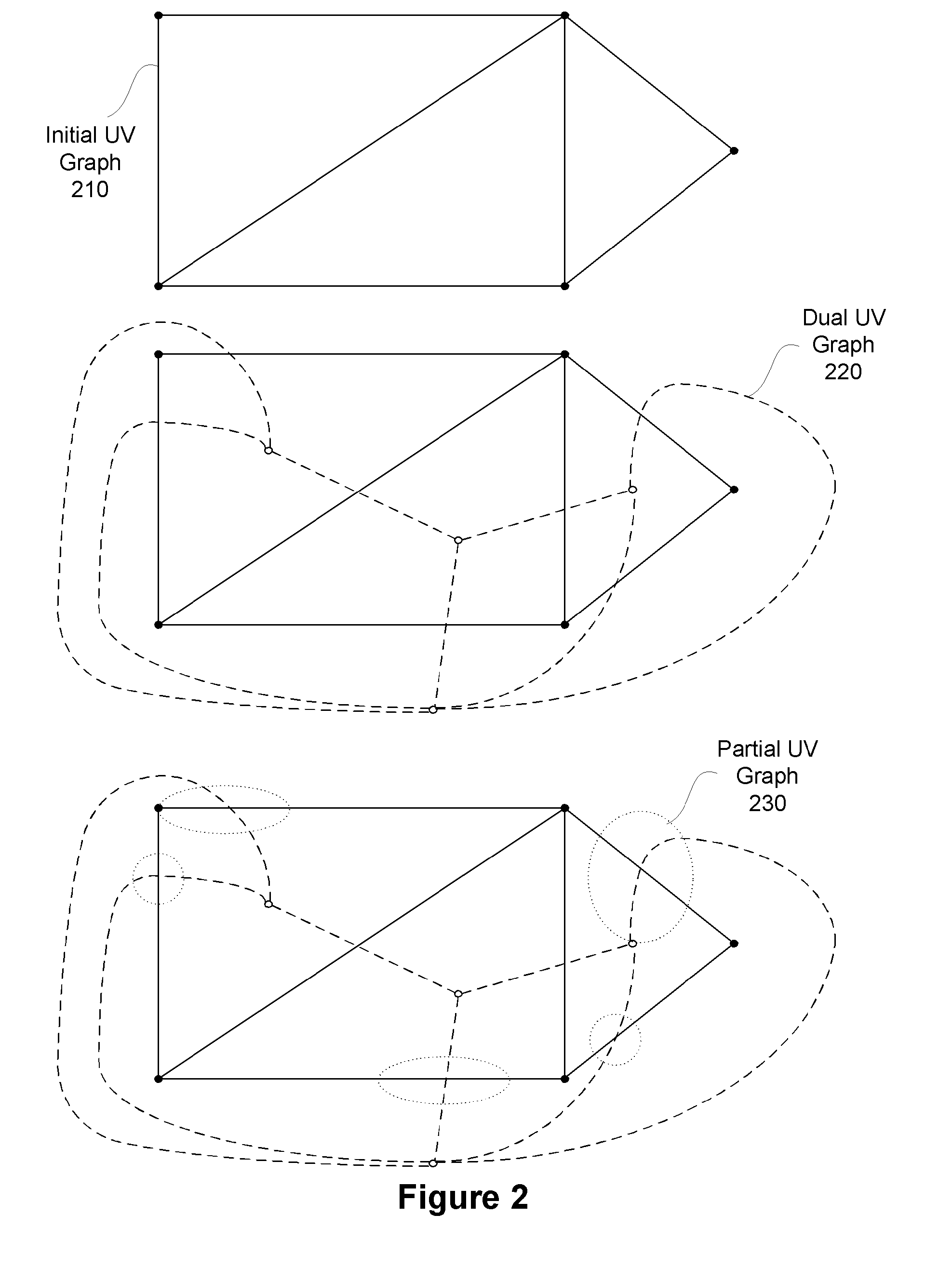
[0021]Embodiments of the invention provide a rendering technique where multiple overlapping UV sets are used to improve the visual quality of a texture rendered on a surface. In one embodiment, one or more UV sets are automatically computed from a first UV set, where the seams of the first UV set fall within the interior of a least one of the UV pieces included in the generated UV sets. That is, the seams of the UV sets do not overlap with one another, although the seams may intersect at single points. For example, the second UV set may be computed from a dual graph representation generated from the first UV set. In an alternative embodiment, UV pieces in the first UV set may be augmented by “growing” UV regions from the “corners” of the seams of the first UV set.
[0022]During a painting process used to generate a texture map, for each triangle (or pixel), it may be determined which UV piece(s) within the UV set(s) contribute to painting that triangle (or pixel). Furthermore, each co...
PUM
 Login to View More
 Abstract
Description
Claims
Application Information
 Login to View More