

Thumb/Fingerprint Activated Pill Dispenser
a dispenser and fingerprint technology, applied in the field of pill dispensers, can solve the problems of diluting or destroying the potency of the remaining pills in the container by spraying
- Summary
- Abstract
- Description
- Claims
- Application Information
AI Technical Summary
Benefits of technology
Problems solved by technology
Method used
Image

Examples
Embodiment Construction
[0031]Other objects, features and advantages of the invention will become apparent from a consideration of the following detailed description and the accompanying drawing.
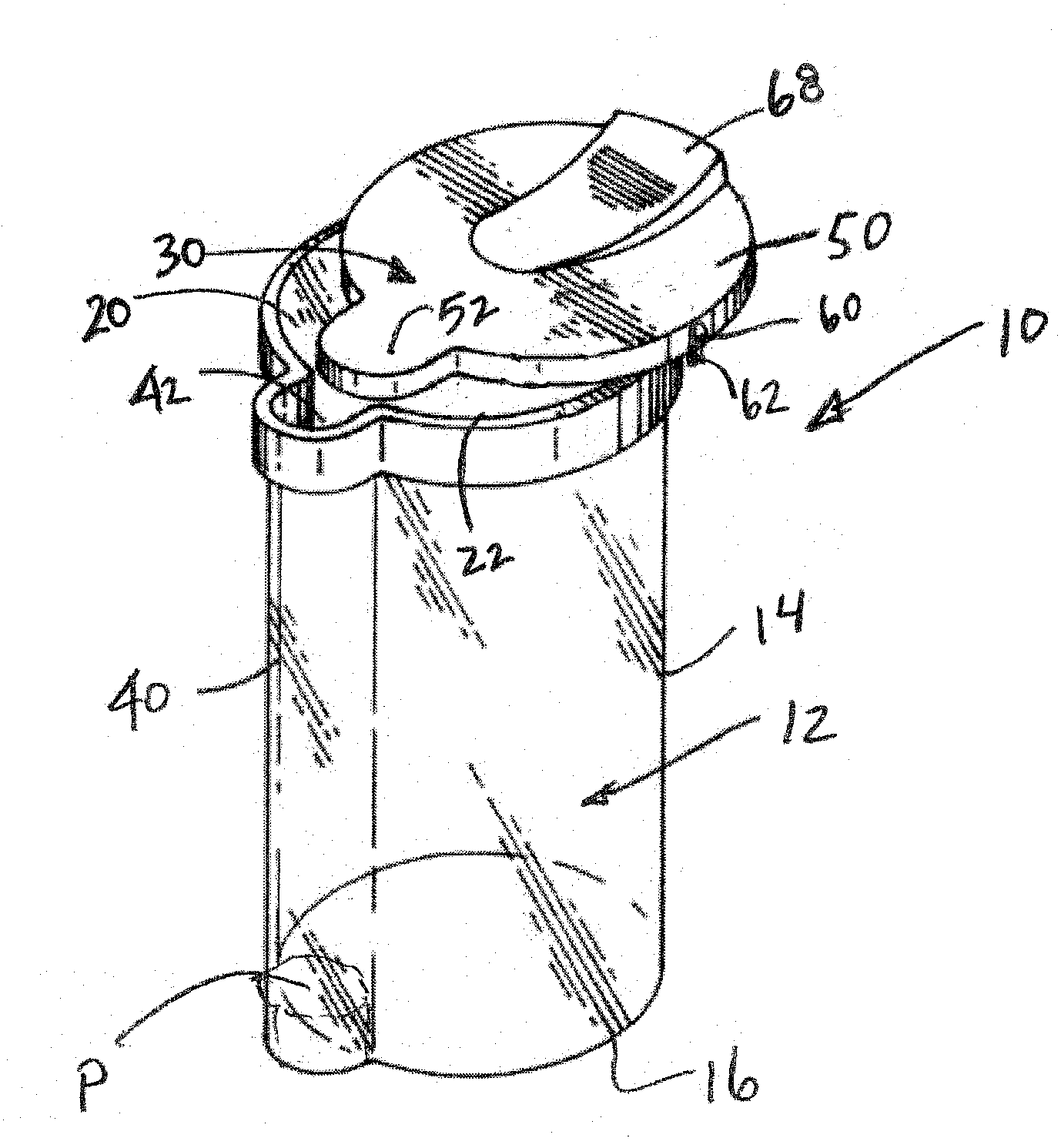
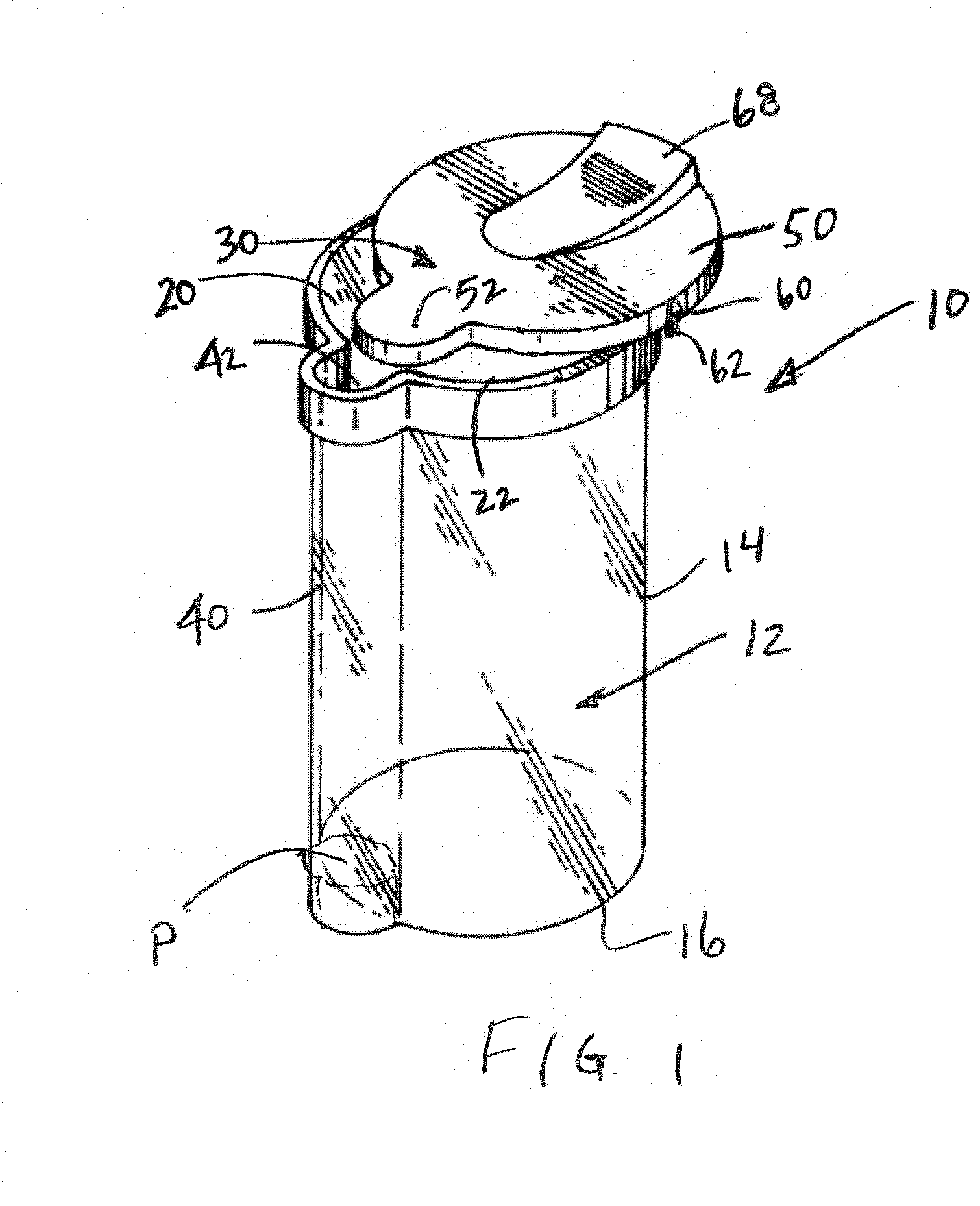
[0032]Referring to the figure, it can be understood that the principles of the present invention is embodied in a pill container / dispenser 10 which comprises a body 12 that includes a cylindrical sidewall 14 that can be translucent if suitable, a first wall 16 that is a bottom wall when the device is in a use orientation such as shown in FIG. 1, and an open mouth 20 that is defined by a rim 22 to which a cap 30 is releasably attached. A cylindrical dispenser pill-dispensing channel 40 is defined on one portion of the sidewall and extends between the first wall and the rim and terminates in a pill-dispensing opening 42 that is co-planar with the open mouth of the sidewall. Pills, or the like, are stored in body 12 for dispensing as needed.
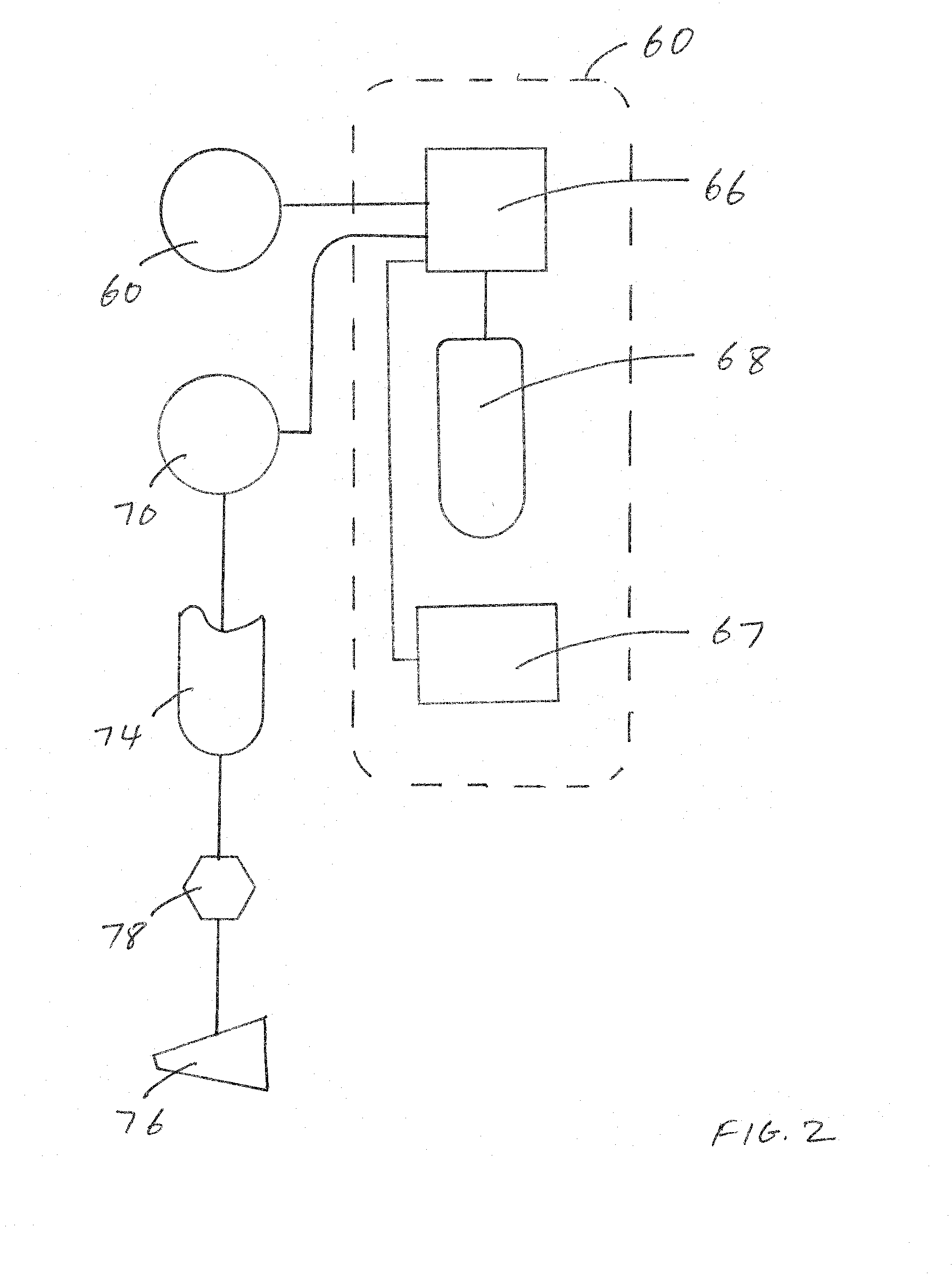
[0033]Cap 30 includes a circular body 50 and an arcuate projection 52, with th...
PUM
 Login to View More
 Abstract
Description
Claims
Application Information
 Login to View More