

Universal donor-derived tolerogenic cells for inducing non-syngeneic transplantation tolerance
a technology of donor-derived tolerogenic cells and non-syngeneic transplantation, which is applied in the direction of biocide, antibody medical ingredients, unknown materials, etc., can solve the problems of diabetes, debilitating and potentially lethal disease, and no satisfactory/optimal treatment is currently available, so as to reduce the concomitant graft rejection, prevent or reduce the subject's graft rejection, and reduce the effect of graft rejection
- Summary
- Abstract
- Description
- Claims
- Application Information
AI Technical Summary
Benefits of technology
Problems solved by technology
Method used
Image

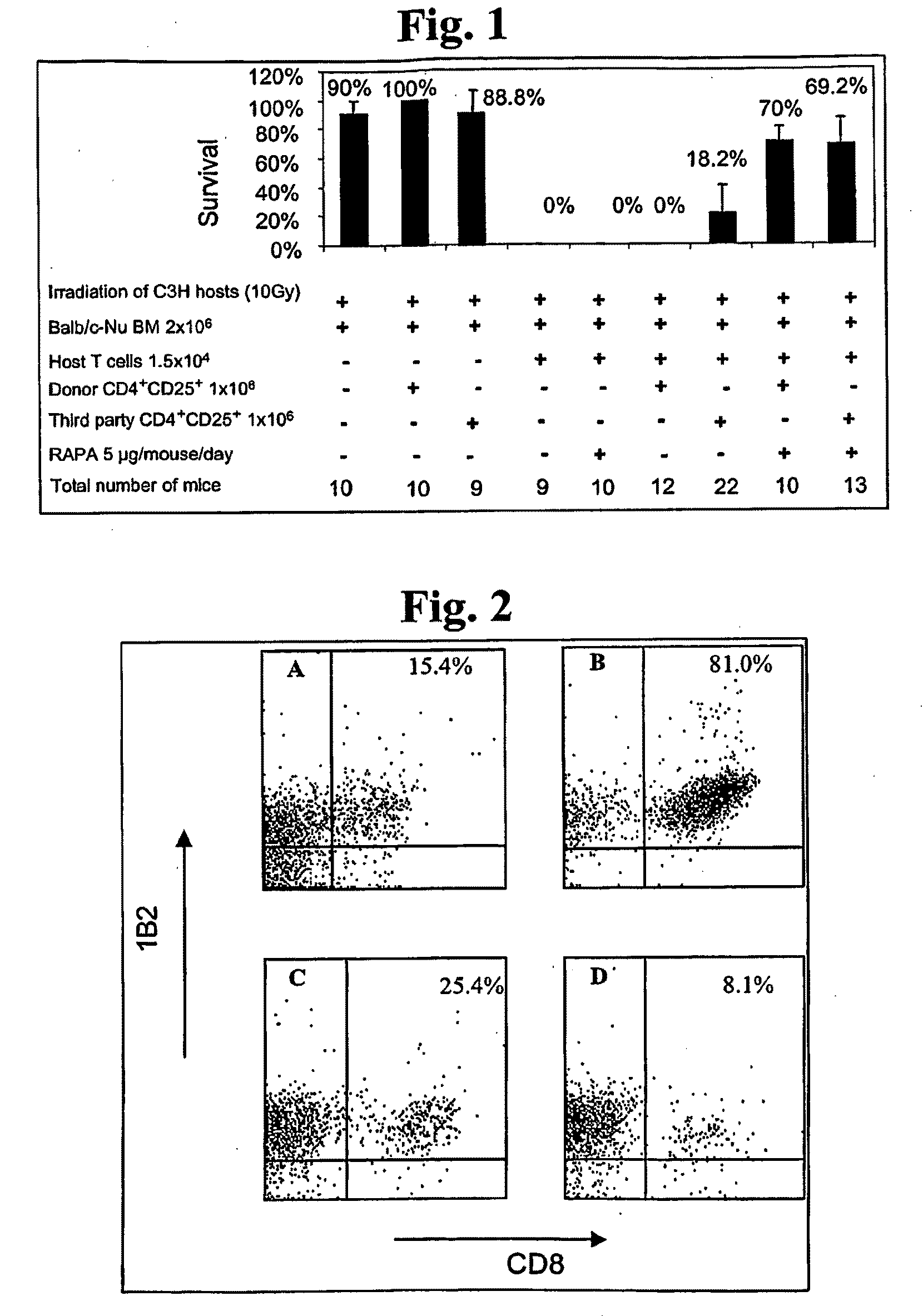
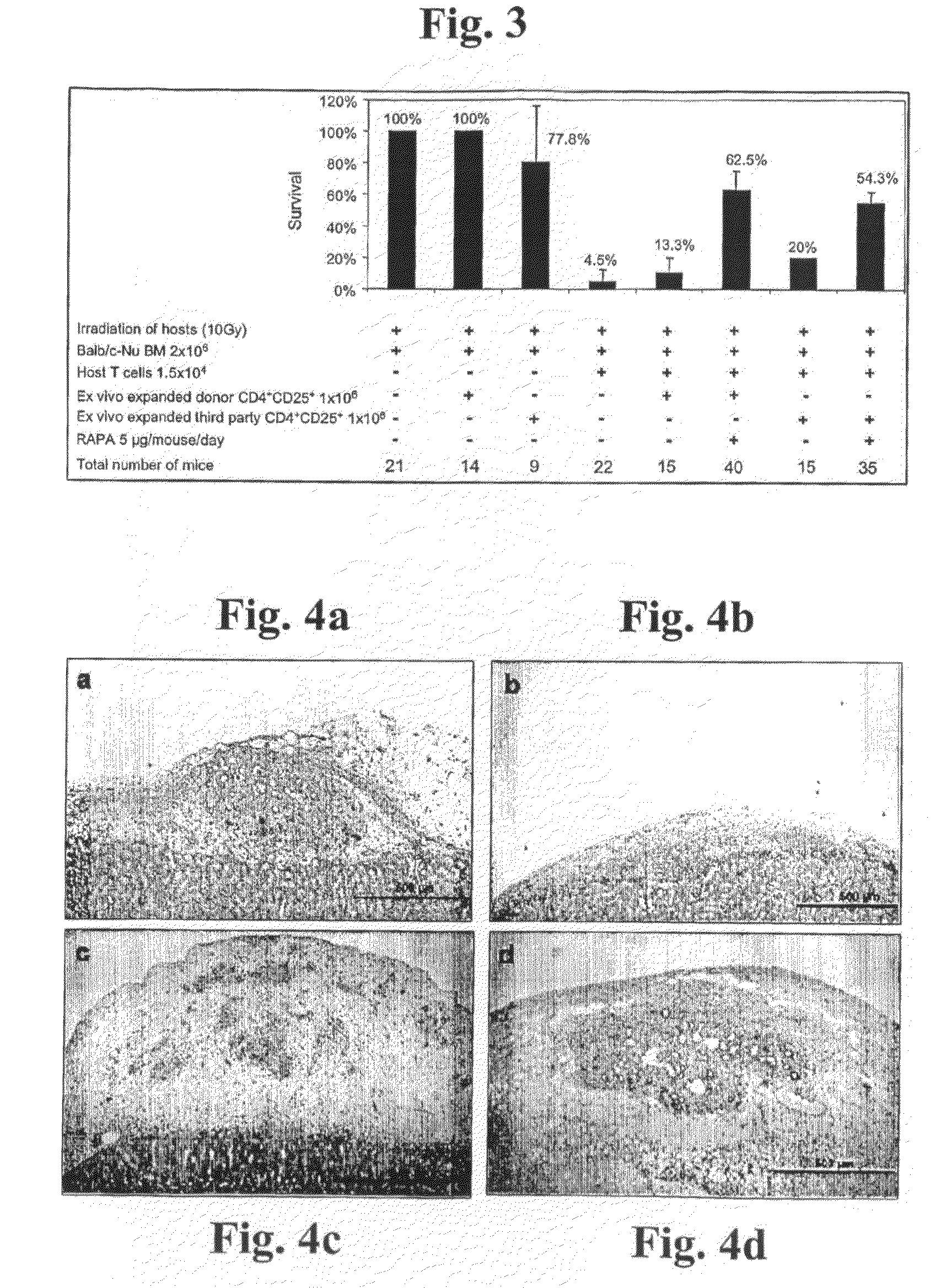
Examples
example 1
Administration of Fully MHC-Mismatched Allogeneic Third-Party CD4+CD25+ Cells Facilitates Life-Saving Engraftment of Fully MHC-Mismatched Bone Marrow Allografts in Supralethally Irradiated Mammalian Subjects
[0212]Diseases which are treatable via treatment regimens involving administration of allografts, such as bone marrow allografts, include numerous highly debilitating / lethal diseases. Current methods of treating diseases by administration of allografts, however, are associated with various critical drawbacks, including unavailability of suitably immunologically matched graft donors, unavailability of sufficient quantities of graft material, graft rejection, graft-versus-host disease (GVHD), and lifelong administration of toxic immunosuppressive drugs such as cyclosporin A to prevent graft rejection / GVHD. A potentially optimal strategy for preventing or reducing allograft rejection involves administration to the graft recipient of CD4+CD25+ cells, a cell type possessing potent tol...
example 2
[0227]Administration of Third-Party CD4+CD25+ Cells Facilitates Immune Tolerance to Xenografts
[0228]Diseases which are treatable via treatment regimens involving administration of non-syngeneic grafts, such as pancreatic grafts, include highly debilitating / lethal diseases, such as diabetes. Current methods of treating diseases by administration of non-syngeneic grafts, however, are associated with various critical drawbacks, including unavailability of suitably immunologically matched allograft donors, and unavailability of sufficient quantities of graft material. A potentially optimal strategy for overcoming these drawbacks involves administration of xenogeneic grafts such as porcine xenografts, which are available in essentially unlimited quantities. Current methods of xenograft transplantation, however, fail to provide satisfactory solutions for preventing hyperacute graft rejection, and hence fail to enable therapeutic xenotransplantation. As such, there is a clearly felt and ur...
PUM
| Property | Measurement | Unit |
|---|---|---|
| body weight | aaaaa | aaaaa |
| weight | aaaaa | aaaaa |
| weight | aaaaa | aaaaa |
Abstract
Description
Claims
Application Information
 Login to View More