

End cap attachment for chemiluminescent light sticks
a technology of chemiluminescent light sticks and end caps, which is applied in the direction of lighting and heating apparatus, light sources, and luminescent, etc., can solve the problems of limiting the type of vessel materials, posing a hazard, and dispensed material from the inner container itself with liquid, so as to reduce the cost of manufacturing and prevent premature separation
- Summary
- Abstract
- Description
- Claims
- Application Information
AI Technical Summary
Benefits of technology
Problems solved by technology
Method used
Image

Examples
Embodiment Construction
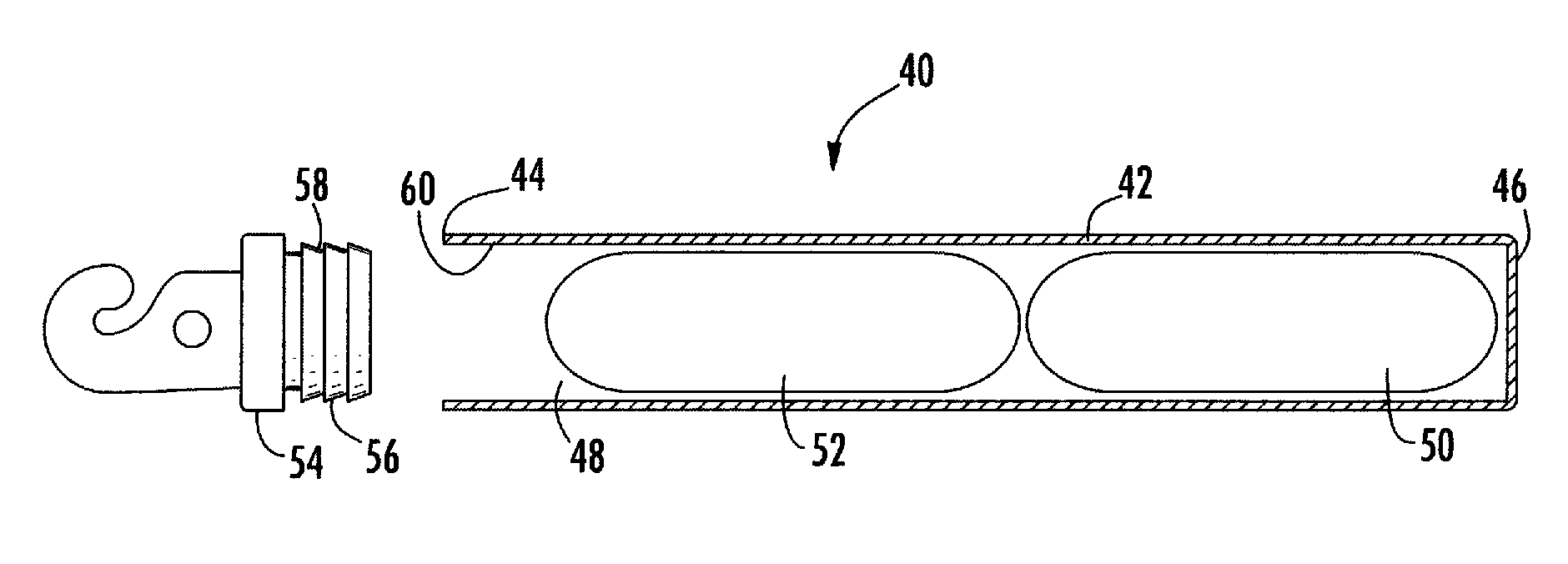
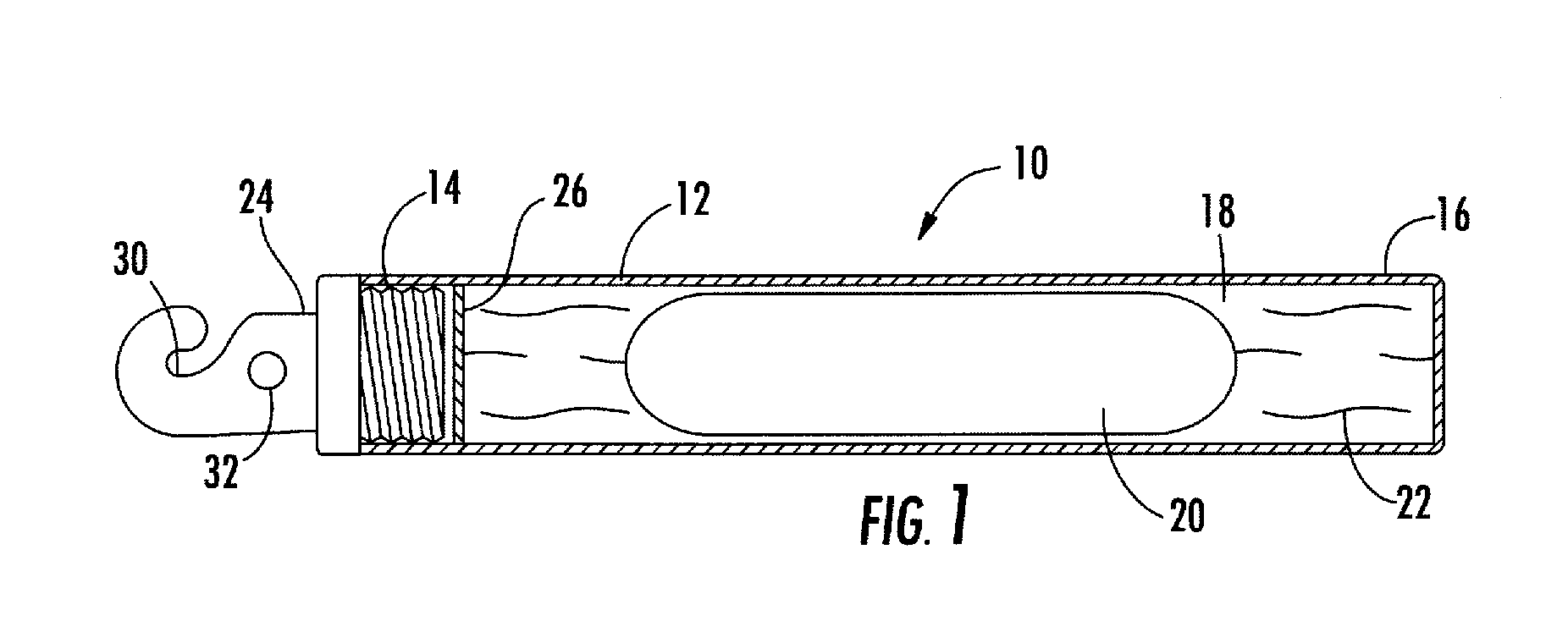
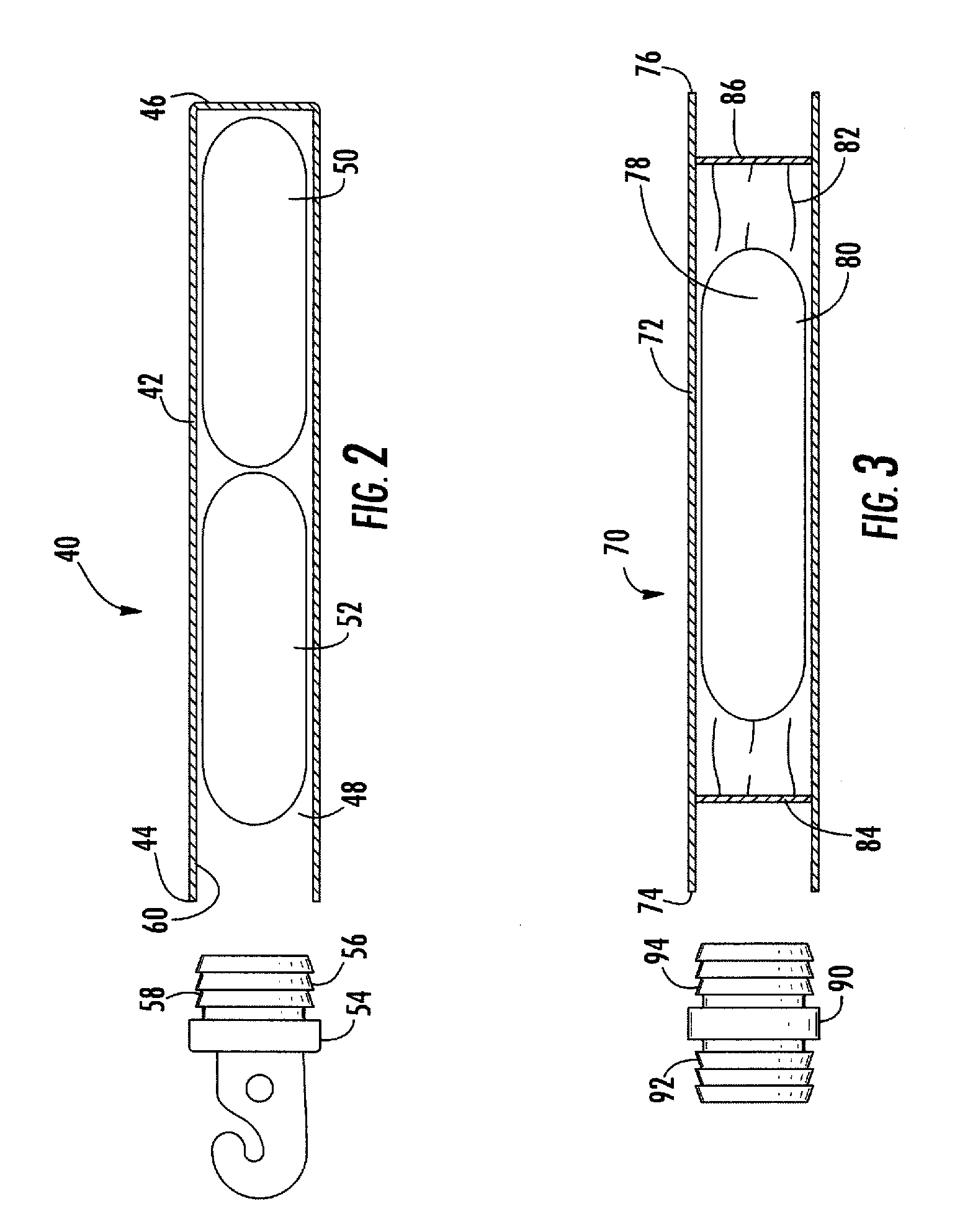
[0031]Referring now to FIG. 1, set forth is a light stick formed from a vessel casing 10 having a translucent continuous side wall 12 with a first end 14 and second end 16 forming a cavity 18 therebetween. The cavity is receives chemiluminescent materials, namely an activator 20 and an oxalate 22. In this embodiment a single end cap 24 is removably inserted into a portion of the vessel casing aperture formed along the first end 14. Further to this embodiment, the vessel casing is sealed by the second end 16 and an end wall 26 adjacent the first end so as to allow the end cap 24 to be shipped without an end cap or otherwise add the end cap with a connector means needed for a particular situation. It should be noted that the connector means may be of most any configuration, FIG. 1 illustrating a hook 30 with pass thru aperture 32 as the connector means. This arrangement of a hook is well known and allows for quick attachment to most any object whereas the pass thru aperture can receiv...
PUM
 Login to View More
 Abstract
Description
Claims
Application Information
 Login to View More