
Methods for Diagnosis and Treatment of Endometrial Cancer
a technology for endometrial cancer and diagnosis, applied in the field of endometrial cancer detection and treatment, can solve the problems of heterogeneity in this population, low predictive power, and risk of recurrence and death, and achieve the effect of reducing the surface expression of integrins and/or fibronectin
- Summary
- Abstract
- Description
- Claims
- Application Information
AI Technical Summary
Benefits of technology
Problems solved by technology
Method used
Image

Examples
example 1
[0155]EMP2 is spatially and temporally regulated during the window of implantation in the endometrium.
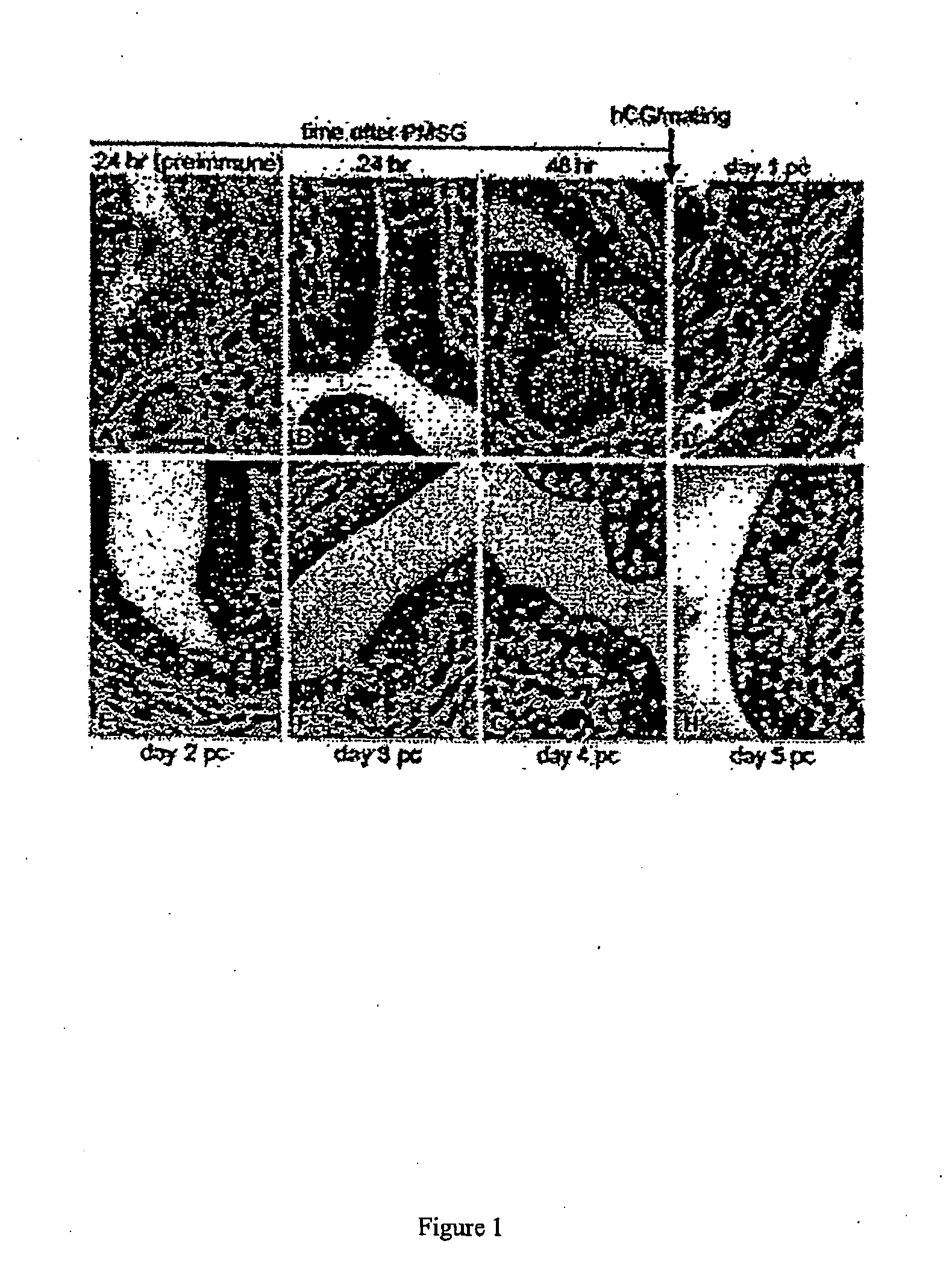
[0156]EMP2, which is highly expressed in the uterus, translocates from an intracellular location to the apical surface of the endometrial epithelium during implantation in mice (FIG. 1).
[0157]EMP2 expression is regulated in part by steroid sex hormones.
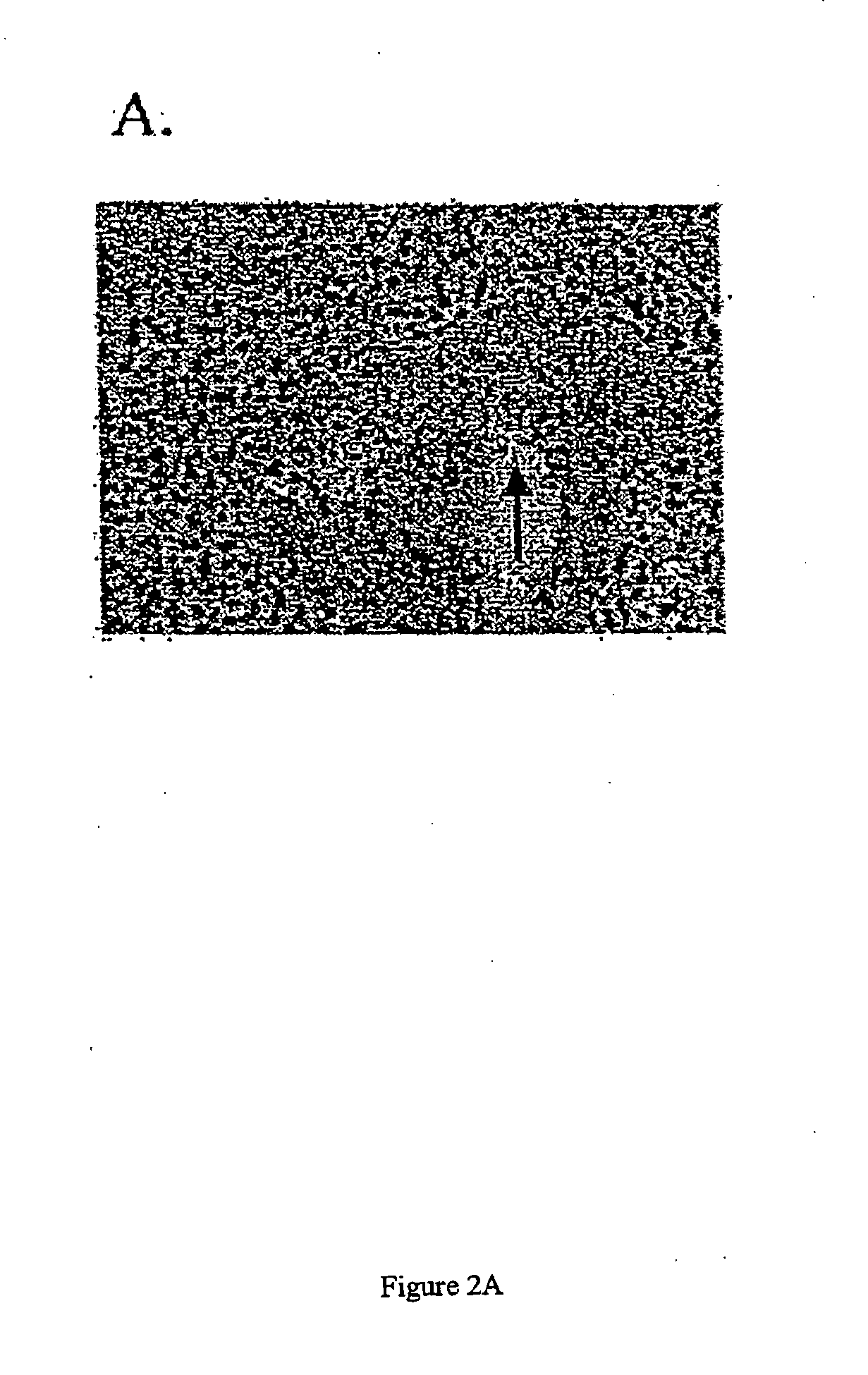
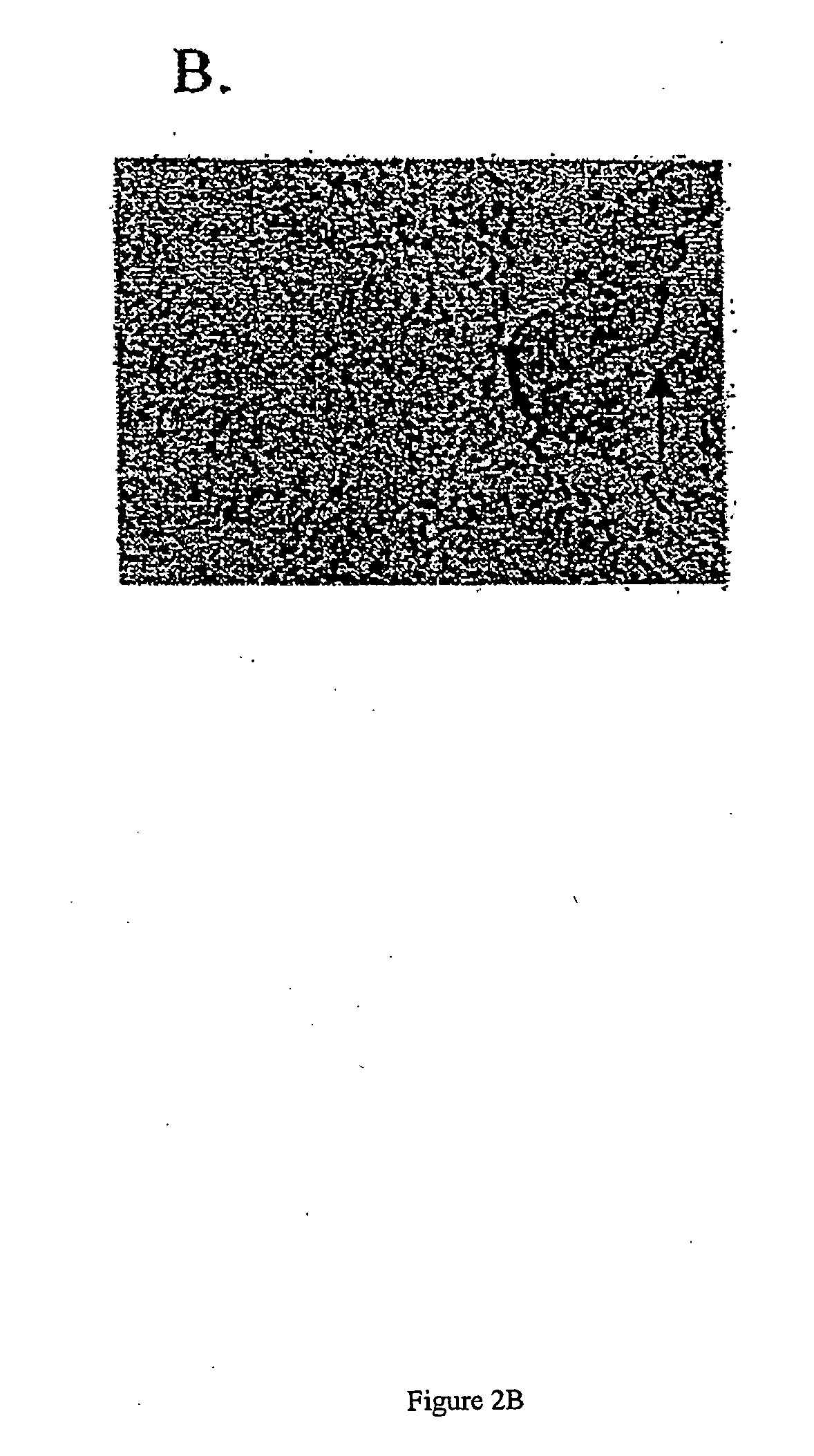
[0158]Normal endometrium is a dynamic organ, with a phenotype that alters with the menstrual cycle. Simply, this can be described as an interplay between estrogen during the proliferative phase and progesterone during the secretory phase (Mutter et al., Gynecol Oncol (2001) 83:177-185). First, FIG. 1 shows that EMP2 is temporally regulated in mice. Similarly in humans, EMP2 expression is upregulated in secretory endometrium compared to the proliferative phase (FIG. 2). This data suggests that EMP2 is in part regulated by progesterone. To support this conclusion, human and mouse promoters were analyzed using the Genomatrix MatInspector...
example 2
Phage Display Generated Antibodies
[0179]Phage display, first established by Smith et al in 1985, has provided an in vitro immune system which can be used to create high affinity antibodies to virtually any antigens with a bare minimal recognition region (Bradbury, A. R. & Marks, J. D., Immunol Methods (2004) 290:29-49; Marks, J. D. & Bradbury, A., Methods Mol Biol (2004) 248:161-76; Pavlik, P. et al., Hum Antibodies (2003) 12:99-112; Persic, L. et al., FEBS Lett (1999) 443:112-6; Smith, G. P., Science (1985) 228:1315-7). Selection of antibody using phage antibody libraries with filamentous phase and phagemids mimics humoral immune system that lack cell-mediated responses. Thus, generation of purified antibodies with affinities comparable to ones made by conventional hybridoma technology can be achieved without complications such as self-tolerance, T cell help and antigen presentation (Bradbury, A. R. & Marks, J. D., J Immunol Methods (2004) 290:29-49; Pavlik, P. et al., Hum Antibodi...
PUM
| Property | Measurement | Unit |
|---|---|---|
| Tm | aaaaa | aaaaa |
| temperature | aaaaa | aaaaa |
| temperature | aaaaa | aaaaa |
Abstract
Description
Claims
Application Information
 Login to View More