
Binaural multi-channel decoder in the context of non-energy-conserving upmix rules
a multi-channel decoder and upmixing technology, applied in the field of binaural decoding of multi-channel audio signals, can solve the problems of energy error, unfavorable spectral coloring of binaural output, and one will receive artifacts which are particularly serious
Patent Information
- Authority / Receiving Office
- US · United States
- Patent Type
- Applications(United States)
- Current Assignee / Owner
- Publication Date
- 2011-04-21
Smart Images
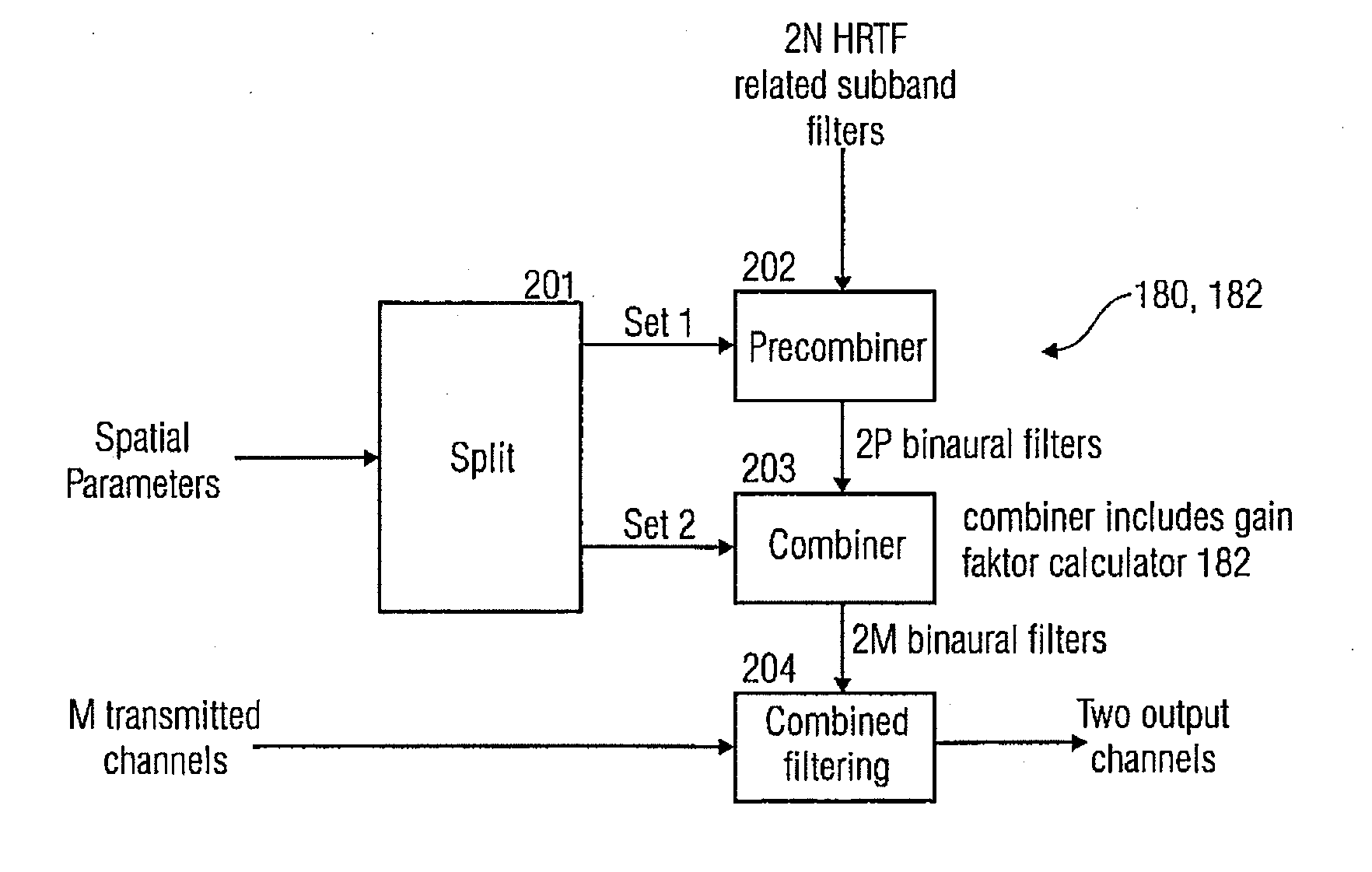
Figure 1 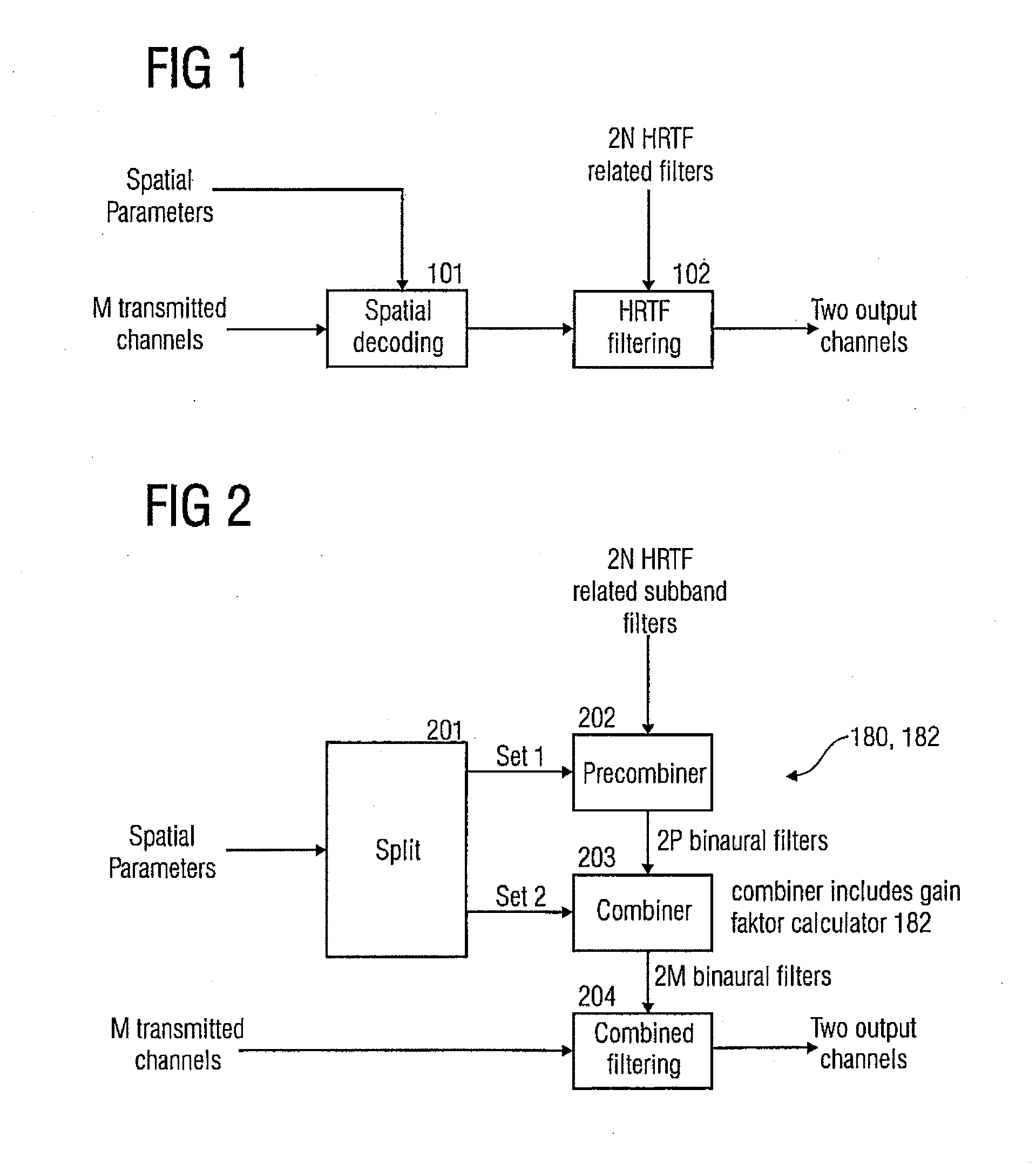
Figure 2 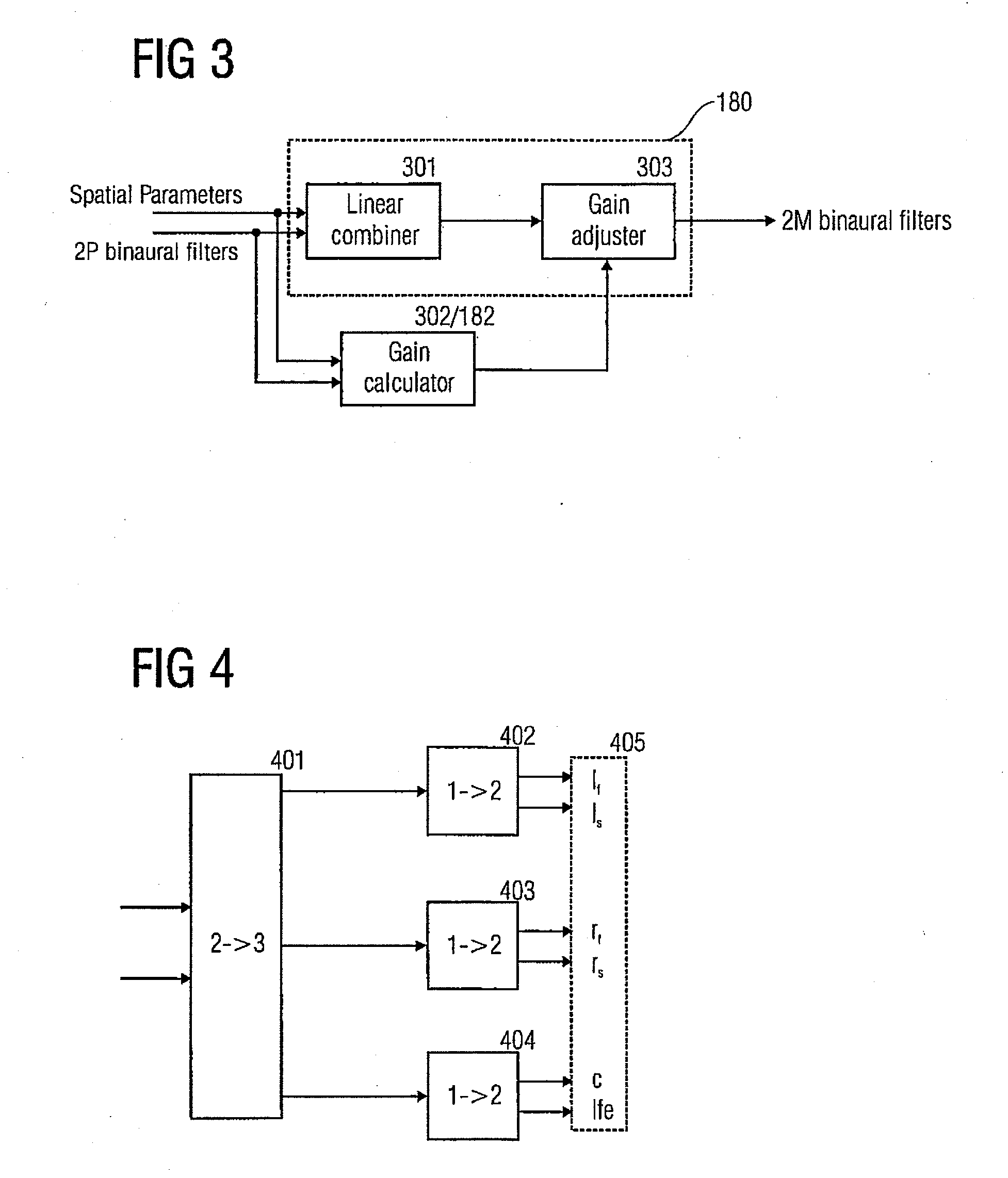
Figure 3
Abstract
Description
CROSS-REFERENCE TO RELATED APPLICATIONS
[0001] This application is a divisional of U.S. patent application Ser. No. 11 / 469,818 filed Sep. 1, 2006 which claims priority to U.S. patent application Ser. No. 60 / 803,819 filed Jun. 2, 2006 which is incorporated herein in its entirety by this reference made thereto.FIELD OF THE INVENTION
[0002] The present invention relates to binaural decoding of multi-channel audio signals based on available downmixed signals and additional control data, by means of HRTF filtering.BACKGROUND OF THE INVENTION AND PRIOR ART
[0003] Recent development in audio coding has made methods available to recreate a multi-channel representation of an audio signal based on a stereo (or mono) signal and corresponding control data. These methods differ substantially from older matrix based solution such as Dolby Prologic, since additional control data is transmitted to control the re-creation, also referred to as up-mix, of the surround channels based on the transmitted mono ...
Examples
Embodiment Construction
[0042]Before discussing the inventive gain adjusting aspect in detail, a combination of HRTF filters and usage of HRTF-based filters will be discussed in connection with FIGS. 7 to 11.
[0043]In order to better outline the features and advantages of the present invention a more elaborate description is given first. A binaural synthesis algorithm is outlined in FIG. 7. A set of input channels is filtered by a set of HRTFs. Each input signal is split in two signals (a left ‘L’, and a right ‘R’ component); each of these signals is subsequently filtered by an HRTF corresponding to the desired sound source position. All left-ear signals are subsequently summed to generate the left binaural output signal, and the right-ear signals are summed to generate the right binaural output signal.
[0044]The HRTF convolution can be performed in the time domain, but it is often preferred to perform the filtering in the frequency domain due to computational efficiency. In that case, the summation as shown...