
Heavy metal remediation system
a heavy metal and remediation system technology, applied in biological water/sewage treatment, instruments, microorganisms, etc., can solve the problems of toxic forms, heavy metals are toxic, mercury, lead, cadmium is considered particularly toxic, etc., and achieve the effect of convenient handling
- Summary
- Abstract
- Description
- Claims
- Application Information
AI Technical Summary
Benefits of technology
Problems solved by technology
Method used
Image

Examples
example 1
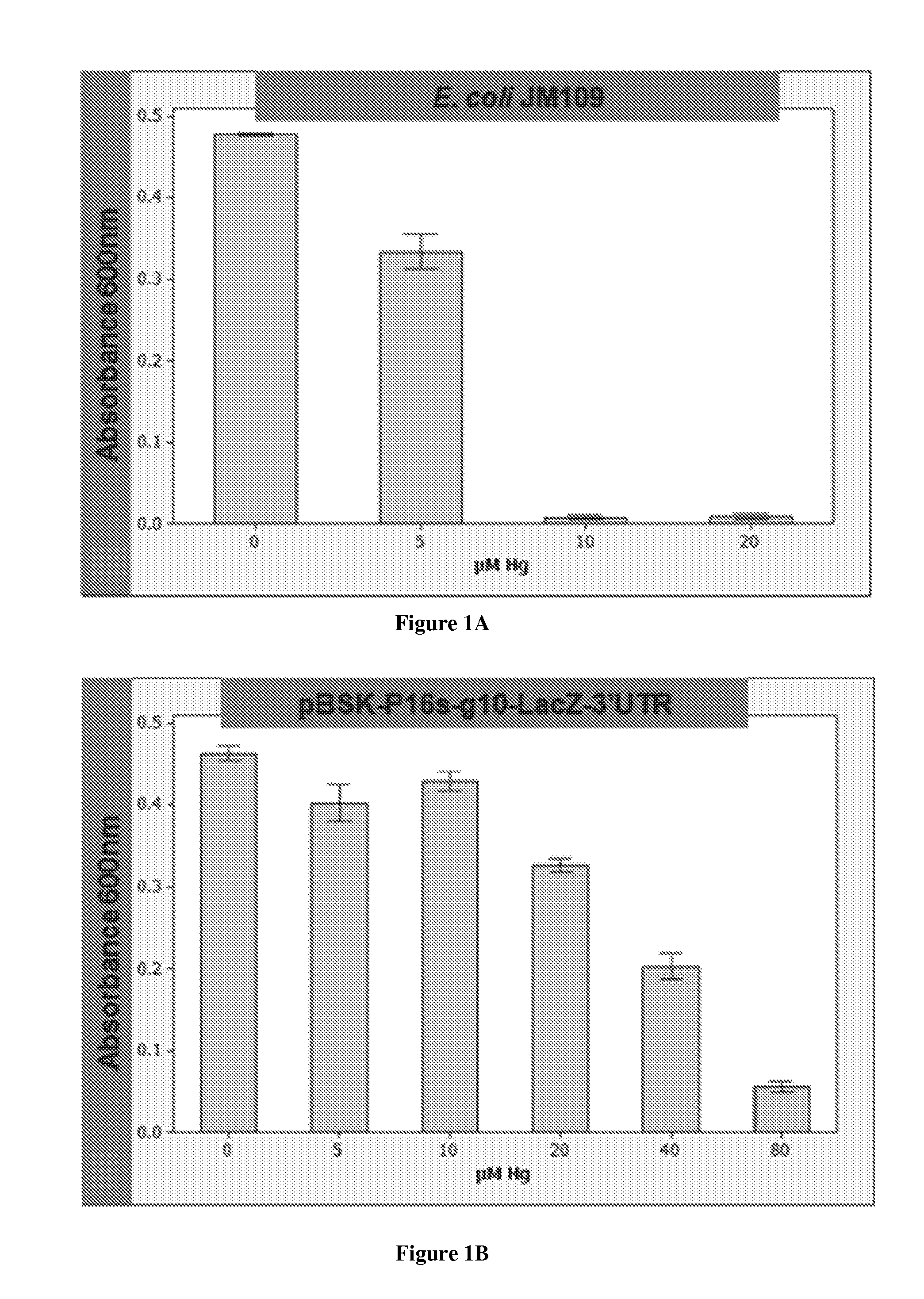
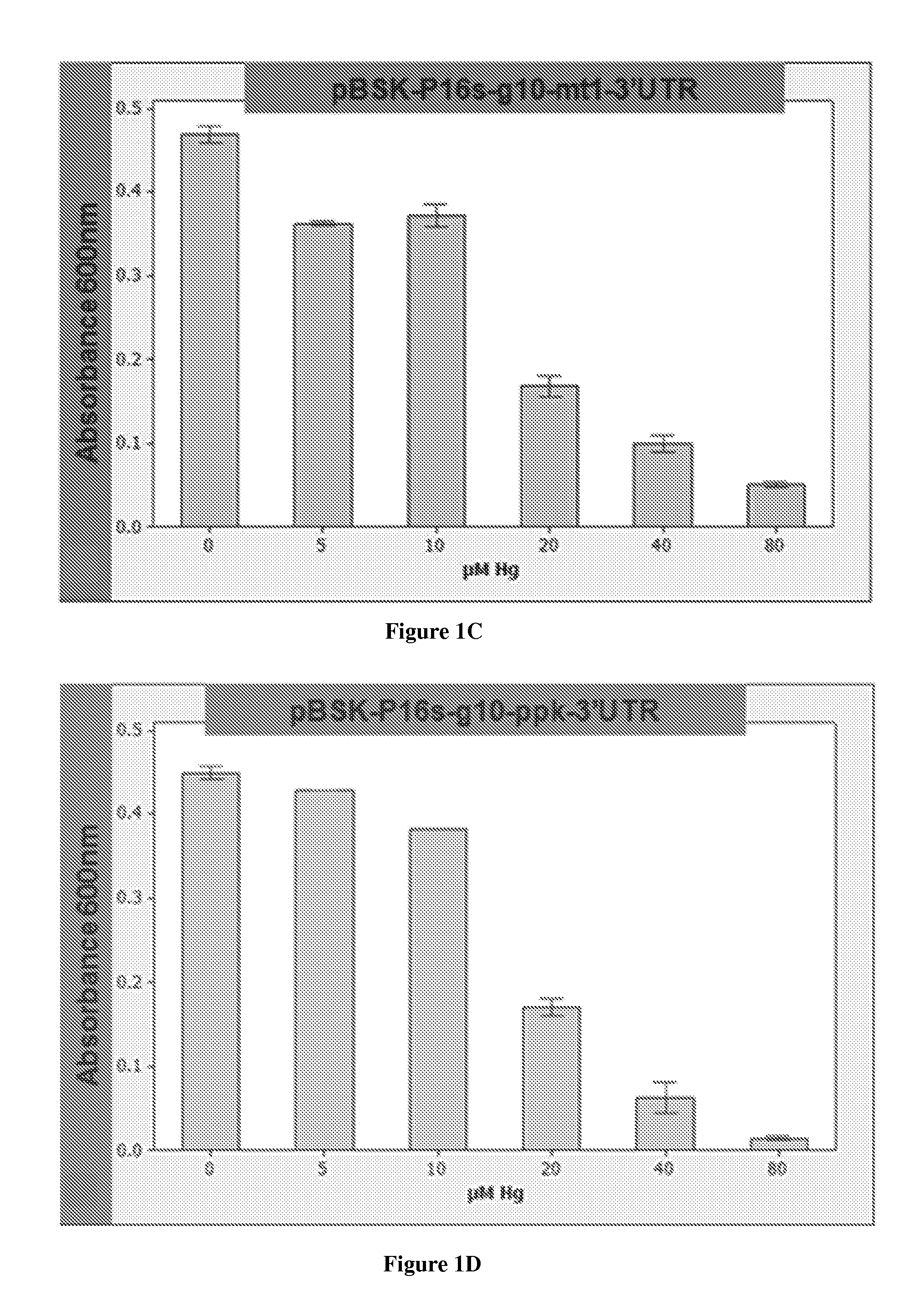
The sequestration agents of the invention provide tolerance to and allow bacterial growth in the presence of high concentrations of mercury, cadmium, zinc, and lead. In one embodiment of the present invention, a plasmid comprising a vector sold under the trademark pBlueScript® (Stratagene) was constructed to express transgenes at high level. The expression cassette in this vector comprised: the plastid 16S rrn gene promoter; the 5′UTR translational enhancer element is from bacteriophage T7 gene 10; the transgene; and the 3′UTR Rho-independent terminator as shown in FIG. 5. In one embodiment, the 3′ UTR was the chloroplast rps16 sequence. The 5′UTR from Gene 10 was created from synthetic oligonucleotides. The other regulatory sequences were constructed via polymerase chain reaction. The genetic elements were created to comprise convenient restriction enzyme sites near the termini of each element. These methods are well known to artisans skilled in the art. See, for example, Sambrook,...
example 2
The constructs of the invention (pBSK-P16S-g10-chelator agent-3′UTR) transcribed the chelator agent element to very high levels. mRNA was collected from untransformed bacteria and the mt1 and ppk expressing bacterial clones. The total cellular RNA was isolated by using the RNeasy Mini Kit (Qiagen) and protocol from 1 ml of bacterial clones and untransformed E. coli JM109 cultures grown in Luria Bertani (LB) broth for 16 hours at 37° C. with 300 rpm agitation. The RNA samples were treated with DNAse I at a concentration of 100 μg / ml. The samples were normalized and reversed transcribed by random primer amplification using the AccuScript cDNA Kit (Stratagene). The cDNA was analyzed by quantitative real-time PCR using a two-step real-time PCR amplification program with post-amplification melt curve analysis. Gene-specific standard curves were produced for quantification from synthetic oligonucleotide. Real time PCR using transgene specific primers produced cDNA, in proportional amounts...
example 3
Bacteria containing the sequestration agents of the invention form aggregates when they accumulate mercury. Dark coloring, aggregation and precipitation were observed when the bacteria were grown in mercury at sufficiently high concentrations or at lower concentrations for sufficient lengths of time. For example, as shown in FIG. 6, pBSK-P165-g10 (5′UTR)-mt1-3′UTR (“mt1”) and pBSK-P165-g10 (5′UTR)-lacZ-3′UTR (“lacZ”) samples after incubation in LB media containing 120 μM Hg form aggregates that accumulate at the bottom of the container. Similar effects were also observed with transgenic bacteria comprising the mt1 or ppk genes grow in the presence of 80 μM mercury. The changes were observed after about 24 hours and they increased over time, proportional with accumulation. All the three bacterial clones were grown with agitation (at about 280 rpm) in a 15 ml conical tube. The aggregation and precipitation occurred during agitation, without the need for a stationary incubation. These ...
PUM
| Property | Measurement | Unit |
|---|---|---|
| Mass | aaaaa | aaaaa |
| Molar density | aaaaa | aaaaa |
| Molar density | aaaaa | aaaaa |
Abstract
Description
Claims
Application Information
 Login to View More