Capacity customization for fraud filtering

a fraud filtering and capacity customization technology, applied in the field of capacity customization for fraud filtering, can solve the problems of false-positive identification of fraud, fraud is a growing concern, financial institution fraud costs financial institutions and consumers billions of dollars each year, etc., to achieve the effect of increasing the software seats, reducing the cpu speed, and varying the capacity of the system

US20130024361A1Active Publication Date: 2013-01-24BANK OF AMERICA CORP
18 Cites 38 Cited by

Patent Information

Authority / Receiving Office
US · United States
Patent Type
Applications(United States)
Current Assignee / Owner
Publication Date
2013-01-24

Smart Images

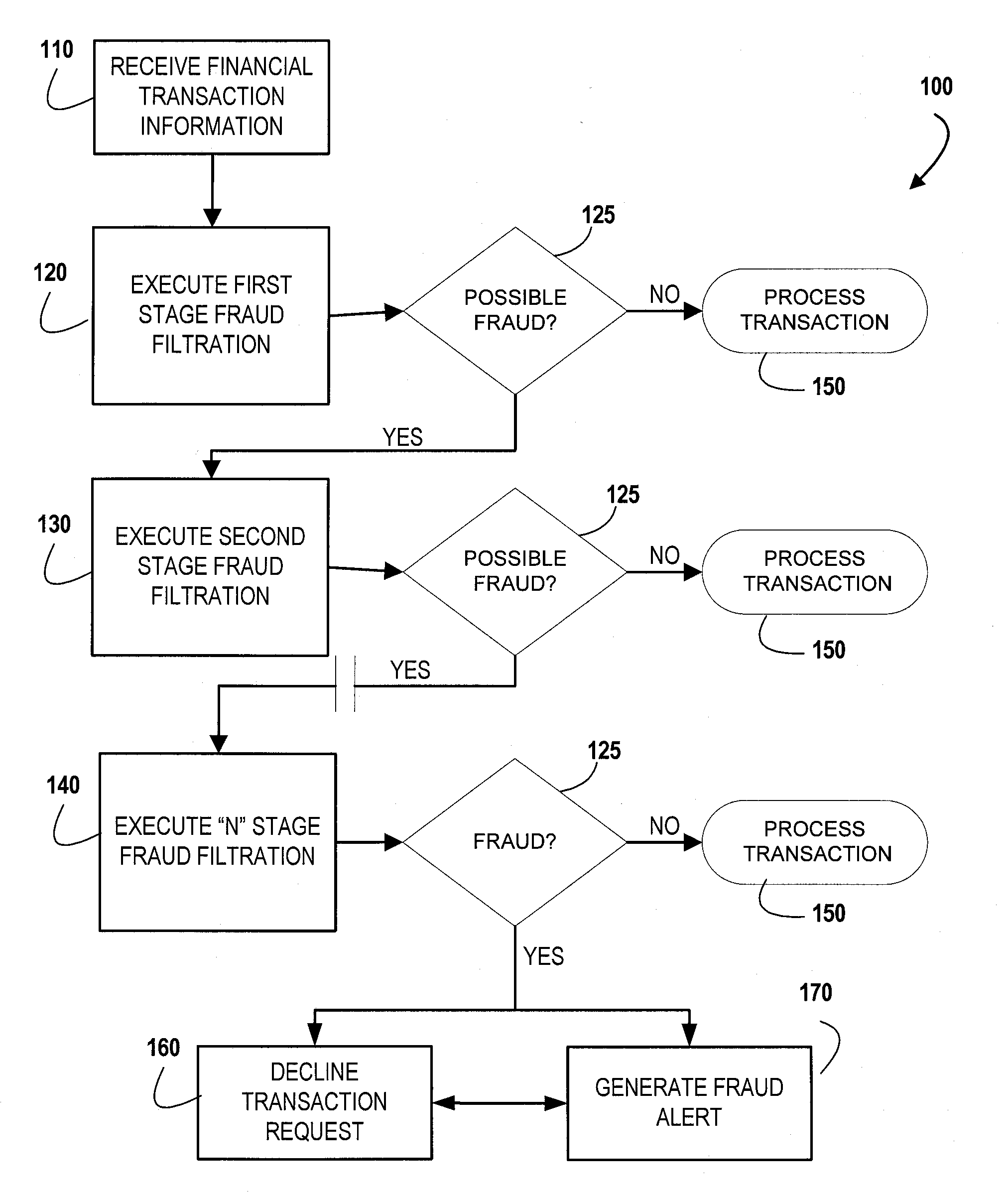
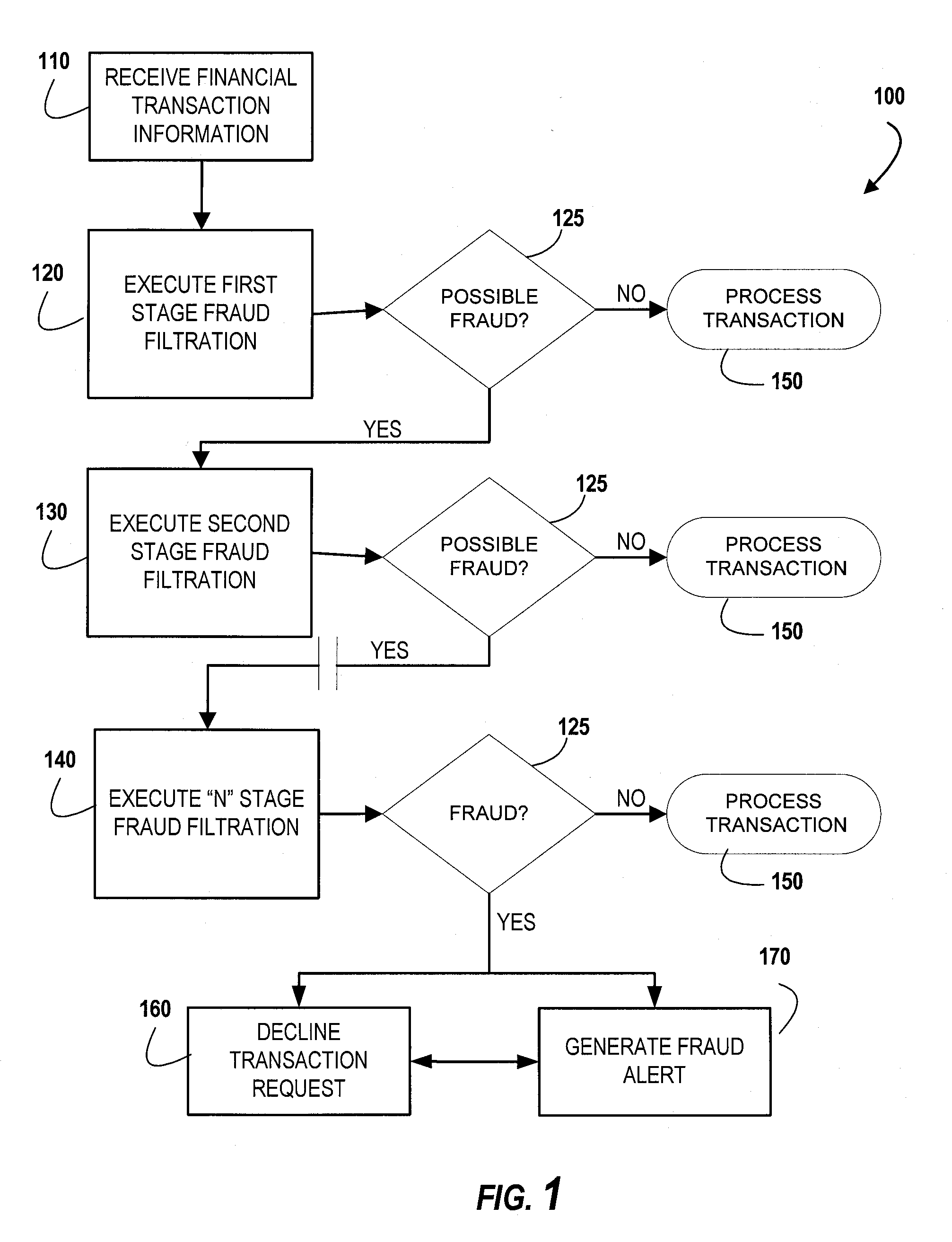
  • Figure 1
    Figure 1
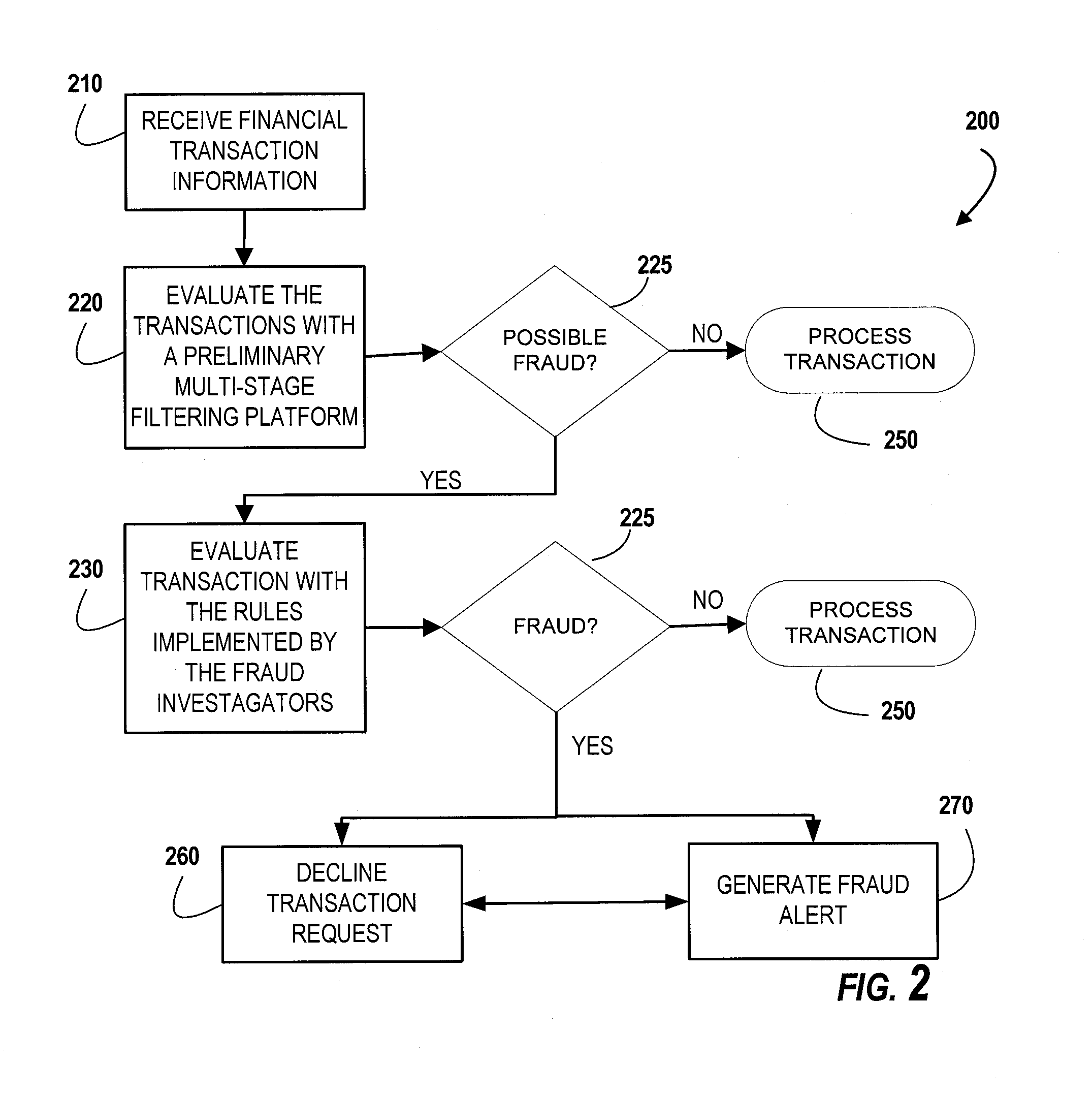
  • Figure 2
    Figure 2
  • Figure 3
    Figure 3
Patent Text Reader

Abstract

A multi-stage filtering process and system for fraud detection is disclosed. The multi-stage filtering process allows for the ability to dynamically increase / decrease server capacity, as well as application capacity to support fraud detection activities. The system monitors the queues of the transactions being made using various channels, and responds by adjusting the server and application resources needed for performing pre-filtering on the transactions in the queues. The invention allows for the fraud detection systems to maintain the capacity necessary to examine, at some level, if one or more of the transactions being processed by a financial institution are potentially fraudulent. The capacity can be changed during times of high and low volumes, thus allowing the allocation of resources based on transaction volume, which reduces the computing, energy, labor, etc. costs associated with fraud detection systems without losing the ability to detect almost all of the fraudulent transactions occurring.
Need to check novelty before this filing date? Find Prior Art

Description

BACKGROUND

[0001] Financial institution fraud costs financial institutions and consumers billions of dollars each year. With the advancement of technology, fraud is a growing concern. Indeed, criminals have devised schemes for stealing customer identities and for conducting fraudulent activity. Conventional fraud detection systems generally analyze each transaction (or types of transactions) in the same manner. As such, criminals have learned to exploit gaps in conventional fraud detection techniques leading to the processing of fraudulent transactions. Conversely, in many instances, in an attempt to eliminate as many fraudulent transactions as possible, conventional fraud detection systems are too strict, resulting in false-positive identifications of fraud and increased data storage costs. False-positives fraud identifications lead to legitimate transactions being declined causing loss of revenue to the financial institution as well as heightened consumer frustration. As such, a nee...

Examples

Embodiment Construction

[0039]Embodiments of the invention now may be described more fully hereinafter with reference to the accompanying drawings, in which some, but not all, embodiments of the invention are shown. Indeed, the invention may be embodied in many different forms and should not be construed as limited to the embodiments set forth herein; rather, these embodiments are provided so that this disclosure may satisfy applicable legal requirements. Like numbers refer to like elements throughout.

[0040]Where possible, any terms expressed in the singular form herein are meant to also include the plural form and vice versa, unless explicitly stated otherwise. Also, as used herein, the term “a” and / or “an” shall mean “one or more,” even though the phrase “one or more” is also used herein. Furthermore, when it is said herein that something is “based on” something else, it may be based on one or more other things as well. In other words, unless expressly indicated otherwise, as used herein “based on” means...