

Total field of view classification for head-mounted display
a head-mounted display and classification technology, applied in the field of total field of view classification for head-mounted displays, can solve the problems of occluding the normal hmd wearer's normal, distracting and obtrusive virtual images,
- Summary
- Abstract
- Description
- Claims
- Application Information
AI Technical Summary
Benefits of technology
Problems solved by technology
Method used
Image

Examples
Embodiment Construction
[0014]The subject matter of the present invention is described with specificity herein to meet statutory requirements. However, the description itself is not intended to limit the scope of this patent. Rather, the inventors have contemplated that the claimed subject matter might also be embodied in other ways, to include different steps or combinations of steps similar to the ones described in this document, in conjunction with other present or future technologies. Moreover, although the terms “step” and / or “block” may be used herein to connote different elements of methods employed, the terms should not be interpreted as implying any particular order among or between various steps herein disclosed unless and except when the order of individual steps is explicitly described.
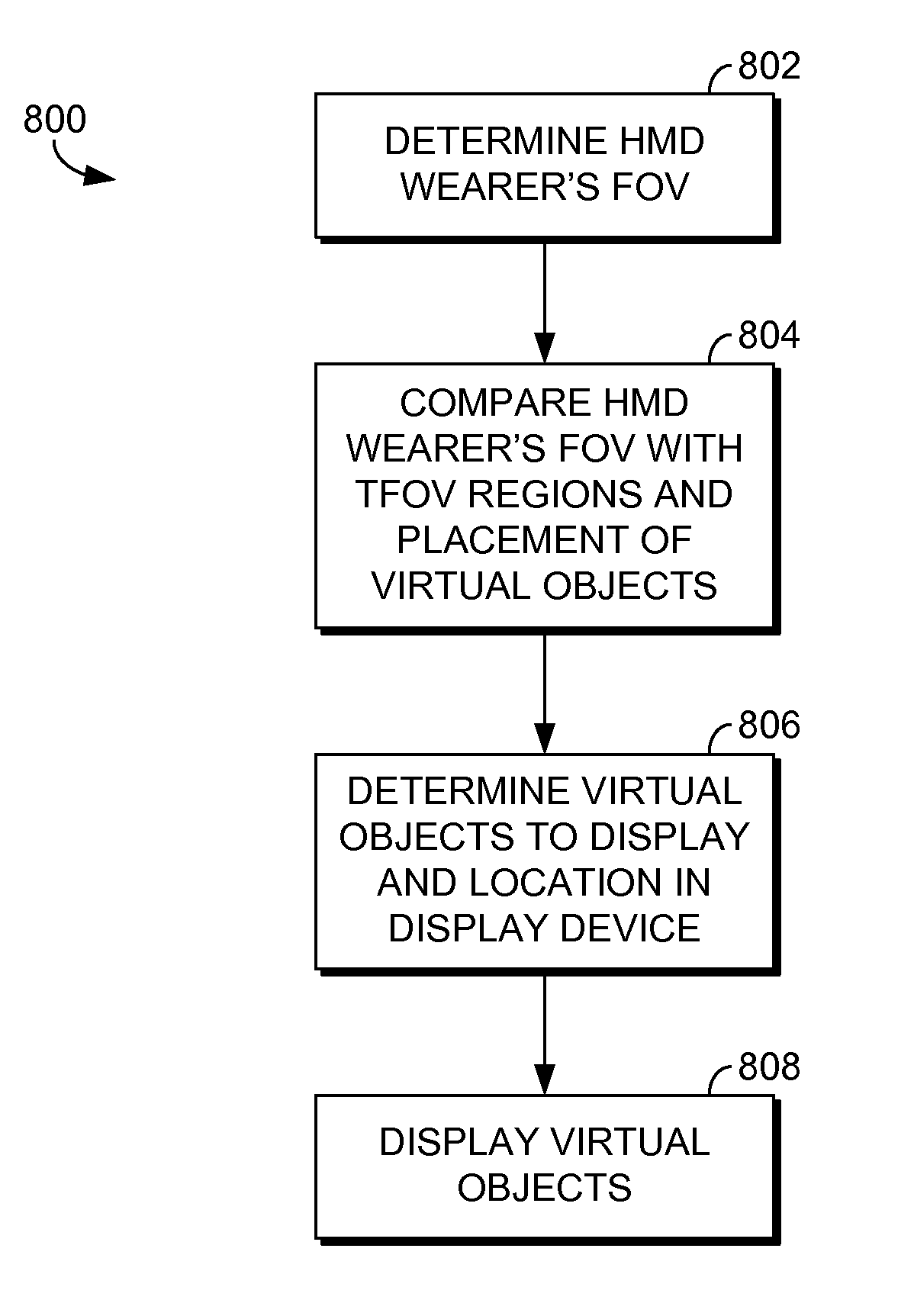
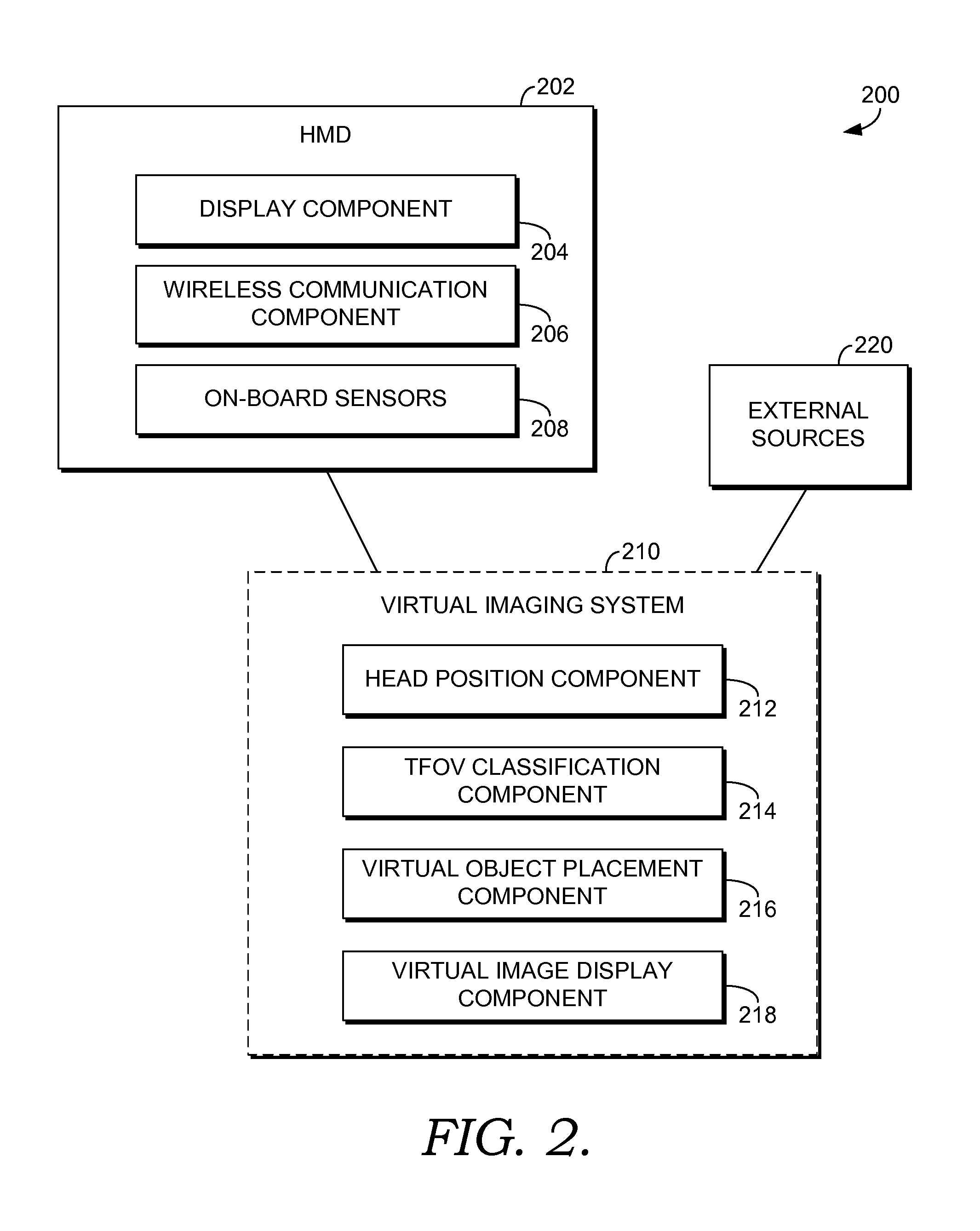
[0015]Embodiments of the present invention are directed to the automatic and continuous placement and replacement of virtual images in an HMD's display relative to the HMD wearer's total field of view (TFOV) to p...
PUM
 Login to View More
 Abstract
Description
Claims
Application Information
 Login to View More