
Controlled flight of a multicopter experiencing a failure affecting an effector
a multi-copter and effector technology, applied in vehicle position/course/altitude control, process and machine control, instruments, etc., can solve the problems of inability to guarantee safe and efficient control in many real-world operating conditions, limited cost-effectiveness, and the need for human pilots, so as to reduce the limitations of previous methods for controlling multi-copters.
- Summary
- Abstract
- Description
- Claims
- Application Information
AI Technical Summary
Benefits of technology
Problems solved by technology
Method used
Image

Examples
Embodiment Construction
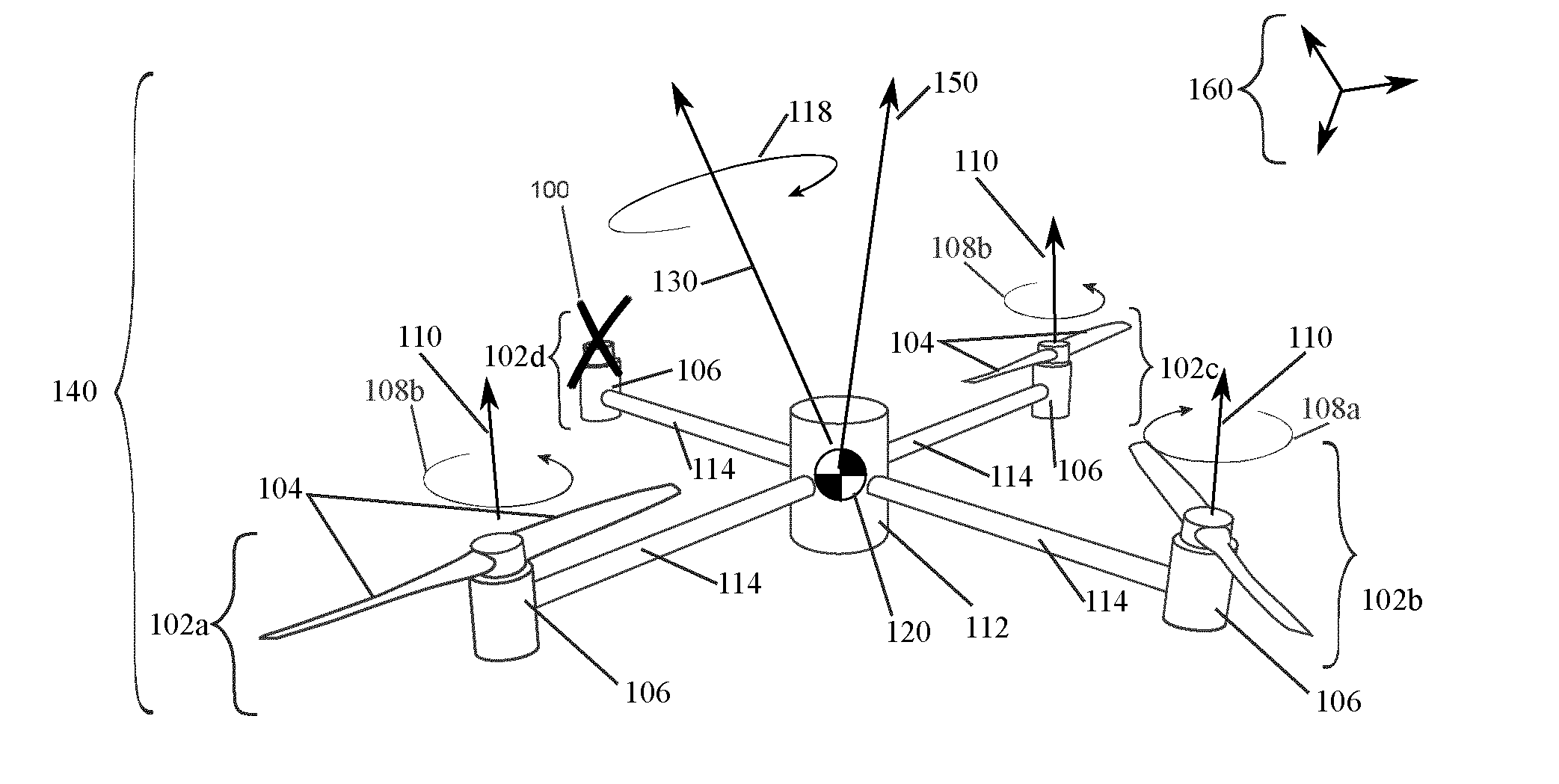
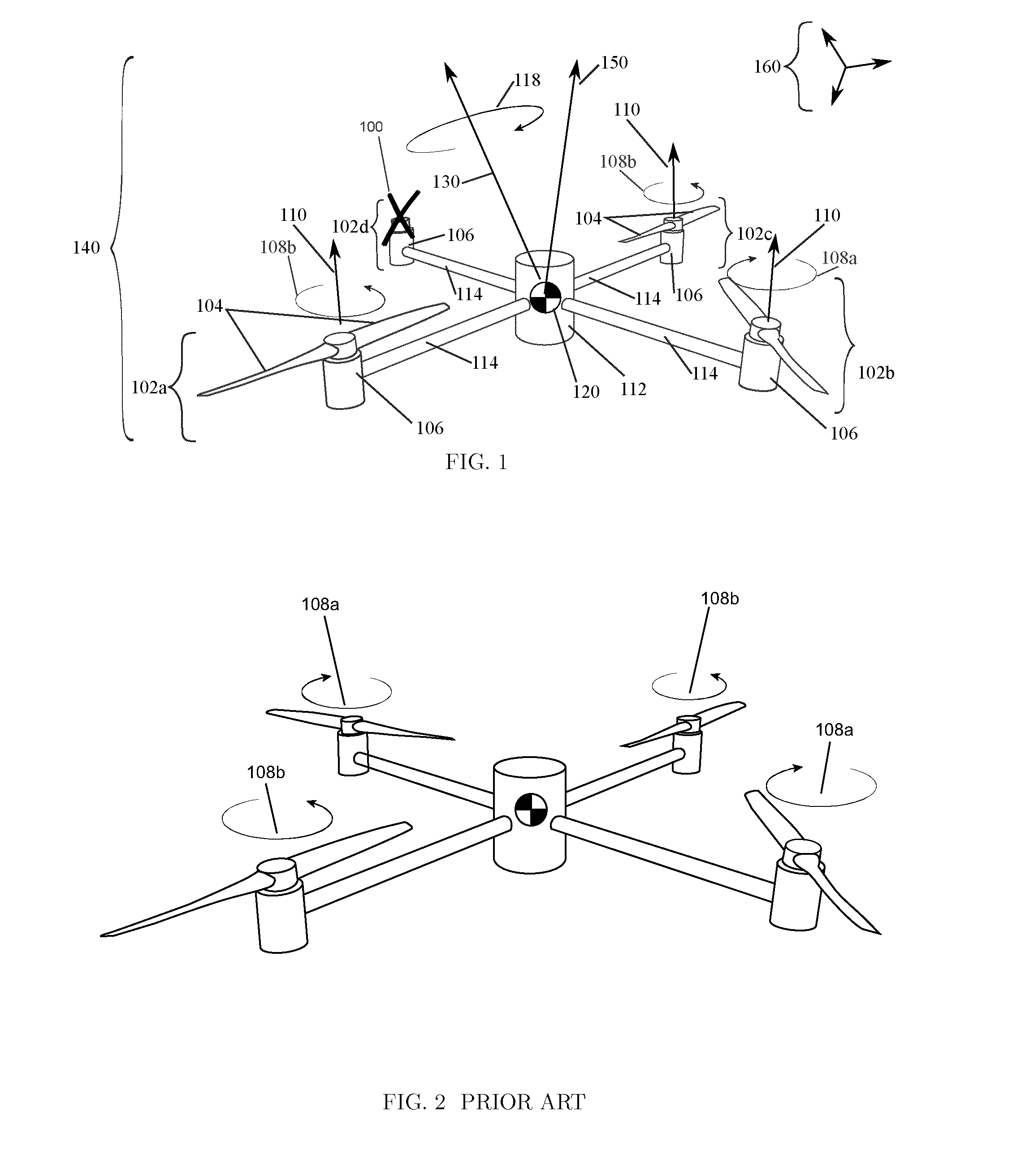
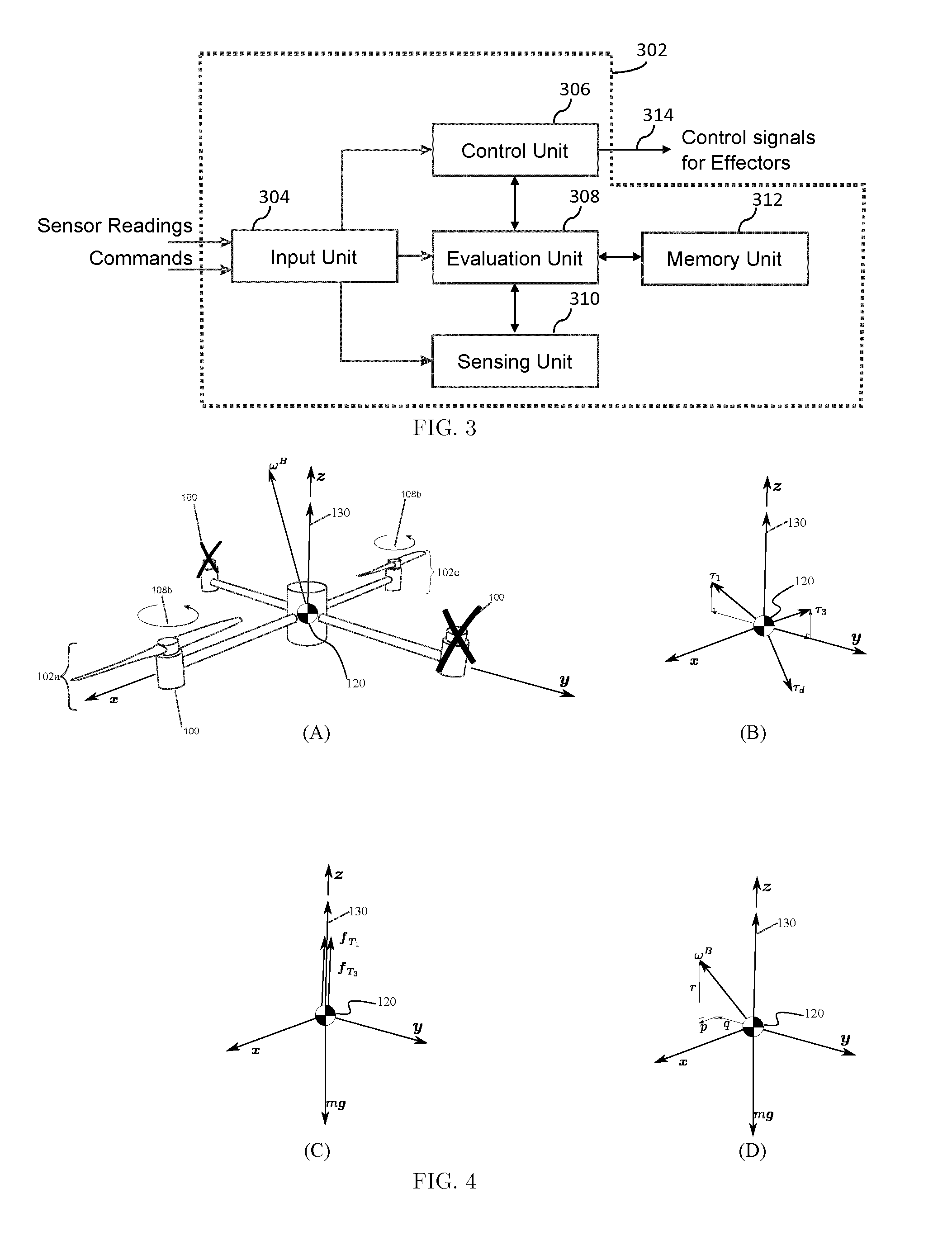
[0138]The disclosed invention relates to the control of motion of a multicopter experiencing a failure affecting one or more effectors. Multicopters are typically equipped with effectors that produce both a thrust force and a torque acting on the multicopter. These effectors are typically characterized by having a characteristic drive axis (typically identical to the direction of thrust force), which is fixed with respect to the body of the multicopter, and by having a single variable which controls the thrust force. For example, the fixed-pitch propellers used on many hover-capable aerial vehicles such as multicopters produce a thrust force and torque acting on the vehicle, and are typically directly fixed to a motor's fixed drive axis and commanded using a single variable. For multicopters, this single variable typically commands the relative desired speed of the motor and thus the thrust force of the effector. Multicopters typically use brushless motors, which typically use a mot...
PUM
 Login to View More
 Abstract
Description
Claims
Application Information
 Login to View More