
Recombinant microorganism capable of synthesizing alkane and method for producing alkane
- Summary
- Abstract
- Description
- Claims
- Application Information
AI Technical Summary
Benefits of technology
Problems solved by technology
Method used
Image

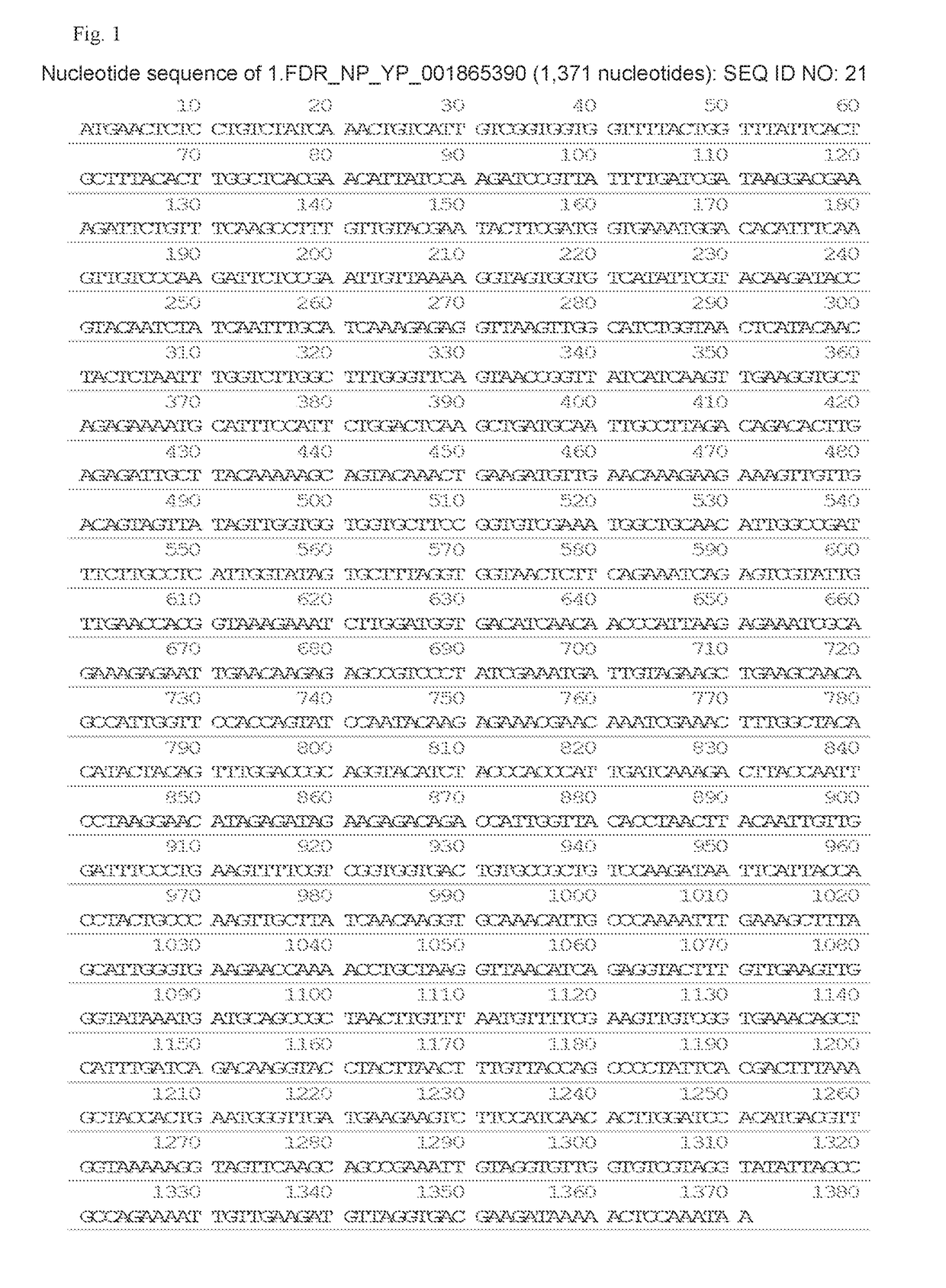
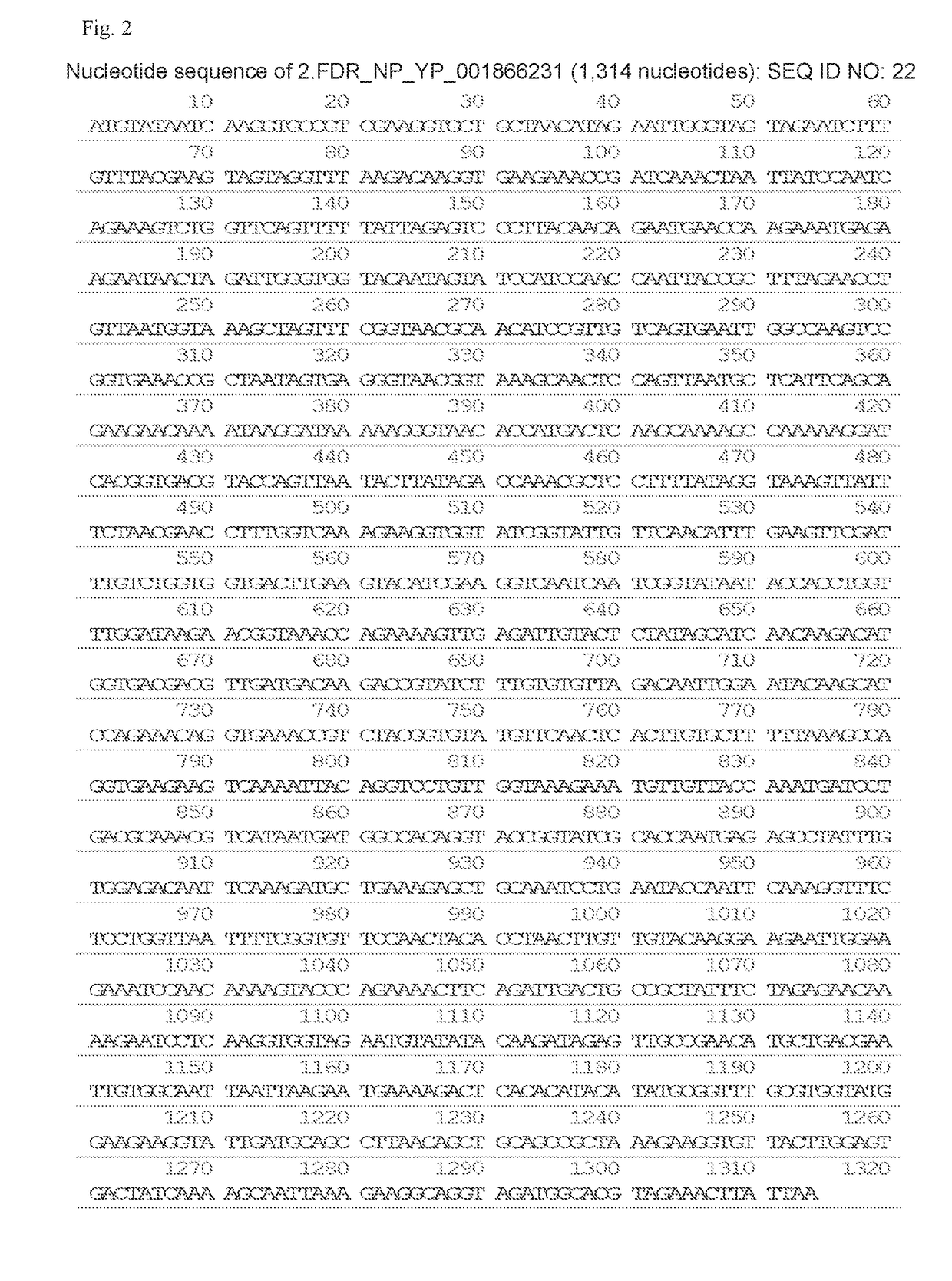
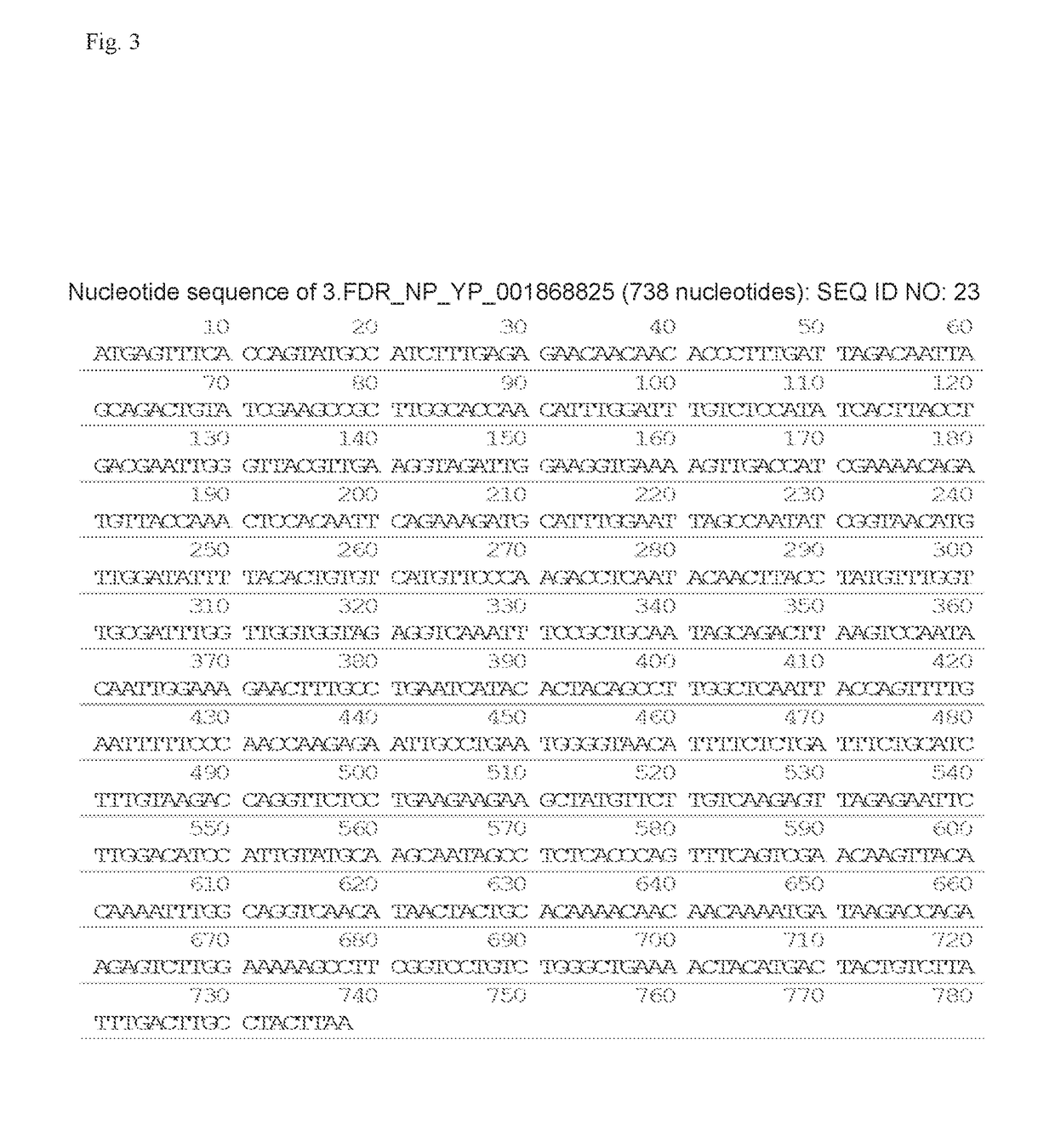
Examples
example 1
[1. Objectives]
[0158]In Example 1, a ferredoxin gene and a ferredoxin reductase gene in the N. puntioforme PCC 73102 strain, the origin of which is the same as that of the decarbonylase gene to be introduced into a host to provide the capacity for alkane synthesis, were deduced, these genes were co-introduced (co-expressed) into E. coli in a predetermined combination, and the influence imposed on alkane production was then inspected. Genes exhibiting 70% or higher amino acid sequence homology to that of alr0784, all1430, asr2513, all2919, and all4148 annotated with reference to ferredoxin, all4121 annotated with reference to ferredoxin reductase, and alr3707 annotated with reference to ferredoxin oxidoreductase of the Nostoc sp. PCC 7120 strain whose genome had been disclosed since the early stage were selected as the genes to be inspected.
[0159]When ferredoxin and ferredoxin reductase of the Nostoc sp. PCC 7120 strain are searched for with the use of KEGG, 10 types of ferredoxin re...
experimental example 1
[0191]Method for Preparing pRSF-NpAD-SeAR
[0192]At the outset, the acyl-ACP reductase gene derived from the Synechococcus elongatus PCC 7942 strain (YP_400611) and the decarbonylase gene derived from the Nostoc punctiforme PCC 73102 strain (YP_001865325) were chemically synthesized. These synthetic genes were inserted into the pUC57 EcoRV site and designated as pUC57-SeAAR and pUC57-NpAD, respectively.
[0193]Subsequently, PCR was carried out under the conditions described below with the use of pUC57-NpAD and pUC57-SeAAR as templates and Pfu Ultra II Fusion HS DNA Polymerase (STRATAGENE), and the amplified NpADvo and SeAAvo fragments were obtained.
TABLE 11Reaction composition:pUC57-NpAD (30 ng / μl)1 μl10 × Pfu Ultra II reaction buffer5 μldNTP mix. (25 mM each)1 μlPrimer pRSF-NpAS-inf-F (10 μM)2 μlPrimer pRSF-NpAS-inf-R (10 μM)2 μlPfu Ultra II fusion HS DNA polymerase1 μlSterile deionized water38 μl Total50 μl
TABLE 12Reaction composition:pUC57-SeAAR (1 ng / μl)1 μl10 × Pfu Ultra II reacti...
PUM
| Property | Measurement | Unit |
|---|---|---|
| Fraction | aaaaa | aaaaa |
| Fraction | aaaaa | aaaaa |
| Fraction | aaaaa | aaaaa |
Abstract
Description
Claims
Application Information
 Login to View More