

Pneumatic tire with reduced tire noise
a technology of pneumatic tires and noise reduction, which is applied in the field of pneumatic tires, can solve the problems of increasing the sound pressure related to noise generation, low aspect ratio drawing a great deal of attention, and the movement of air, so as to reduce the noise generated by the impact of tires during driving
Inactive Publication Date: 2018-09-27
HANKOOK TIRE WORLDWIDE
View PDF6 Cites 6 Cited by
- Summary
- Abstract
- Description
- Claims
- Application Information
AI Technical Summary
Benefits of technology
The present disclosure aims to reduce tire noise, particularly cavity noise caused by air vibration. The invention involves adding a sound absorber to the inner part of the tire to change the noise energy and frequency caused by energy. The sound absorber has a certain size and shape to effectively reduce noise in the tire. The top surface of the sound-absorbing material has ridges and valleys with different heights to reduce cavity noise from impact during driving. Overall, the invention suppresses tire noise and improves the quality of driving experience.
Problems solved by technology
However, in accordance with recent development trends, UHP (ultra high performance) tires having a configuration in which a tread contacting tire pavement is formed at a large width and a side wall corresponding to a side surface of the tire has a low aspect ratio are drawing a great deal of attention.
In the case of such tires, since the strength of the side wall is increased due to structural properties thereof, the tires cannot properly perform their function of damping shock transferred from the road, thus causing an increase in sound pressure related to noise generation.
However, a tire is excited according to ins and outs, (roughness) and the surface of the road during driving, and the excited tire results in movement of air in the assembly of wheels and tires (tire cavity).
Movement of air in the assembly of wheels and tires causes noise.
Such air vibration is generated in a cavity of a tire, so that noise is transferred to the inside of the vehicle and is then detected by a driver, which eventually deteriorates ride comfort (hereinafter, noise caused by air vibration will be broadly called “cavity noise”).
Method used
the structure of the environmentally friendly knitted fabric provided by the present invention; figure 2 Flow chart of the yarn wrapping machine for environmentally friendly knitted fabrics and storage devices; image 3 Is the parameter map of the yarn covering machine
View moreImage
Smart Image Click on the blue labels to locate them in the text.
Smart ImageViewing Examples

Examples
Experimental program
Comparison scheme
Effect test
production example
[0032]Production of Tire
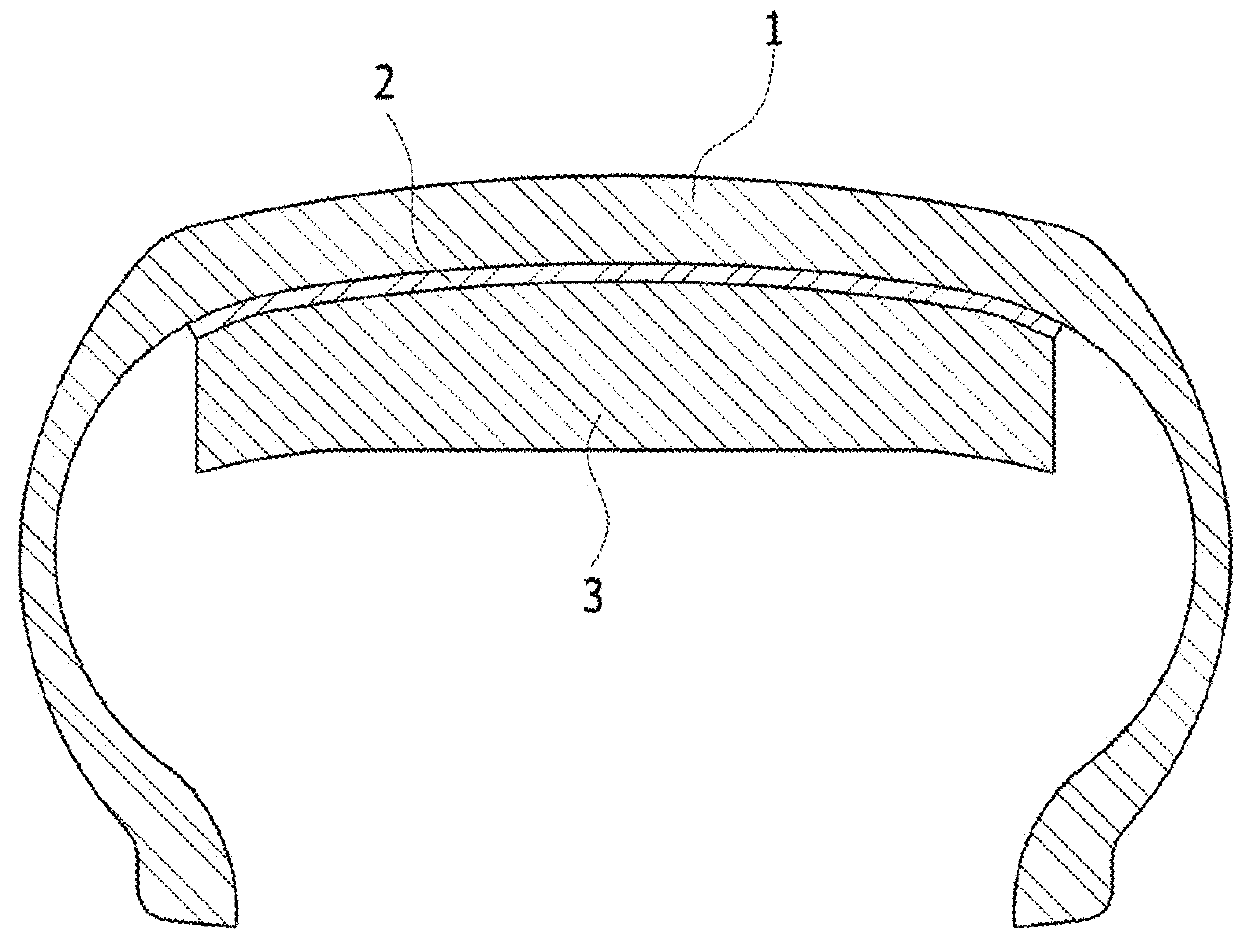
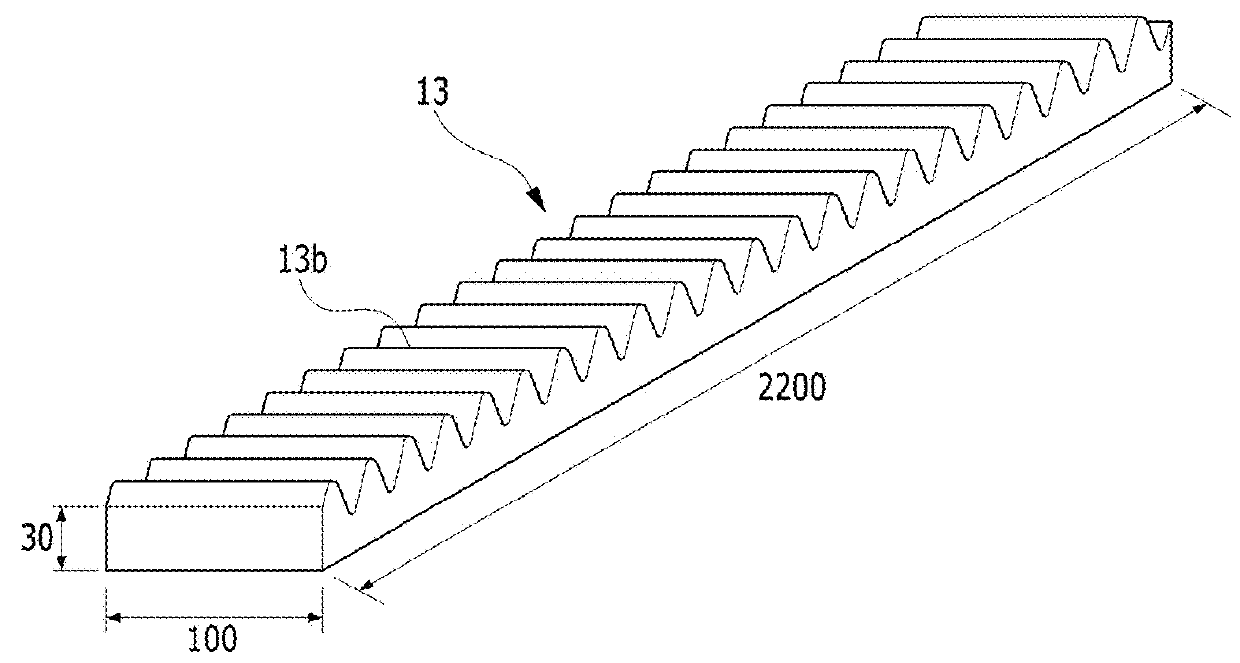
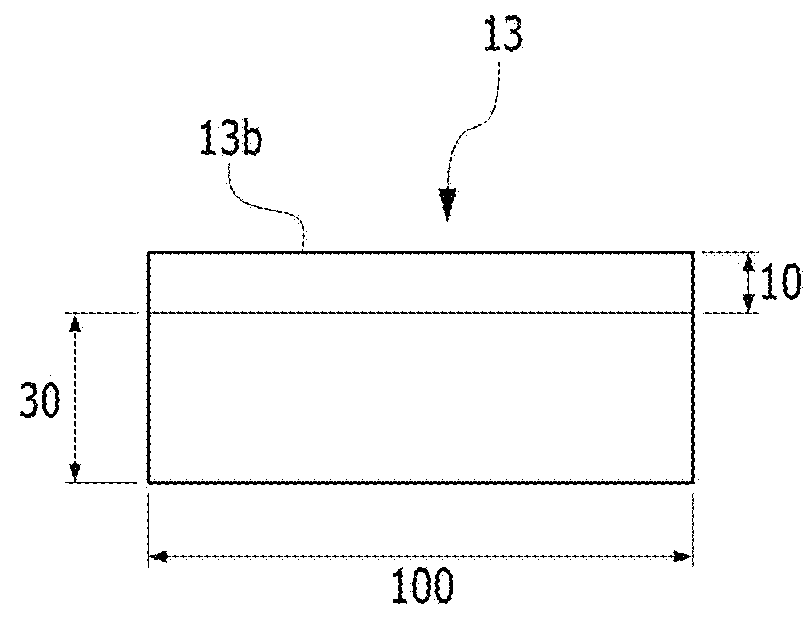
[0033]Sound-absorbing materials 13 and 23 for reducing noise in accordance with the sizes shown in FIG. 2A, FIG. 2B, FIG. 2C (Production Example 1) and FIG. 3A, 3B (Production Example 2) are adhered such that an adhesive agent 2 faces an inside surface of an inner liner of a 245 / 45R19 tire (produced by Hankook Tire Group), as shown in FIG. 1, to produce tires. The material for the sound-absorbing material was a porous polyurethane material (density of 0.06 g / cm3).
the structure of the environmentally friendly knitted fabric provided by the present invention; figure 2 Flow chart of the yarn wrapping machine for environmentally friendly knitted fabrics and storage devices; image 3 Is the parameter map of the yarn covering machine
Login to View More PUM
| Property | Measurement | Unit |
|---|---|---|
| size | aaaaa | aaaaa |
| thickness | aaaaa | aaaaa |
| thickness | aaaaa | aaaaa |
Login to View More
Abstract
Provided is a pneumatic tire with reduced cavity noise including a porous sound-absorbing material adhered by an adhesive agent layer to an inside surface of an inner liner disposed in a tread layer in the tire. The sound-absorbing material is continuously extended in a circumferential direction in the tire. The sound-absorbing material has an open cell on a surface thereof, a volume of the sound-absorbing material is 14% to 26% with respect to a total volume of the tire, and a maximum width of the sound-absorbing material is 35% to 60% with respect to a width of the tire tread and a surface area of the sound-absorbing material is 10% to 50% with respect to a surface area of the rim of a wheel on the surface of the inner liner to which the sound-absorbing material is adhered.
Description
CROSS-REFERENCE TO RELATED APPLICATION[0001]This application claims priority to and the benefit of Korean Patent Application No. 10-2017-0036896 filed in the Korean Intellectual Property Office on Mar. 23, 2017, the entire contents of which are incorporated herein by reference.BACKGROUND1. Technical Field[0002]The present disclosure relates to a pneumatic tire, and more particularly, to a pneumatic tire for reducing noise that can more effectively reduce cavity noise energy, which is generated by vibration of air filling the tire upon rotation of the tire resulting from car driving, and a frequency generated thereby, by adhering a sound absorber for reducing noise having a certain size and shape to an inner liner in the tire.2. Description of the Related Art[0003]With strengthened government regulations on vehicle noise and increasing demand for electric vehicles, the need for reducing noise from tires is gradually increasing. However, in accordance with recent development trends, U...
Claims
the structure of the environmentally friendly knitted fabric provided by the present invention; figure 2 Flow chart of the yarn wrapping machine for environmentally friendly knitted fabrics and storage devices; image 3 Is the parameter map of the yarn covering machine
Login to View More Application Information
Patent Timeline
 Login to View More
 Patent Type & AuthorityApplications(United States)
IPC IPC(8): B60C19/00B60C5/14
CPCB60C19/002B60C5/14B60C1/0008B60C19/122C08G2110/0008G10K11/16G10K2210/1282
InventorSEO, BYEONG HO
OwnerHANKOOK TIRE WORLDWIDE