Intervertebral implant and method of use

a technology of intervertebral implants and implants, which is applied in the field of orthopedics, can solve problems such as difficulty in achieving the desired trajectory of screw insertion, and achieve the effect of increasing rigidity and robustness

US20200046514A1Active Publication Date: 2020-02-13ELEVATION SPINE INC
0 Cites 2 Cited by

Patent Information

Authority / Receiving Office
US · United States
Current Assignee / Owner
Publication Date
2020-02-13

Smart Images

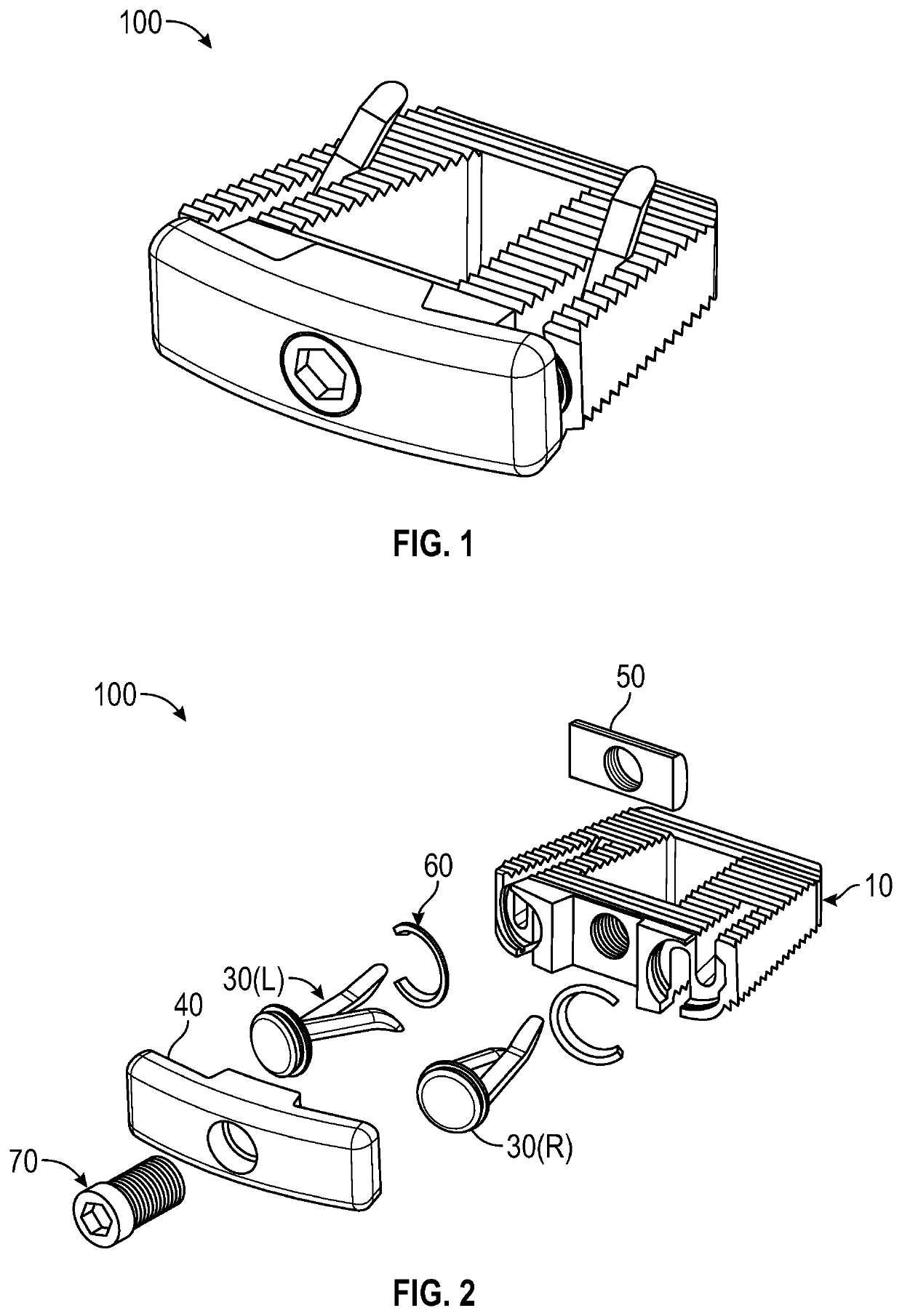
  • Figure 1
    Figure 1
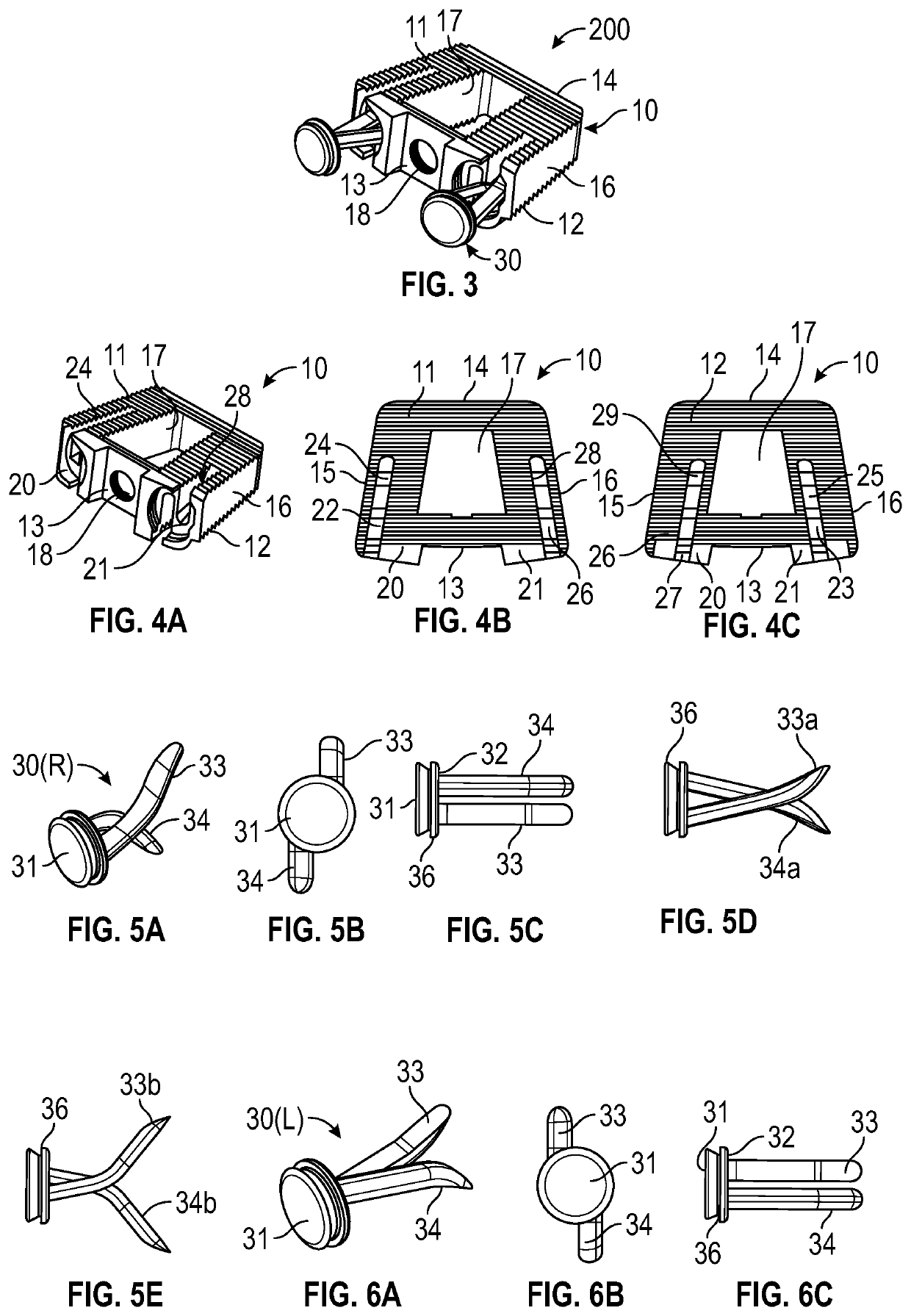
  • Figure 2
    Figure 2
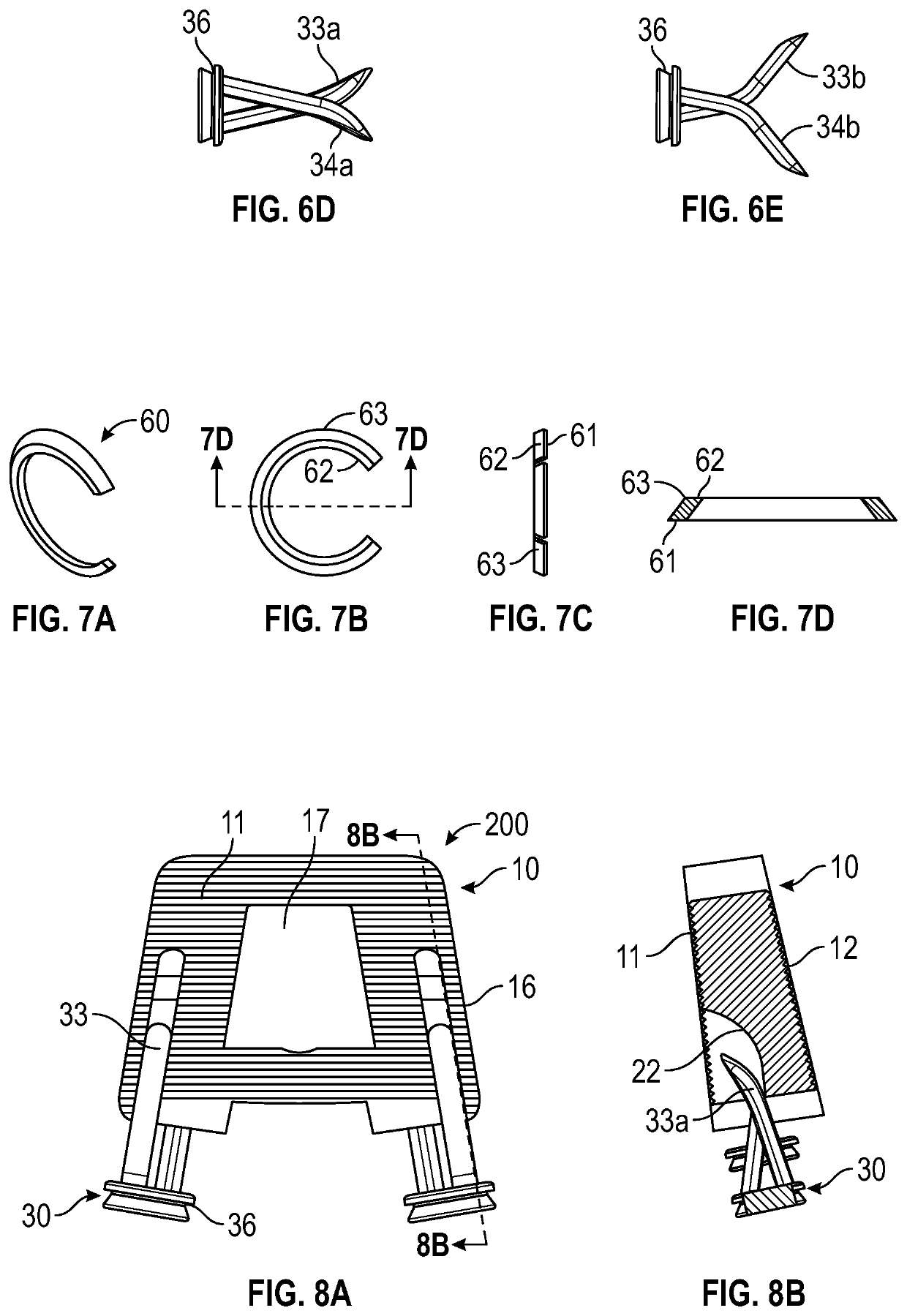
  • Figure 3
    Figure 3
Patent Text Reader

Abstract

An implant and method for fusing adjacent spinal vertebrae is disclosed. In an embodiment for a spinal implant of the present invention, the implant includes a spacer body assembly and two retention members. The two retention members each include split fork tangs wherein the tangs of each retention member are simultaneously extendable from the spacer body assembly into the adjacent vertebra. A method of fusing adjacent vertebrae includes the step of inserting an implant between adjacent vertebrae with retention members. The method also includes the step of configuring the retention members wherein a portion of each tang of a retention member simultaneously extends from the implant into one of the adjacent vertebra.
Need to check novelty before this filing date? Find Prior Art

Description

BACKGROUND OF THE INVENTION

[0001] The present disclosure relates generally to orthopedics, and in particular relates to fixation systems, intervertebral implants, and associated surgical methods and procedures for using same.SUMMARY OF THE INVENTION

[0002] Spinal fixation systems such as pedicle screw and rod constructs are commonly used to promote fusion between intervertebral bodies. The insertion of pedicle screws typically requires a linear “line-of-approach” trajectory that is aligned with the longitudinal axis of the screw, in order to accommodate the access and delivery instruments. Similarly, anchors such as bone screws may be used to directly fix intervertebral implants to vertebral bodies, typically requiring the insertion of several screws at unique angles oblique to the sagittal and / or transverse plane, and thus multiple lines-of-approach. However, in a variety of surgical situations, achieving a desired trajectory for screw insertion can be difficult due to the patient's a...

Examples

Embodiment Construction

[0120]An implant and method for fusing adjacent spinal vertebra is disclosed. In an embodiment for a spinal implant of the present invention, the implant includes a spacer body assembly and two retention members. The two retention members each include split fork tangs wherein the tangs of each retention member are simultaneously extendable from the spacer body assembly into the adjacent vertebra. A method of fusing adjacent vertebrae includes the step of inserting an implant between adjacent vertebrae with retention members. The method also includes the step of configuring the retention members wherein a portion of each tang of a retention member simultaneously extends from the implant into one of the adjacent vertebra.

[0121]Spinal fixation systems such as pedicle screw and rod constructs are commonly used to promote fusion between intervertebral bodies. The insertion of pedicle screws typically requires a linear “line-of-approach” trajectory that is aligned with the longitudinal ax...