

Portable and wearable hand-grasp neuro-orthosis
a neuro-orthosis and hand-grasp technology, applied in the field of neuro-orthosis devices, can solve the problems of loss of hand function, creating dependence on caregivers, loss of independence, etc., and achieve the effect of restoring volitionally controlled grasp functions and hand function
- Summary
- Abstract
- Description
- Claims
- Application Information
AI Technical Summary
Benefits of technology
Problems solved by technology
Method used
Image

Examples
Embodiment Construction
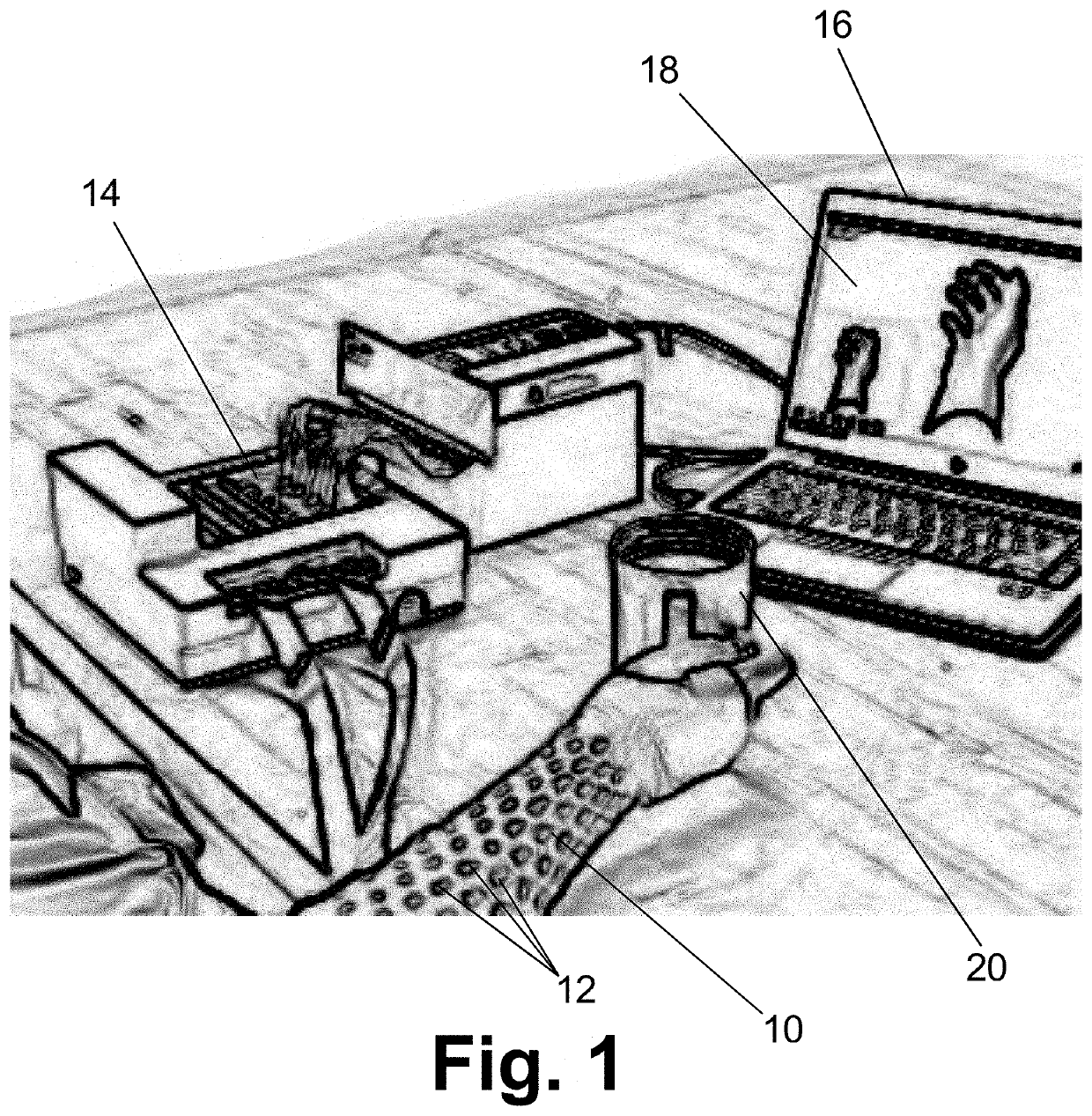
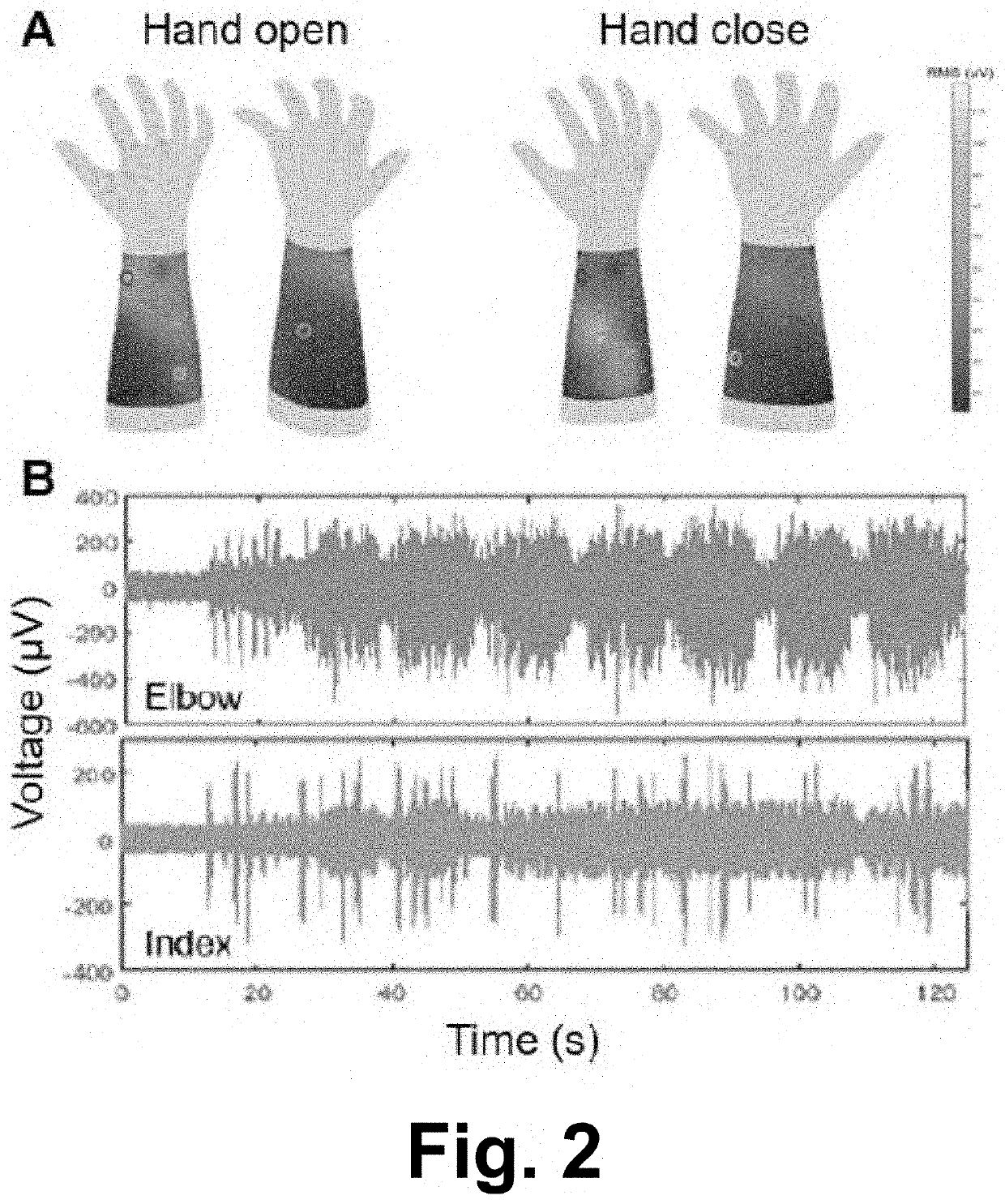
[0028]Disclosed herein is a device sometimes referred to herein without loss of generality as ReGrasp, which is based on closed-loop electromyography (EMG)-controlled functional electrical stimulation (FES) of paralyzed muscles to enable hand function. FIG. 1 shows an embodiment of a ReGrasp device that includes a wearable sleeve 10 with electrodes 12 (diagrammatically indicated by markings on the sleeve 10 in FIG. 1, but physically located inside the sleeve 10 in contact with the skin of the wearer), electronics 14 for driving FES and reading EMG, and a controller 16 for controlling the ReGrasp device. In the illustrative example the controller 16 is a notebook computer with a display 18 which in the example task illustrated shows a graphical depiction of an intended action (grasping a cup 20) and a rendering of the actual configuration of the physical hand being controlled. This approach is motivated in part by the finding that residual, sub-movement threshold EMG signals can be m...
PUM
 Login to View More
 Abstract
Description
Claims
Application Information
 Login to View More