
Sachets for bio-pharmaceutical fluid products
a technology of bio-pharmaceutical fluid and sachet, which is applied in the direction of biochemistry apparatus, paper/cardboard containers, containers, etc., can solve the problems of sachet bursting or piercing, the number of lost sachets is too large, and the hole in the top of the sachet can be just as serious as on
- Summary
- Abstract
- Description
- Claims
- Application Information
AI Technical Summary
Benefits of technology
Problems solved by technology
Method used
Image

Examples
example 2
Fabrication of a Sachet
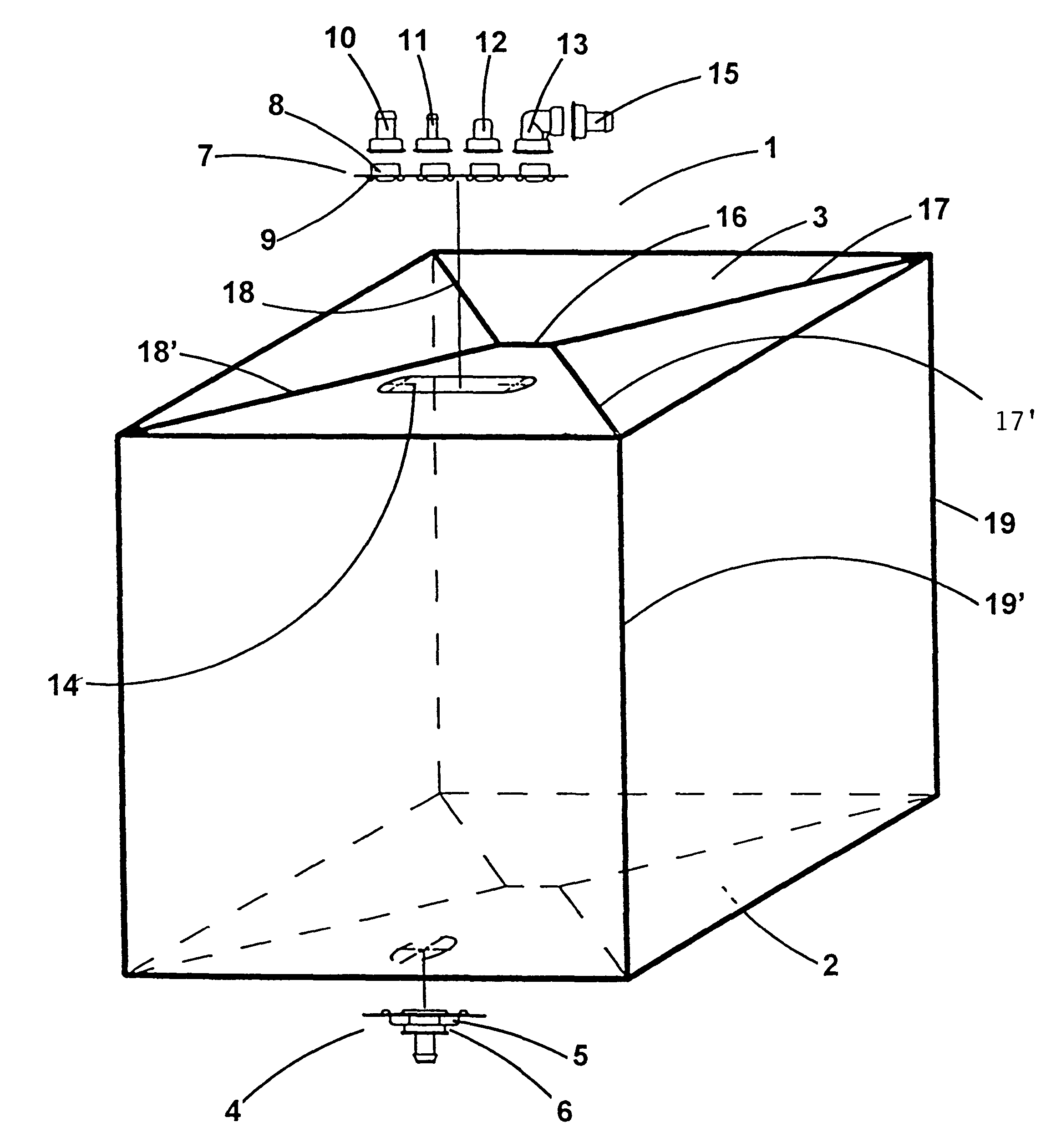
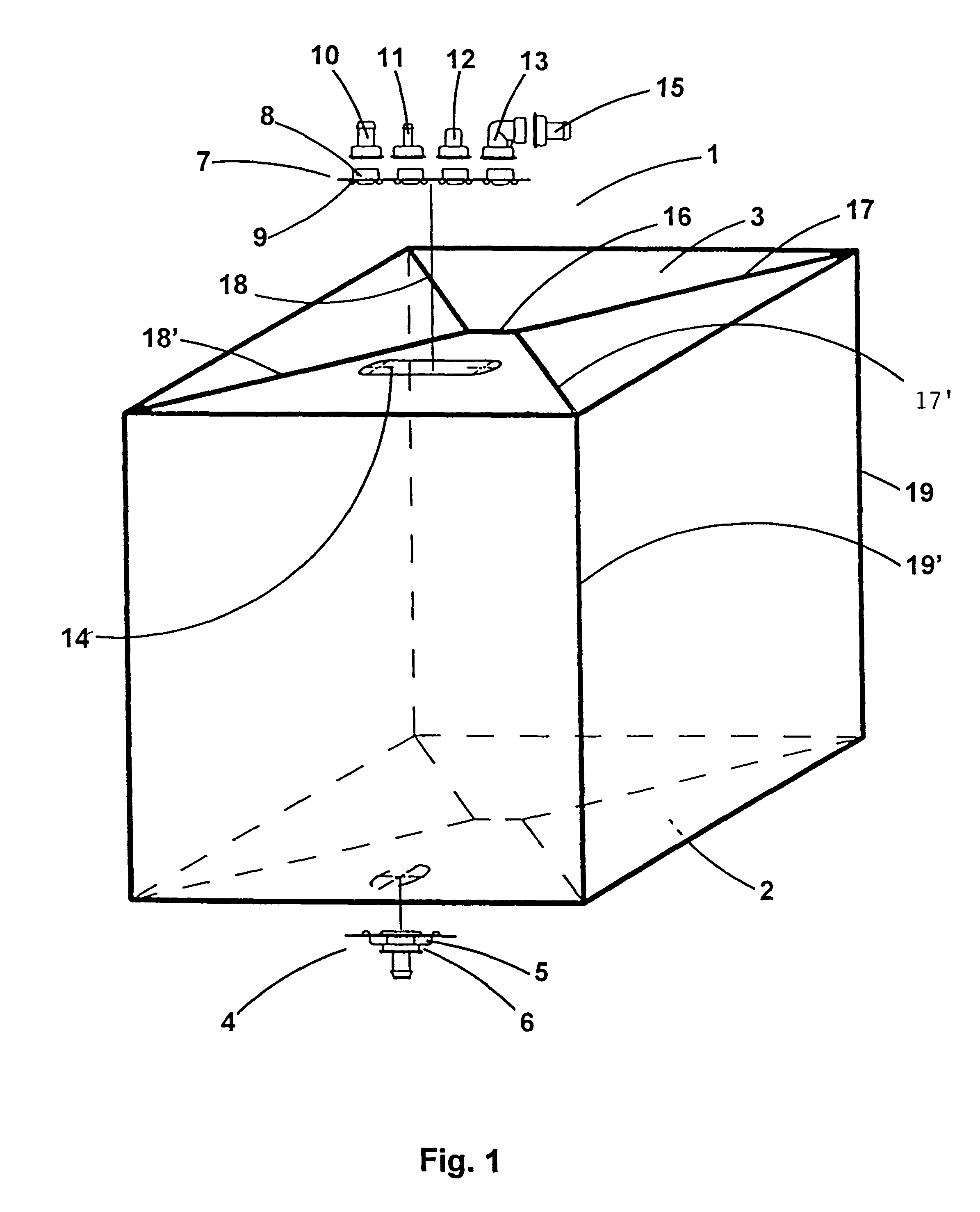
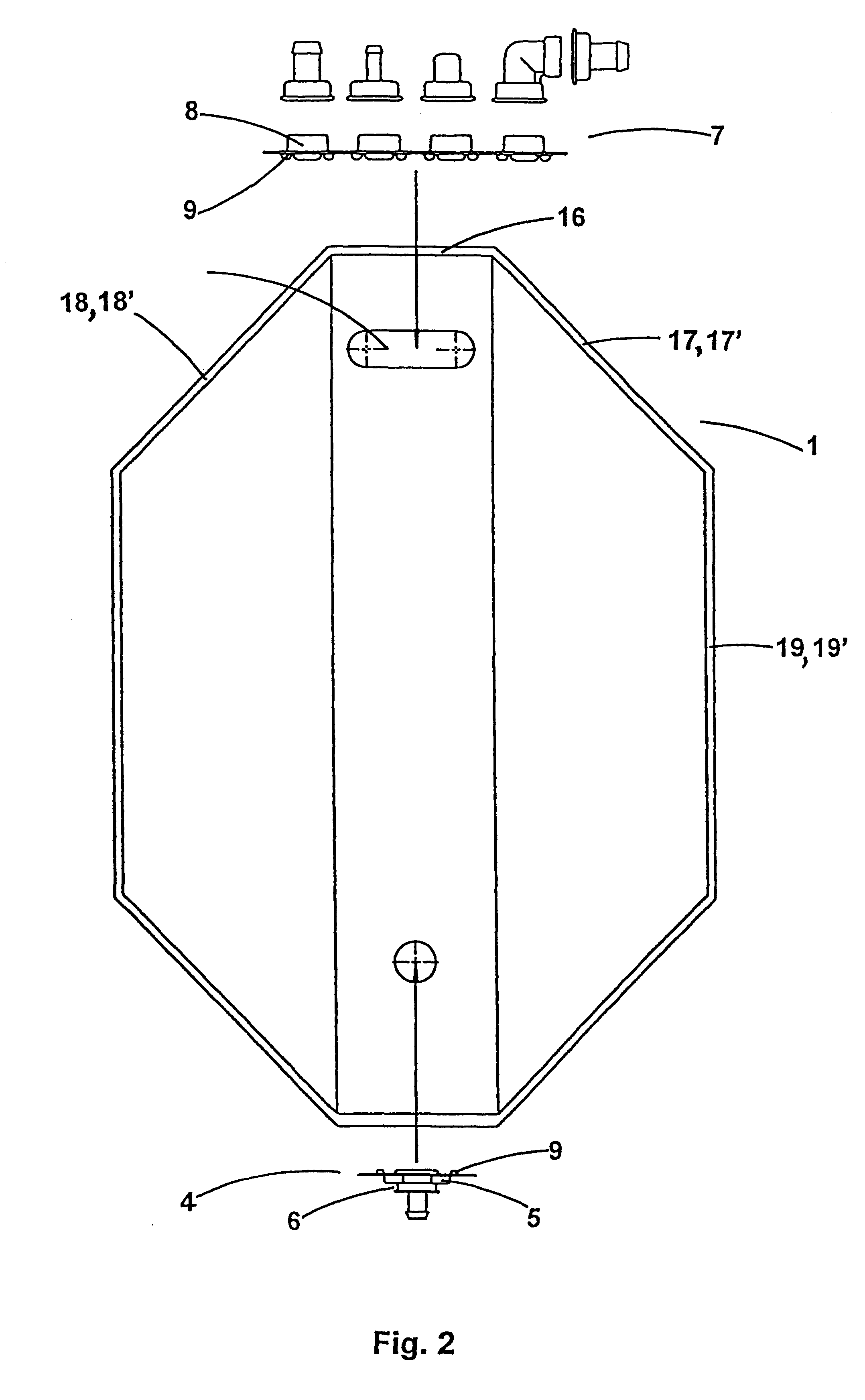
On an automatic machine designed for this purpose, four spools of plastics material film from example 1 are paid out to constitute the four walls of a cubic or parallelepiped-shape sachet: two films are stretched flat (top and bottom) and two films are conformed as flat bellows and inserted between the first two.
The four longitudinal welds are executed by effecting three 30 cm to 90 cm longitudinal weld sections in succession in accordance with a predetermined advance movement of the film. Each of the three welds is effected at a different temperature.
This method guarantees
the strength of the welds, and
minimum overlap between the welded film sections and the welding bars so that the height of the sachet can be varied.
The sachet top and bottom welds are effected one after the other by the same method and with a minimum of one weld and preferably with three successive welds at different temperatures.
The sachet top and bottom welds are effected by a set of weldin...
PUM
| Property | Measurement | Unit |
|---|---|---|
| volume | aaaaa | aaaaa |
| angle | aaaaa | aaaaa |
| width | aaaaa | aaaaa |
Abstract
Description
Claims
Application Information
 Login to View More