
Offset angle disc clamp
a technology of offset angle and clamping apparatus, which is applied in the direction of carrier constructional parts disposition, record information storage, instruments, etc., can solve the problems of non-operational shock tolerance of the disc assembly, bearings with inconsistent flying height, and add to the creation of additional disc warping
- Summary
- Abstract
- Description
- Claims
- Application Information
AI Technical Summary
Benefits of technology
Problems solved by technology
Method used
Image

Examples
Embodiment Construction
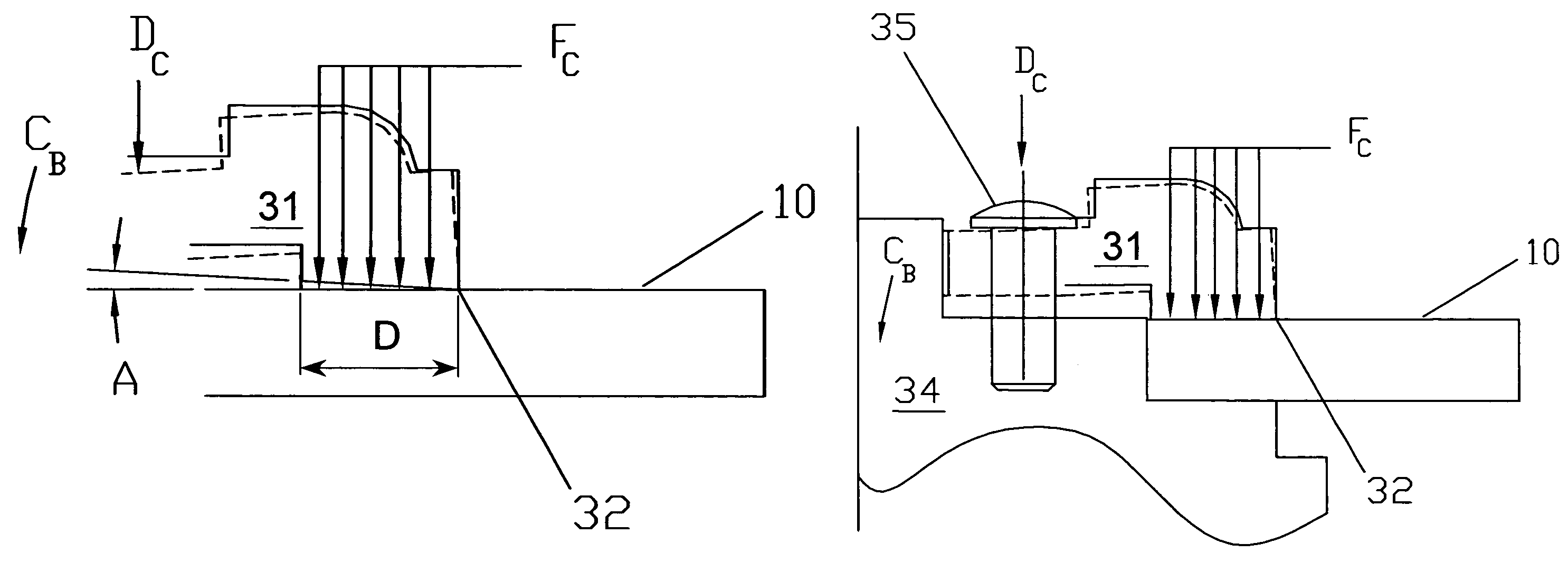
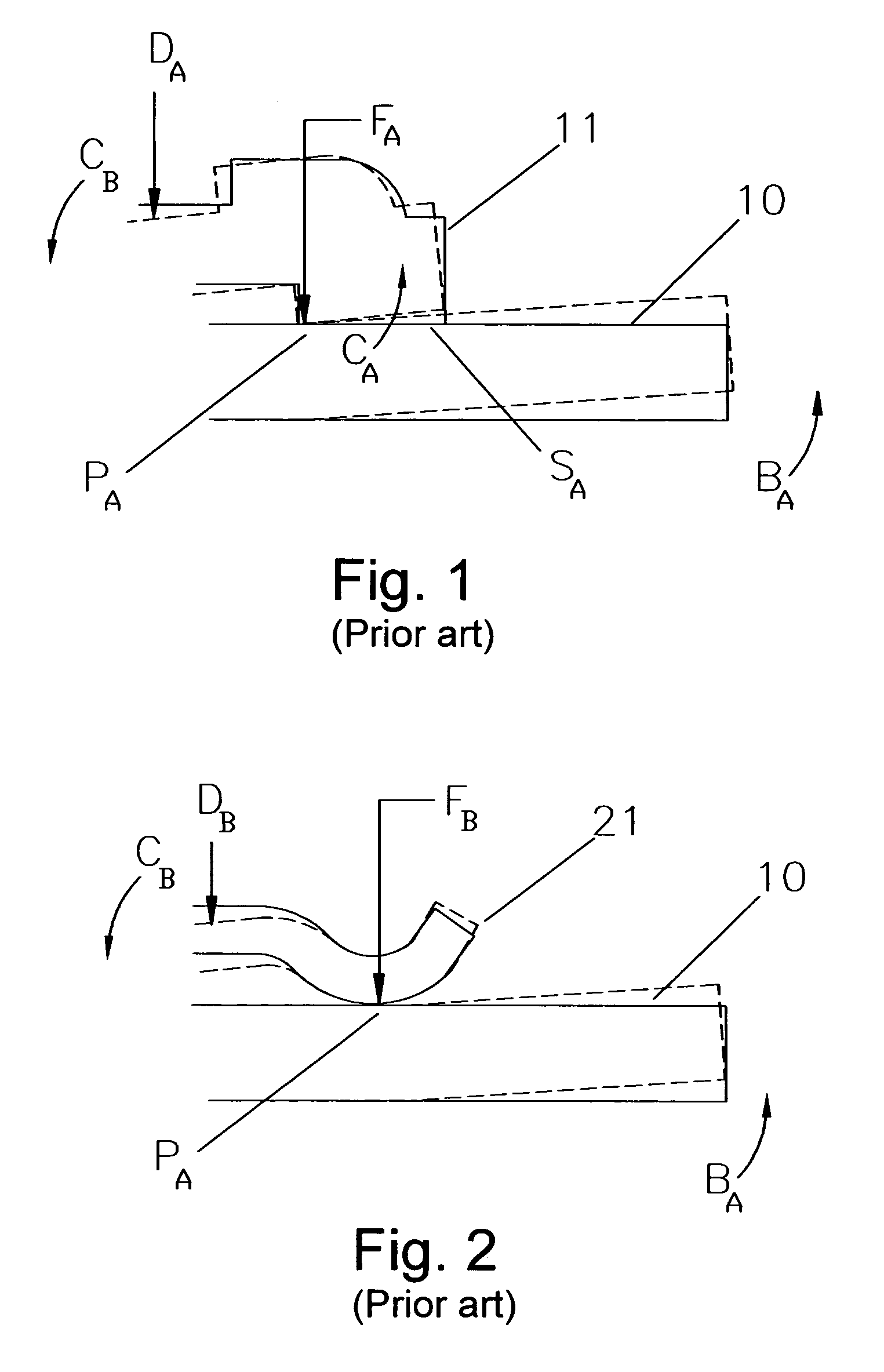
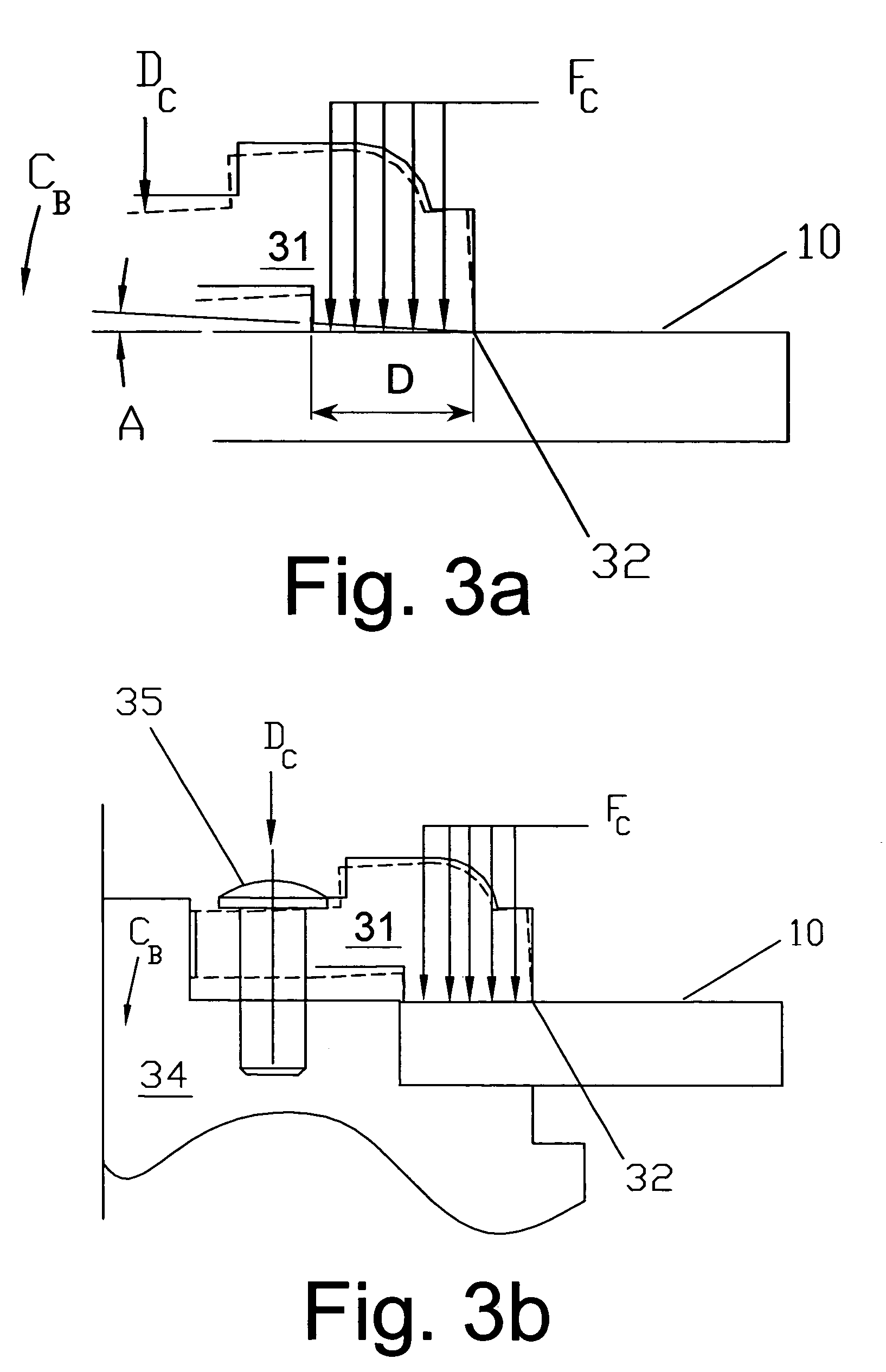
[0042]The present invention provides an offset angle disc clamp, which is an improvement in the distribution of clamp-to-disc vertical holding force. An even distribution of the vertical holding force over a set area will reduce any disc slip. This even distribution allows improved ability of the disc assembly to withstand drop force. An even distribution of vertical holding force will also decrease warping of the disc caused by the clamping mechanism itself by avoiding an annular point-contact force. Reduced warping will enhance R / W head flying height consistency (or axial run out), thus improving data transfer reliability. A reduction in head movement while reading a track (axial run out) minimizes head movement in a vertical direction with respect to the disc surface. Reduction in axial run out will improve the signal to noise ratio of the head pickup mechanism and provide for consistent signal amplitude.
[0043]The even distribution of vertical holding force is accomplished by app...
PUM
 Login to View More
 Abstract
Description
Claims
Application Information
 Login to View More