
Mechanism for avoiding check stops in speculative accesses while operating in real mode
a technology of speculative access and check stop, applied in the field of out-of-order processing, can solve problems such as hindered processing performan
- Summary
- Abstract
- Description
- Claims
- Application Information
AI Technical Summary
Benefits of technology
Problems solved by technology
Method used
Image

Examples
Embodiment Construction
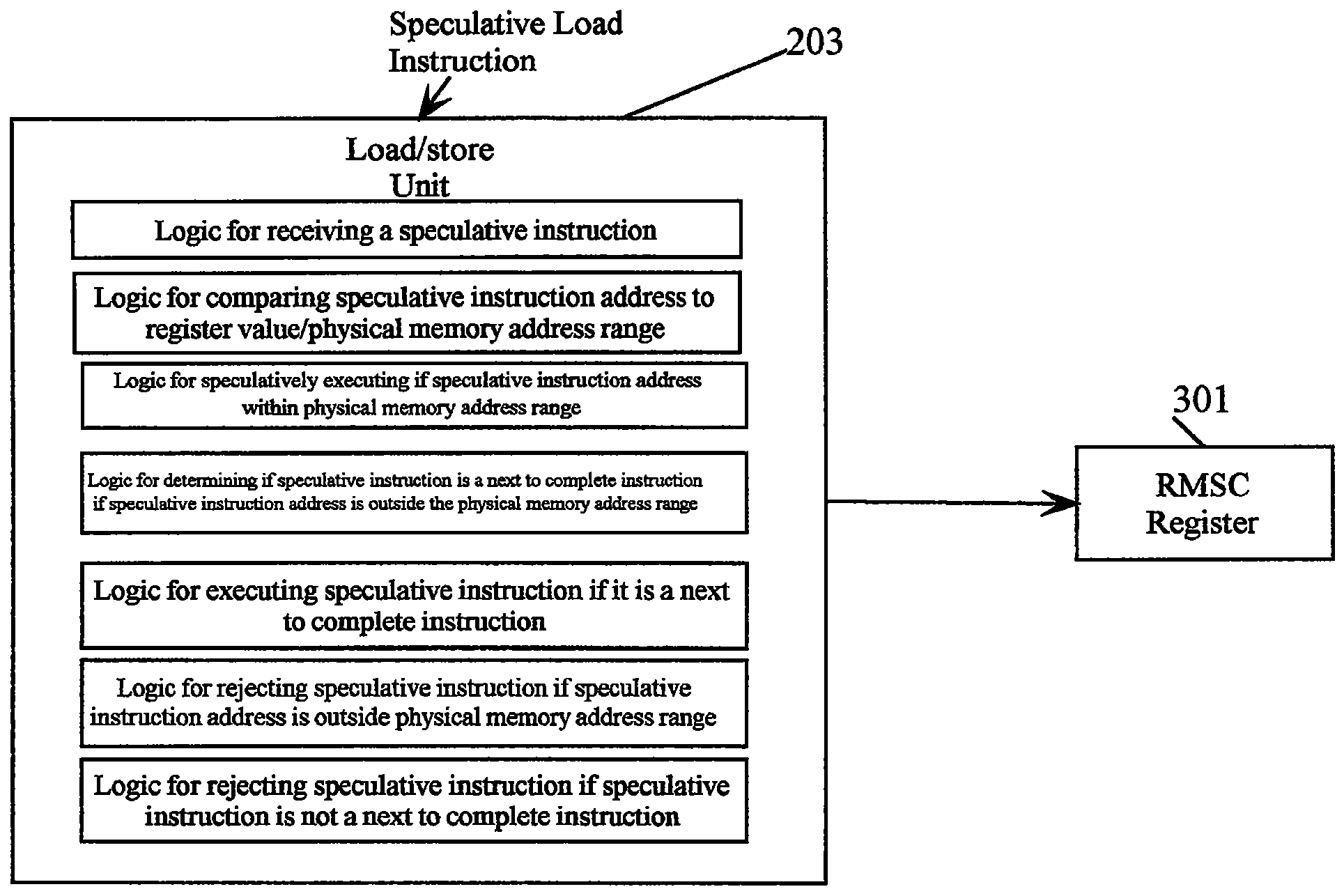
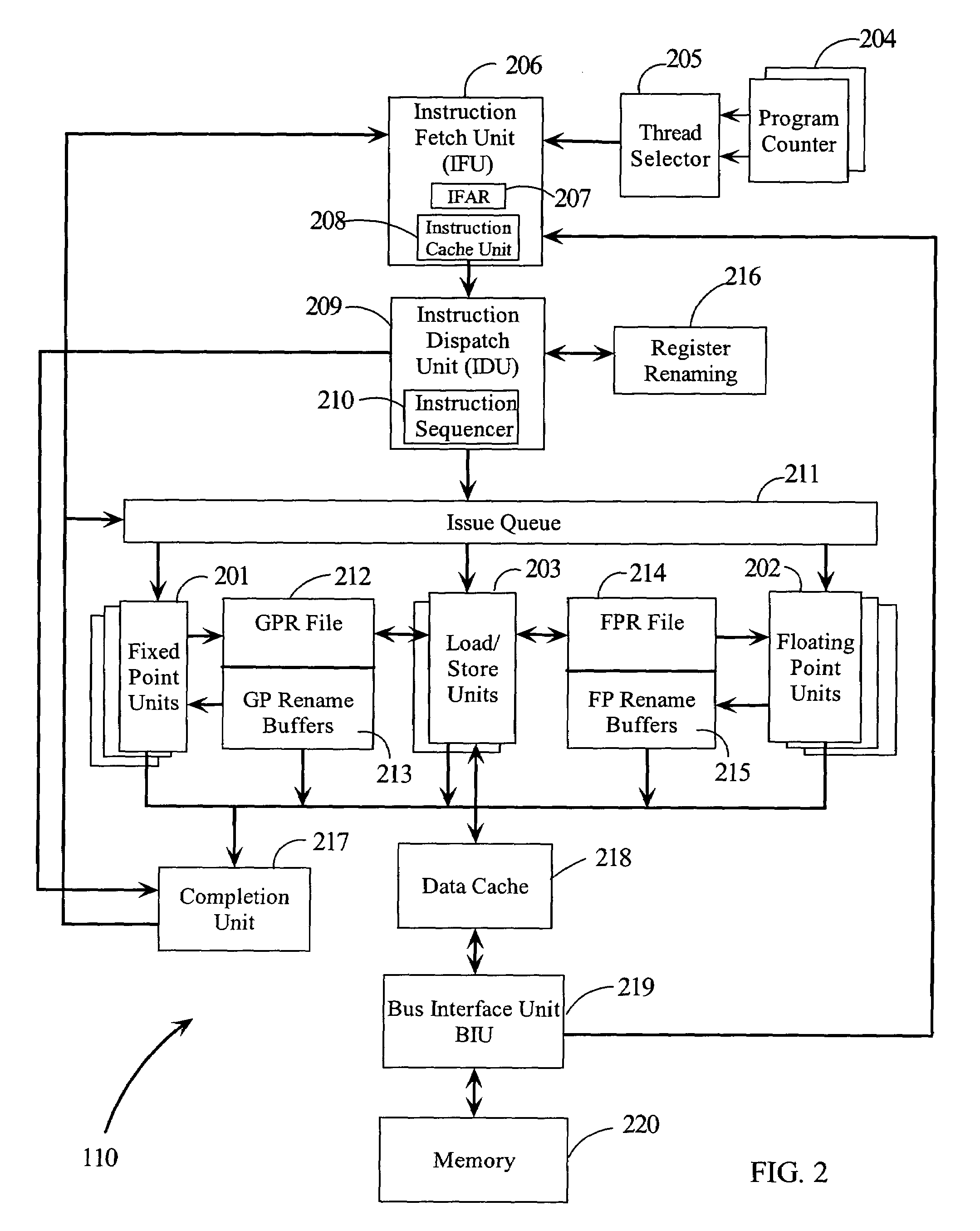
[0015]The present invention comprises a method and processor for avoiding check stops in speculative accesses. In one embodiment of the present invention, an execution unit, e.g., load / store unit, may be coupled to a queue configured to store instructions. A register, coupled to the execution unit, may be configured to store a value corresponding to an address in physical memory. When the processor is operating in real mode, the execution unit may retrieve the value stored in the register. Upon the execution unit receiving a speculative instruction, e.g., speculative load instruction, from the queue, a determination may be made as to whether the address of the speculative instruction is at or below the retrieved value. If the address of the speculative instruction is at or below the value, then the execution unit may safely speculatively execute this instruction while avoiding a check stop since all the addresses at or below this value are known to exist in physical memory.
[0016]Alt...
PUM
 Login to View More
 Abstract
Description
Claims
Application Information
 Login to View More