One problem with conventional approaches for processing orders over
the Internet, such as just described, is the difficulty or inability for customers to return easily to a shopping application after having been transferred from the application to a merchant
web site.
Furthermore, customers cannot use the back button to return to the shopping application
web page when so-called redirect URLs are used to cause a
web browser to load a different
web page than the requested web page.
In these situations, the “chain” of links used to access the merchant web page is “broken” and selecting the back button will not return the customer to the shopping application.
Hence, customers may be unable to return to a shopping application from a merchant site, or may only be capable of doing so via the repeated use of a
web browser's back button.
Either of these situations can deter customers from returning to a merchant
web site.
Another problem with conventional approaches for processing orders over
the Internet relates to the
payment of commissions to shopping applications and portals.
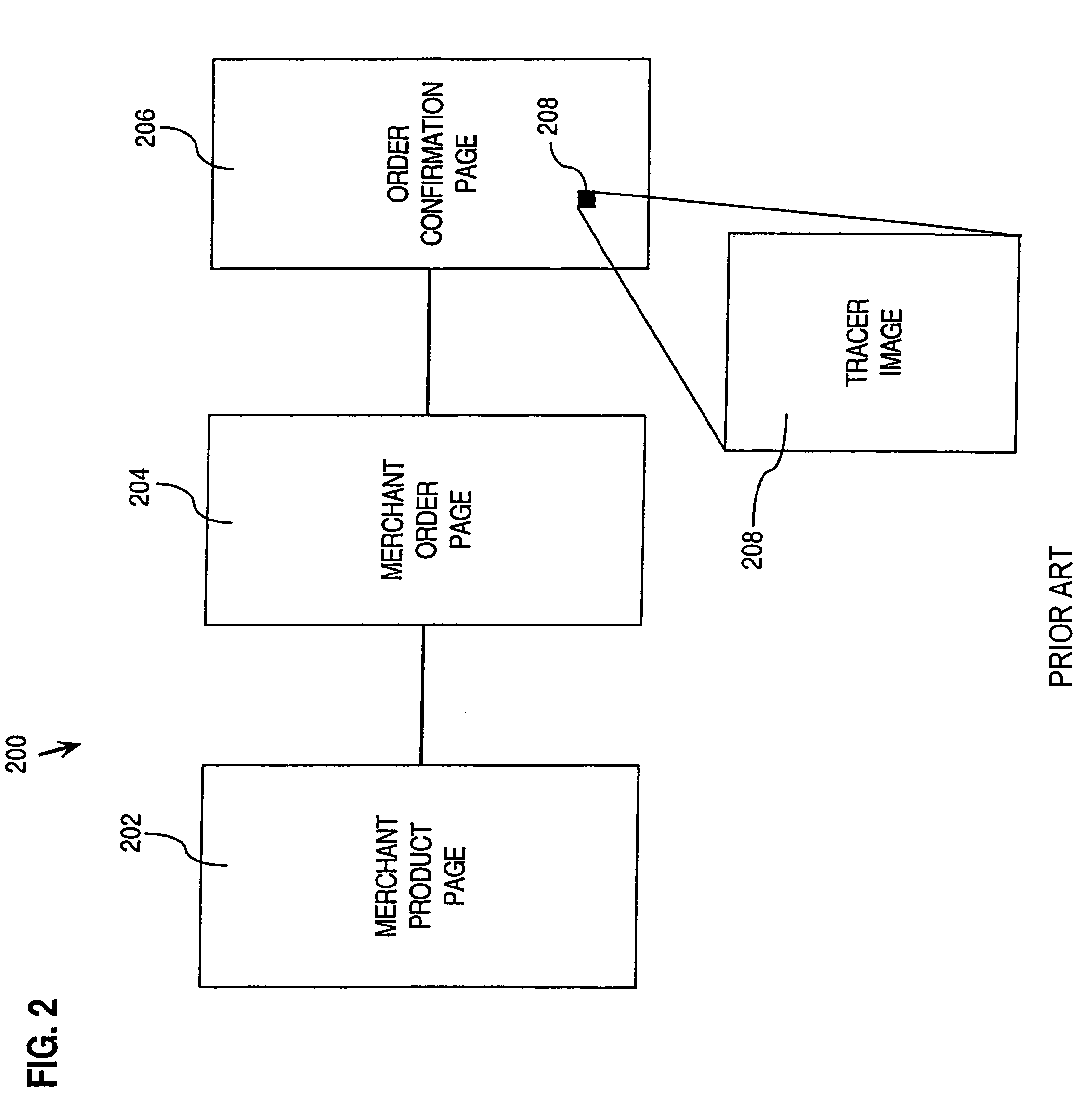
This necessitates tracking the
origination of transactions to particular shopping applications or portals, which can be difficult.
Once the user is at the merchant's
web site, the shopping application does not know what, if anything, the customer buys at the merchant web site.
In this situation, the shopping application does not know whether it is entitled to a commission for directing the customer to that particular merchant.
Although this approach allows merchants to definitively track the
origination of transactions, there are two significant drawbacks.
First, this solution requires that merchants customize their web sites, which is costly and
time consuming for the merchants.
Second, this solution requires that shopping application providers trust that merchants will properly account for the
origination of transactions.
This approach leaves to shopping applications the determination of where transactions originated, which is undesirable to many merchants since they must trust the shopping applications to correctly assign commissions.
This approaches leaves the tracking of commissions in the hands of merchants, which is undesirable to many shopping applications since they must trust the merchants to correctly assign commissions.
In either situation, a considerable burden is placed on merchants to implement tracer image technology into their web site infrastructure, which is costly and
time consuming.
Yet another problem with conventional approaches for processing orders over the Internet relates to completing order forms required by merchants to process a transaction.
Therefore, a customer may have to spend considerable time providing or accessing the same basic information over and over for each purchase even if they are not from different merchants.



 Login to View More
  Login to View More