
Tool assembly for evacuating, vacuum testing and charging a fluid system through a bleeder valve
a technology of fluid system and tool assembly, which is applied in the direction of couplings, liquid handling, packaging goods types, etc., can solve the problems of limited space and unsuitable tool assembly for vacuum testing the brake system
- Summary
- Abstract
- Description
- Claims
- Application Information
AI Technical Summary
Benefits of technology
Problems solved by technology
Method used
Image

Examples
Embodiment Construction
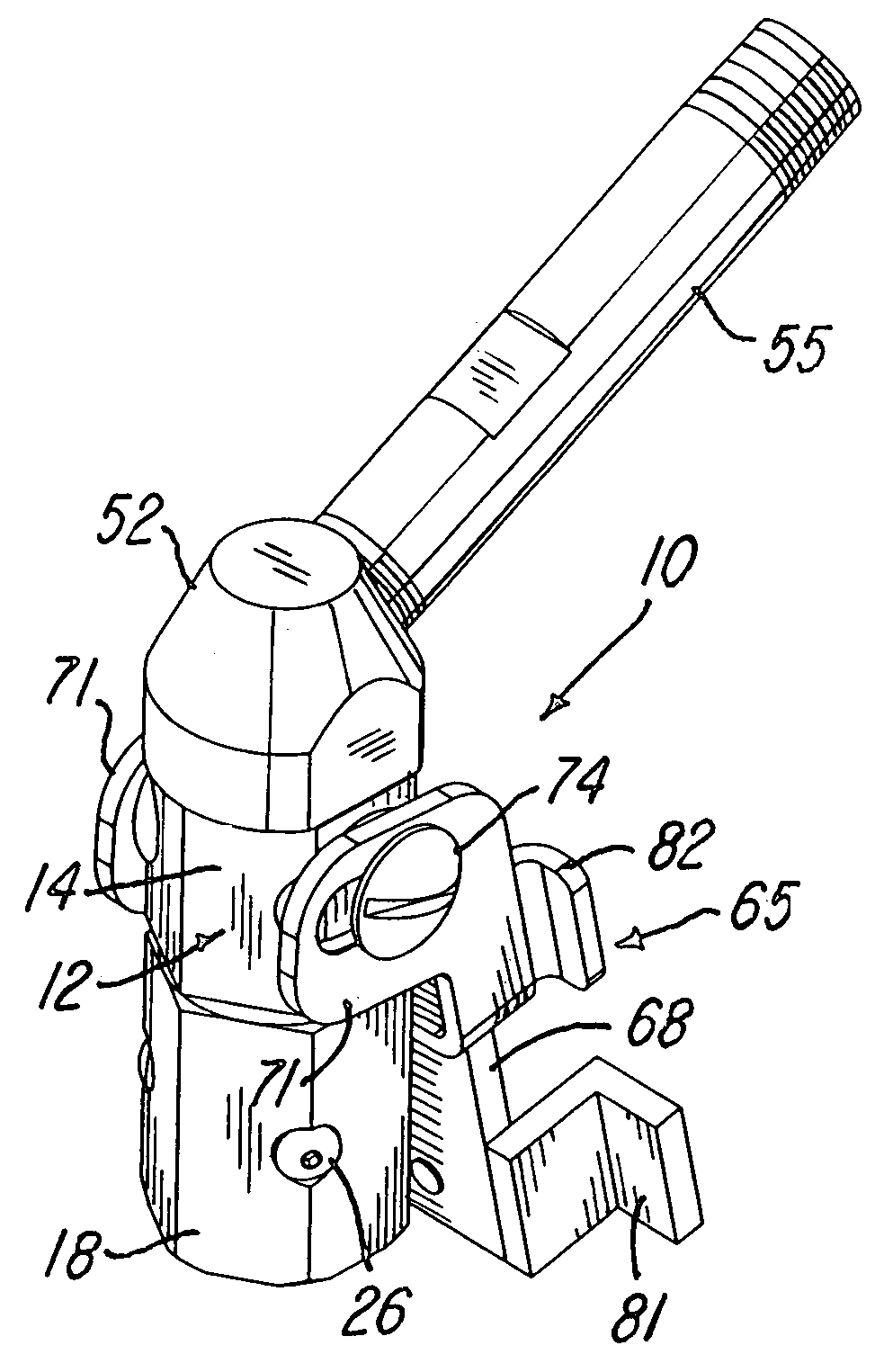
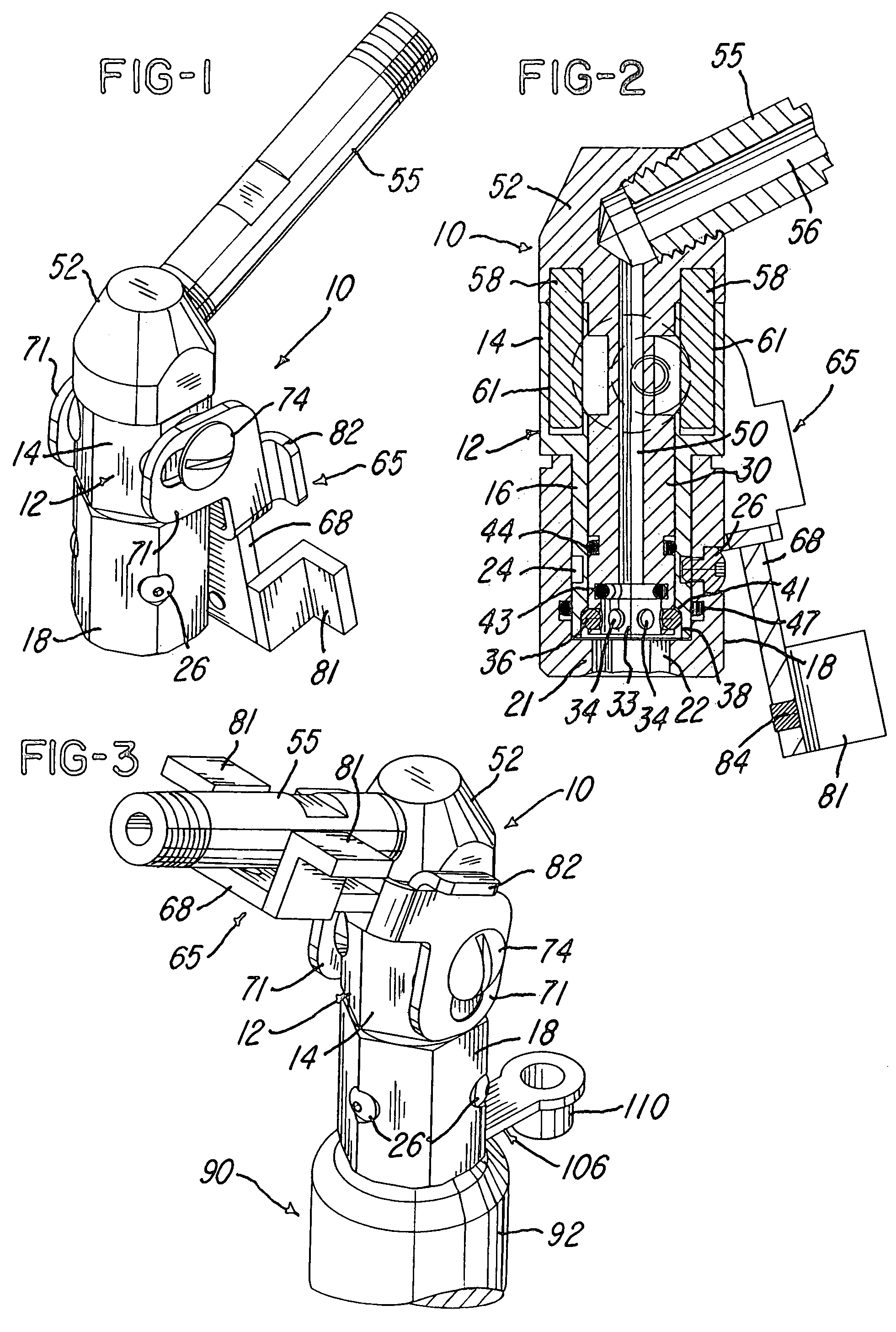
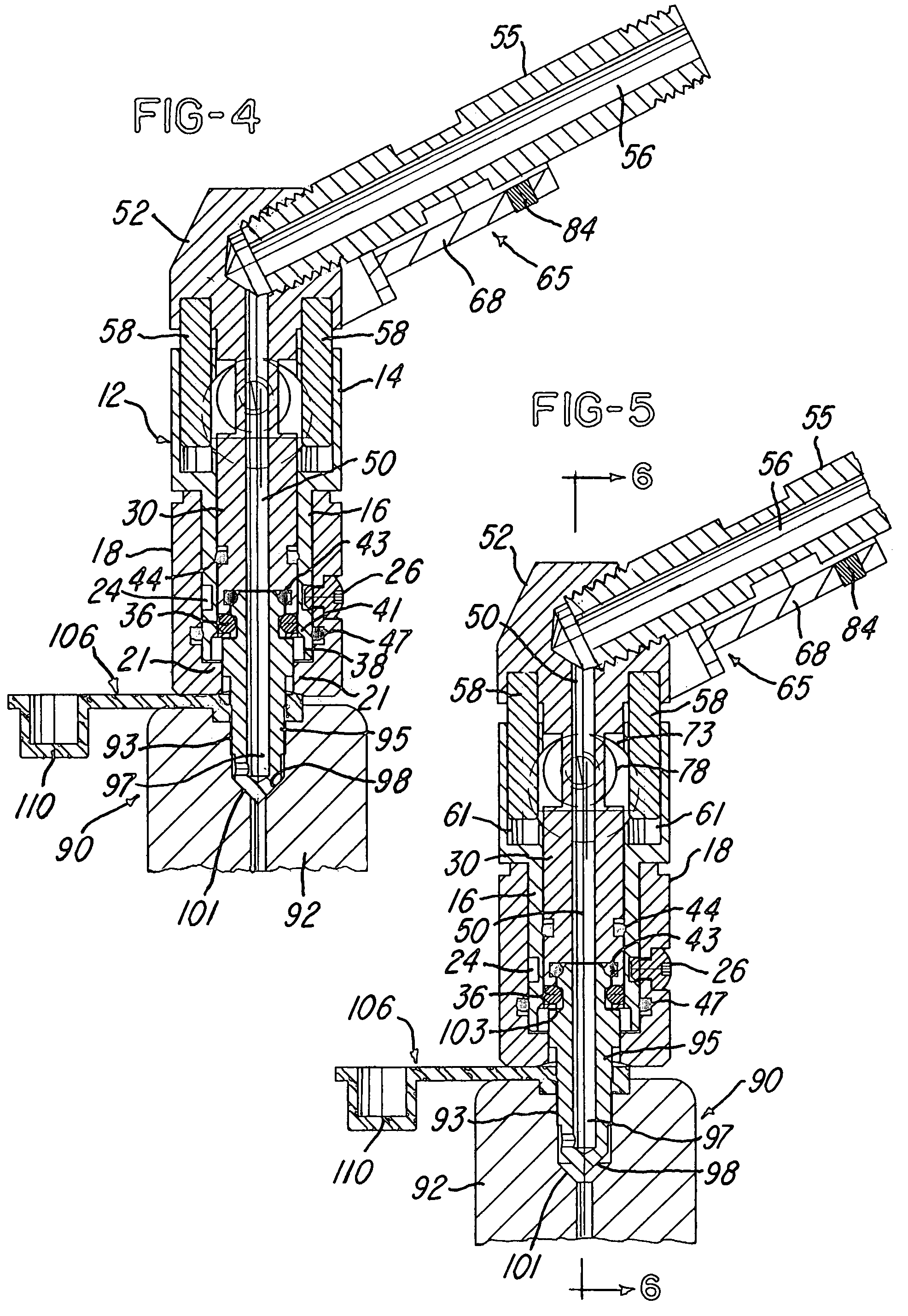
[0013]FIG. 1 illustrates a tool assembly 10 which includes a body 12 having a hexagonal upper portion 14 and a cylindrical tubular portion 16 (FIG. 2) which supports a rotary nut member 18 having a hexagonal outer surface and an inwardly projecting annular flange portion 21 having a hexagonal opening 22. An external groove 24 is formed in the outer surface of the tubular portion 16 of the body 12 and receives a set of three screws 26 threaded into the nut member 18 and having recessed head portions. The screws 26 permit rotation of the nut member 18 on the tubular portion 16 without relative axial movement. An internal tubular member 30 is supported for axial movement within the tubular portion 16 of the body 12 and has an annular lower end portion defining a cylindrical bore or cavity 33. The lower end portion of the tubular member 30 also has six circumferentially spaced holes 34 which receive corresponding spherical balls 36 which project outwardly into a cylindrical bore 38 exte...
PUM
| Property | Measurement | Unit |
|---|---|---|
| flexible | aaaaa | aaaaa |
| pressure | aaaaa | aaaaa |
| non-rotary | aaaaa | aaaaa |
Abstract
Description
Claims
Application Information
 Login to View More