

Minimizing message processing latency in a communication network
Patent Information
- Authority / Receiving Office
- US · United States
- Current Assignee / Owner
- NOKIA TECHNOLOGLES OY
- Publication Date
- 2010-06-29
- Estimated Expiration
- Not applicable · inactive patent
Smart Images
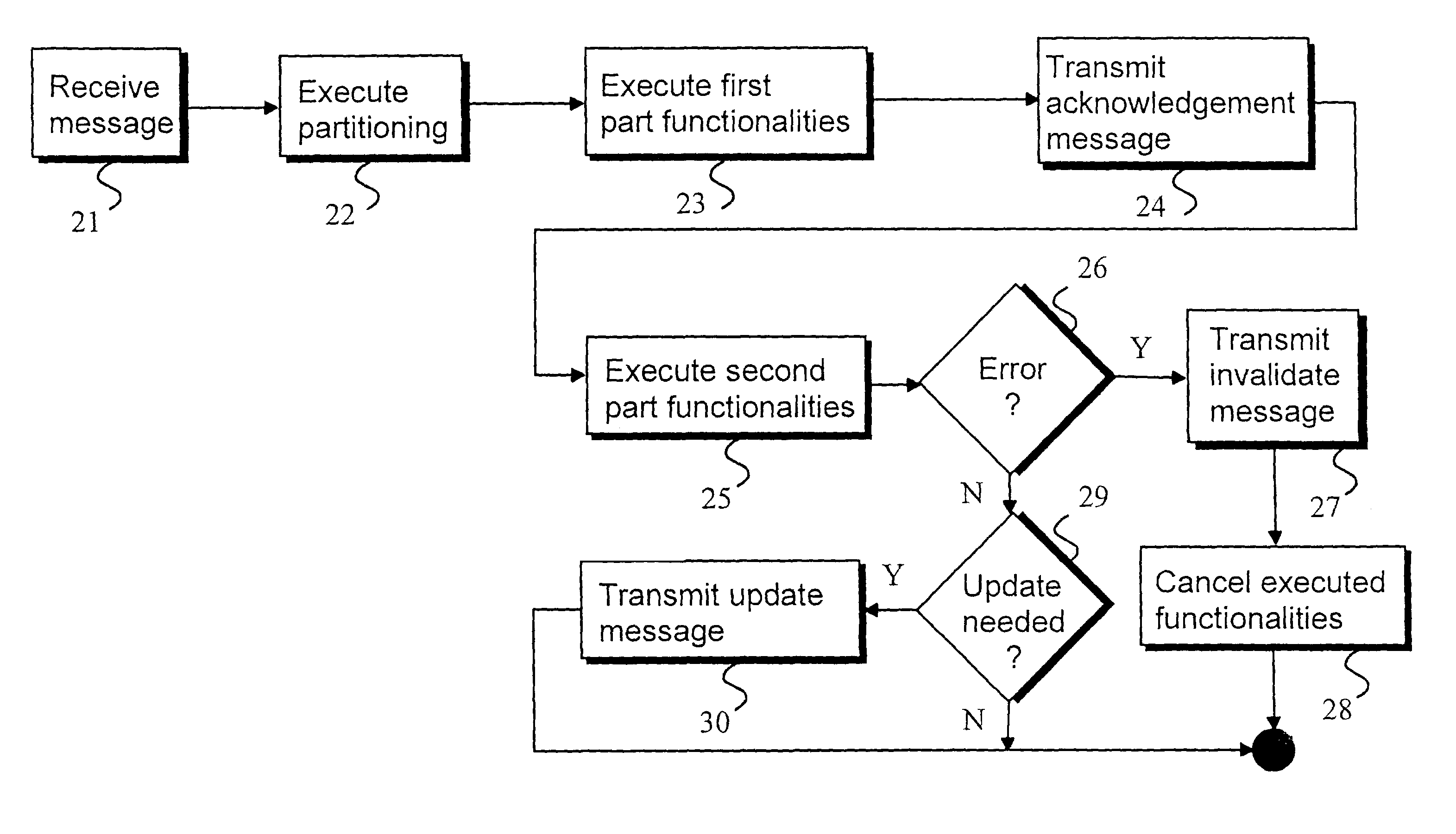
Figure 1 
Figure 2 
Figure 3
Abstract
Description
CROSS REFERENCE TO RELATED APPLICATIONS
[0001] This application claims priority of U.S. Provisional Patent Application Ser. No. 60 / 457,584, entitled “Minimizing Message Processing Latency in a Communication Network,” filed on Mar. 27, 2003, the contents of which are hereby incorporated by reference.BACKGROUND OF THE INVENTION
[0002] 1. Field of the Invention
[0003] The present invention relates to telecommunications. In particular, the present invention relates to a novel and improved method and system for minimizing message processing latency in a communication network.
[0004] 2. Description of the Related Art
[0005] Internet Protocol (IP) has been widely used as an OSI (Open Systems Interconnection) network layer protocol in packet switched networks such as Internet for years. The most commonly used version of IP has traditionally been Version 4 (IPv4). A recently developed version, Version 6 (IPv6), is however also beginning to be supported. IPv6 includes the capabilities of IPv4 but provi...