
Continuous flow sonic reactor and method
a sonic reactor and continuous flow technology, applied in mixers, lighting and heating apparatus, heating fuel, etc., can solve the problems of bursting of fluid, absorbing fluid, liberating heat, etc., and the usefulness of prior methods using ultrasound is believed to have been limited by the power of currently available ultrasound generators
- Summary
- Abstract
- Description
- Claims
- Application Information
AI Technical Summary
Benefits of technology
Problems solved by technology
Method used
Image

Examples
Embodiment Construction
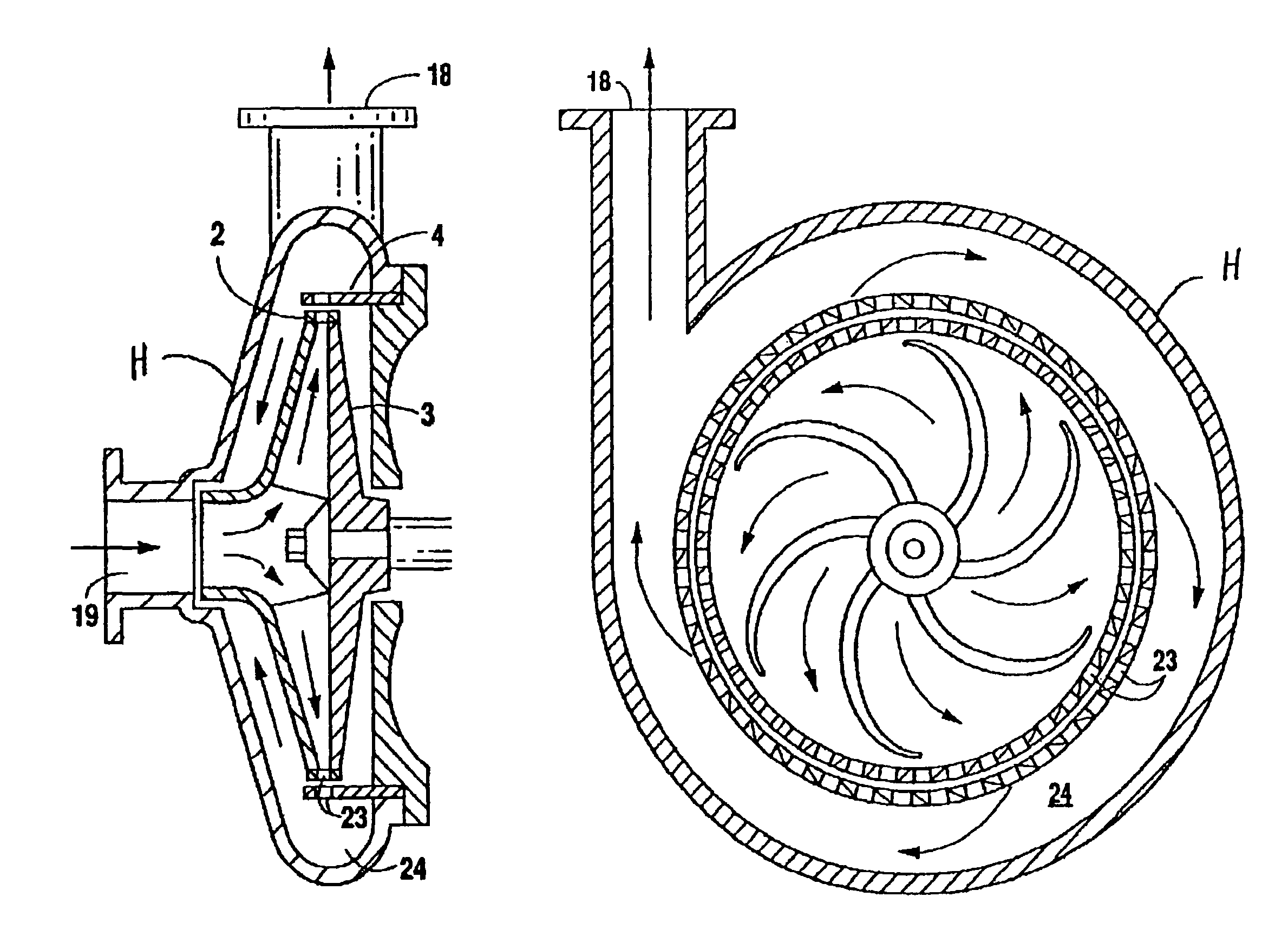
[0040]The reactor operates by moving the fluid on to the drive wheels rotating on one of several shafts. The fluid passes through a system of co-terminous and overlapping apertures of rotors and stators creating elastic fluctuations. The processing time is determined by the time it takes to pass through the working chambers of the reactor.
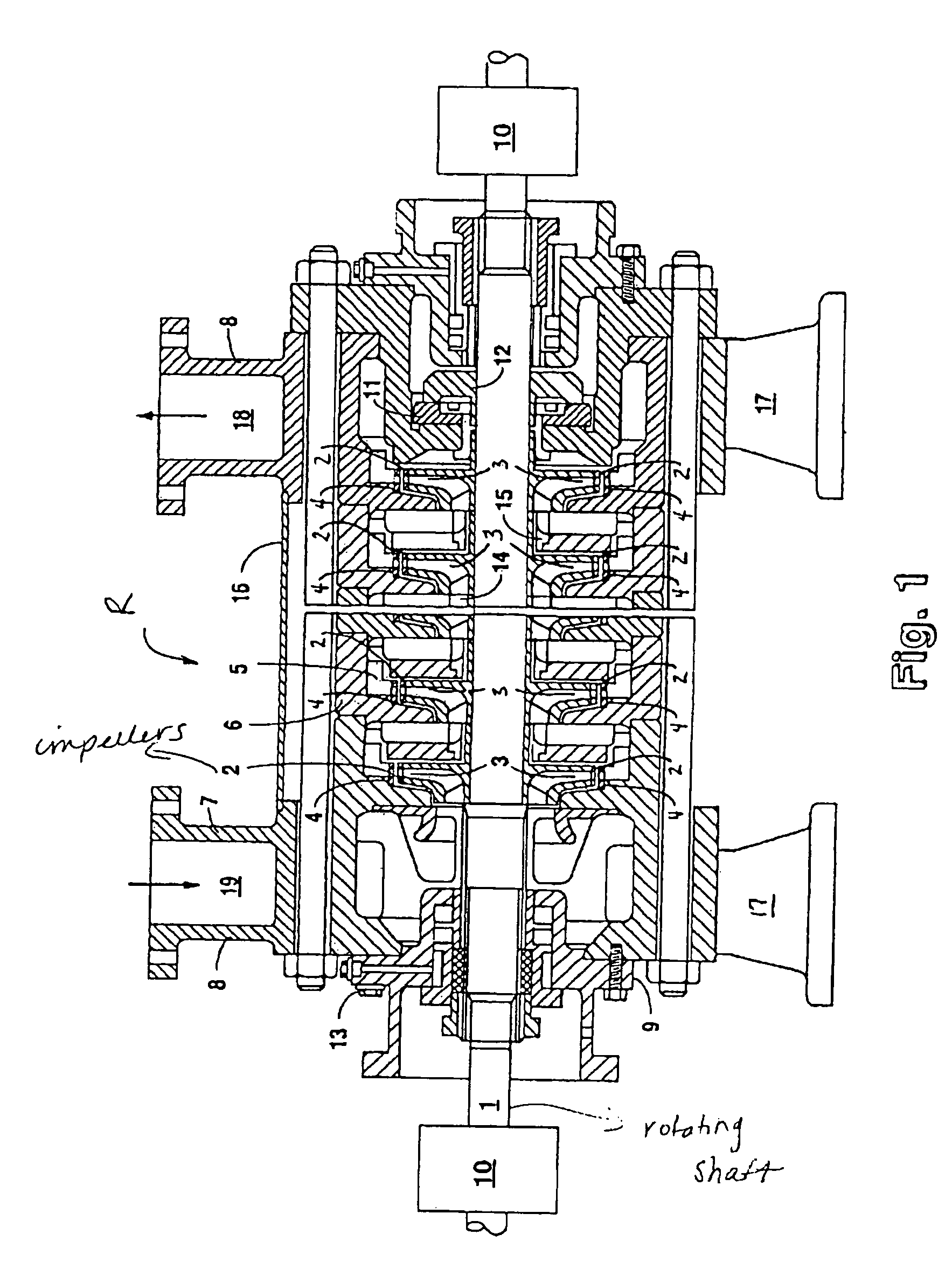
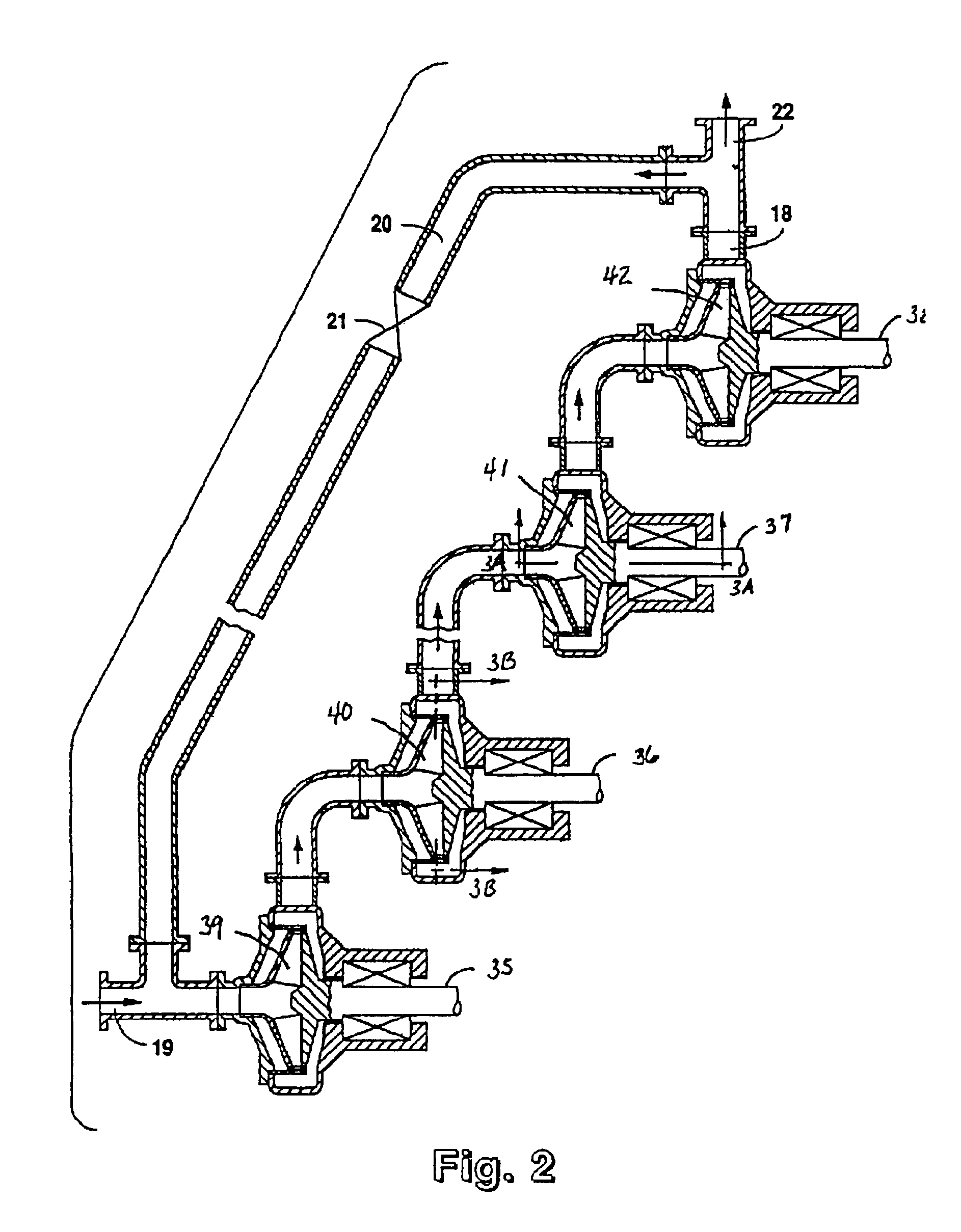
[0041]Referring now to the figures, FIG. 1 shows a cross-sectional view of a multistage centrifugal reactor R adapted to provide a high-intensity sound wave in a fluid feedstock. The rotating shaft 1 drives multiple rotors 3 mounted on the shaft. The fluid feedstock is propelled through apertures formed in impellers 2, which are rigidly mounted on the rotors, and nonrotating stators 4. Vaned or spiral-shaped volute diffusers 5 connect the outlet of each impeller to the inlet of the subsequent impeller. The rotors, impellers, stators and diffusers are installed in middle casings 6 and in two end casings 7 and 8. Also installed in the casings are sea...
PUM
 Login to View More
 Abstract
Description
Claims
Application Information
 Login to View More