

Methods and systems for frequency independent bearing detection
a technology of frequency independent bearings and methods, applied in the direction of direction finders, instruments, measurement devices, etc., can solve the problems of inconvenient system calibration, inability to accurately determine bearings, etc., to achieve the effect of reducing the complexity of the system calibration and overall circuit design, simplifying the system, and simplifying the feed-back loop
- Summary
- Abstract
- Description
- Claims
- Application Information
AI Technical Summary
Benefits of technology
Problems solved by technology
Method used
Image

Examples
Embodiment Construction
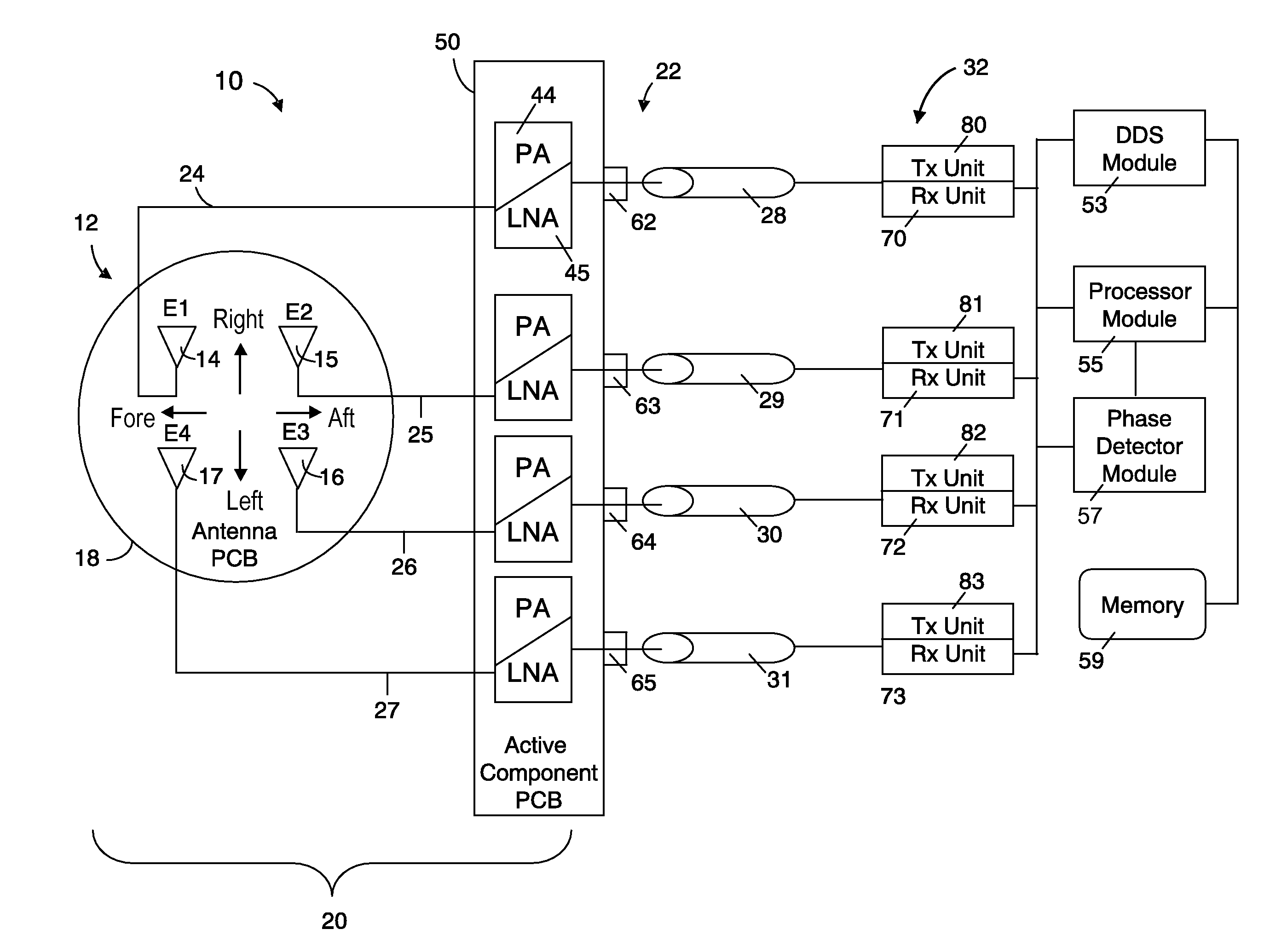
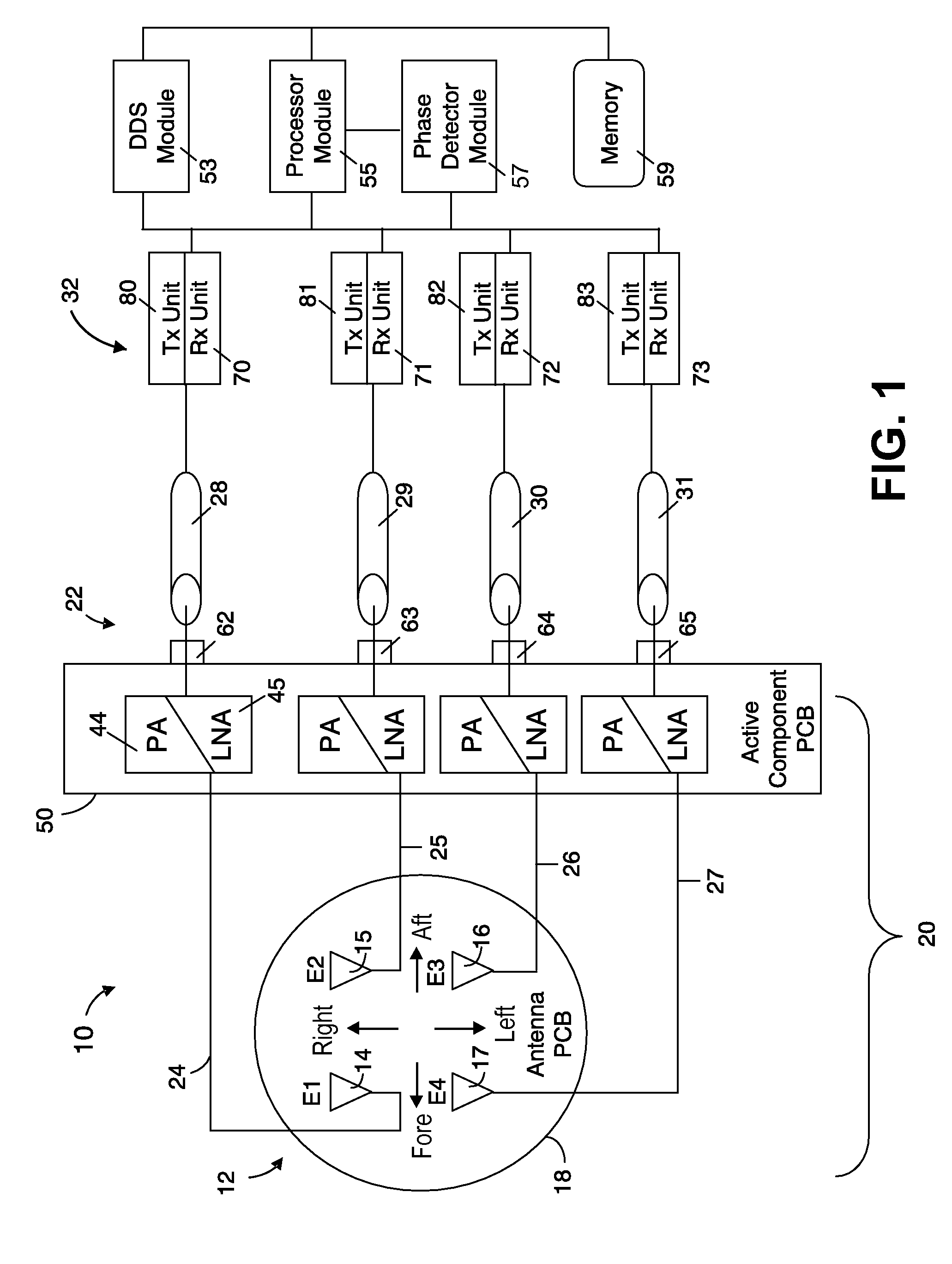
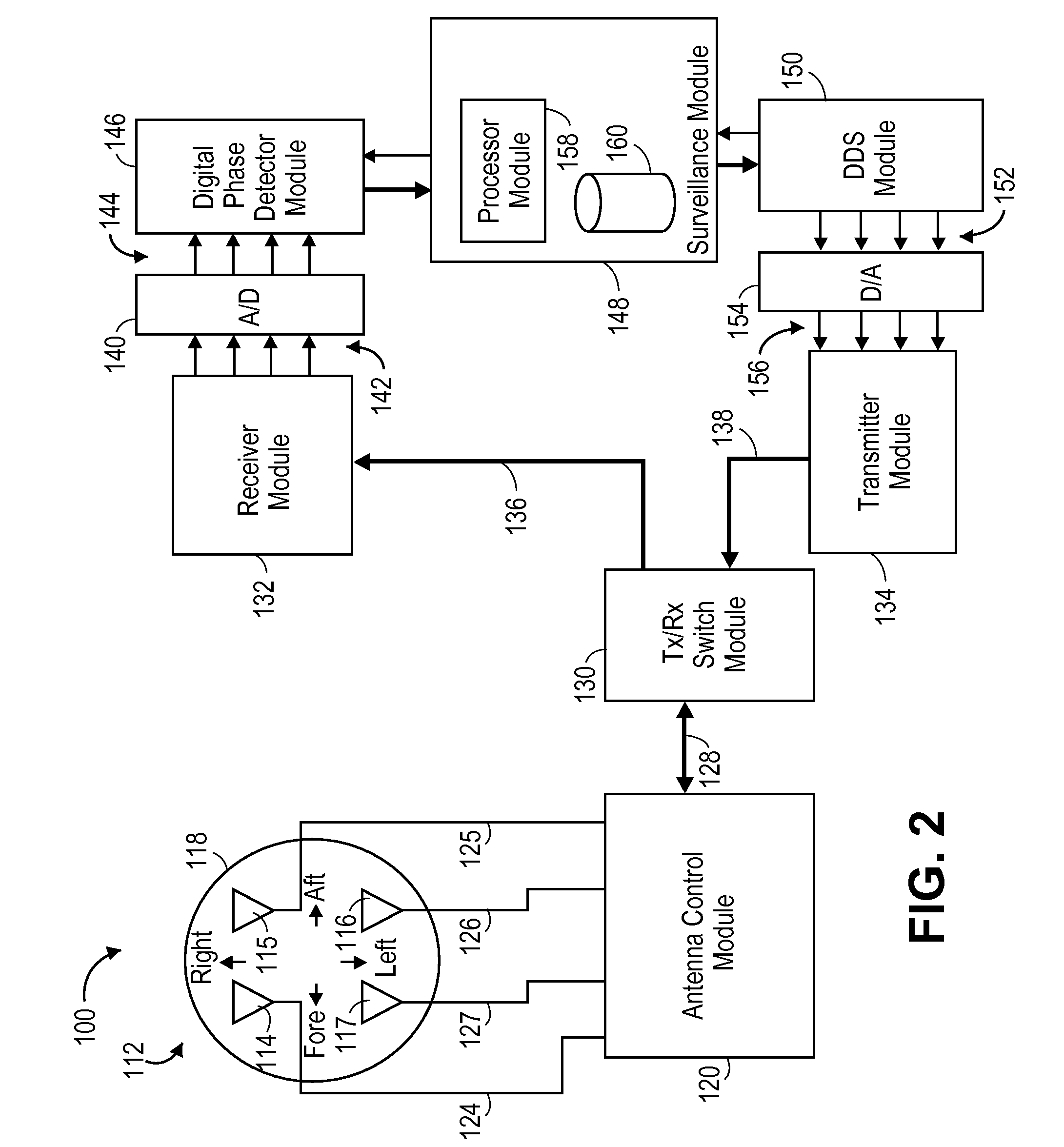
[0020]Embodiments of the present invention are described in connection with a bearing detection system for a Traffic Avoidance System (TAS), or Traffic Collision Avoidance System (TCAS I and TCAS II). However, it is understood that the present invention may be utilized in other applications for determining bearing to an RF signal source. For example, the system may be implemented on a marine vessel, a land-based vehicle, a portable apparatus, a hand-held device, and the like.
[0021]The Minimum Operating Performance Specifications (MOPS) for the TCAS II system is described in RTCA document DO-185A, “Minimum Operational Performance Standards for Air Traffic Alert and Collision Avoidance System II (TCAS II) Airborne Equipment”, dated December 1997 and the MOPS for TCAS I and TAS are embodied in RTCA document DO-197A, “Minimum Operational Performance Standards for Active Traffic Alert and Collision Avoidance System I (Active TCAS I)” each of which is incorporated herein by reference.
[002...
PUM
 Login to View More
 Abstract
Description
Claims
Application Information
 Login to View More