
Method and system for calculating and verifying the integrity of data in a data transmission system
integrity verification technology, applied in the field of methods and systems for calculating and verifying the integrity of data in a data transmission system, can solve problems such as discarding messages and inability to compute correctly
- Summary
- Abstract
- Description
- Claims
- Application Information
AI Technical Summary
Benefits of technology
Problems solved by technology
Method used
Image

Examples
Embodiment Construction
[0033]The invention will be described further, by way of example, with reference to the accompanying drawings, in which:
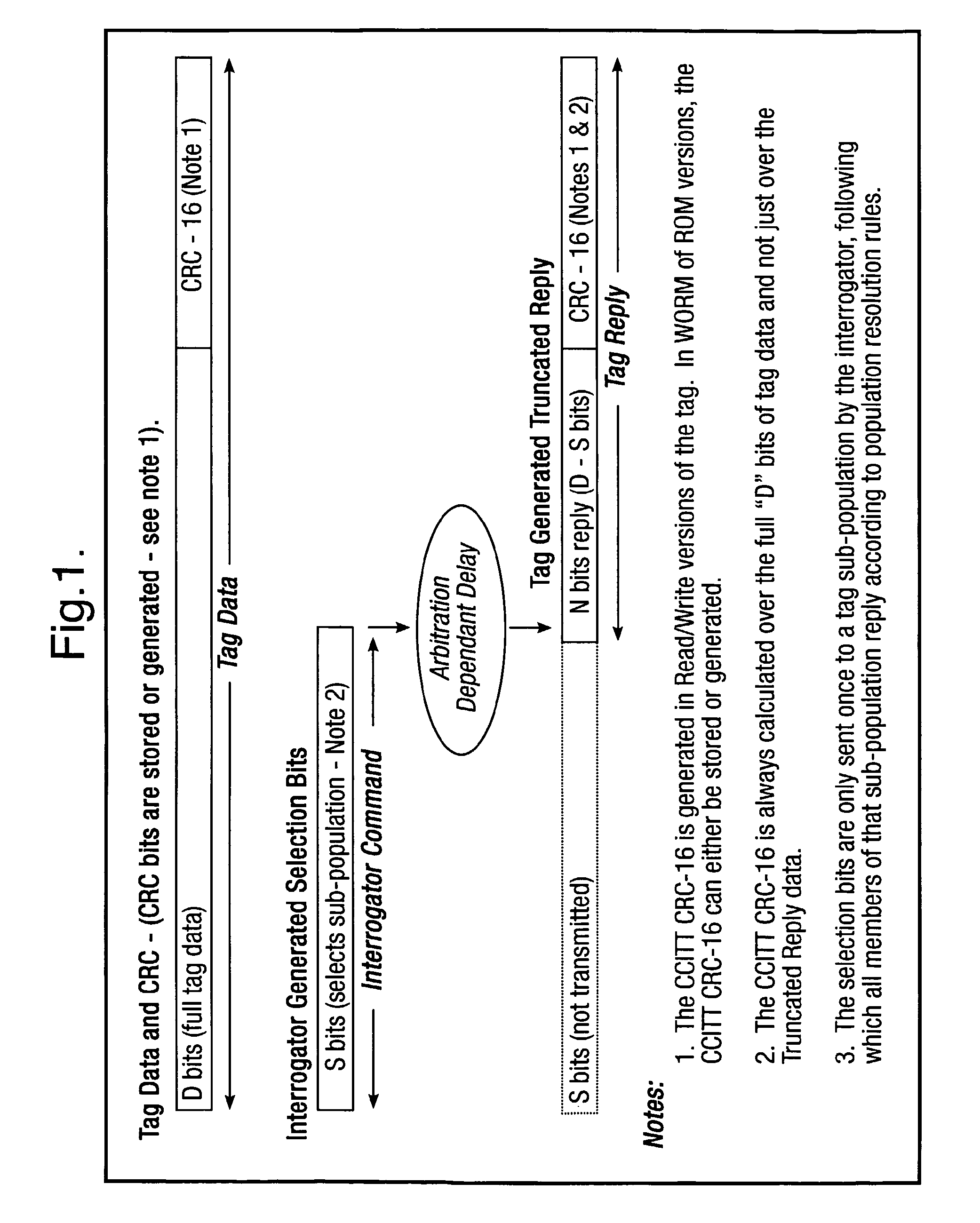
[0034]FIG. 1 illustrates a typical bit format for a tag identity and a portion of that bit identity used by an interrogator in its command to select a sub-population of tags;
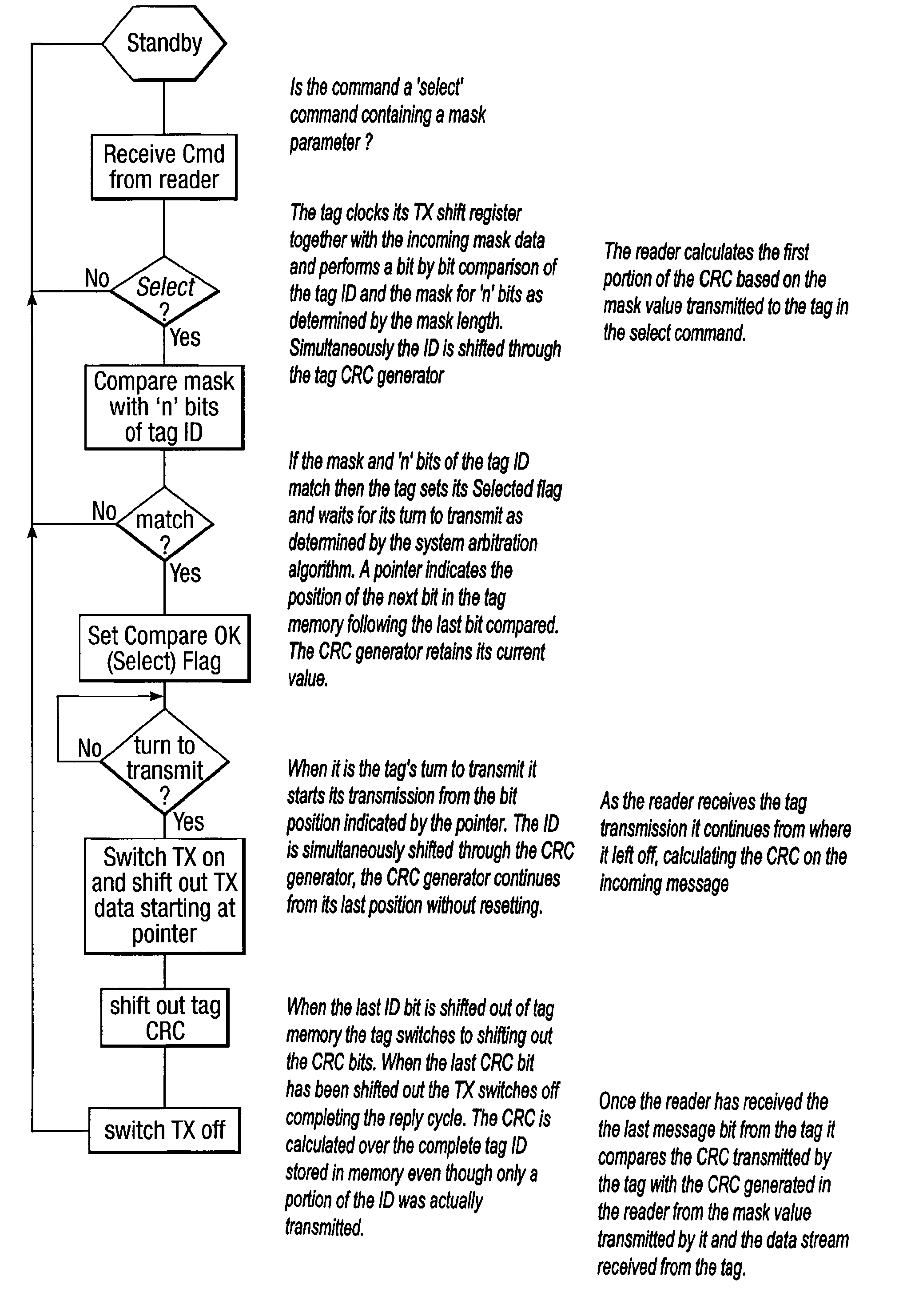
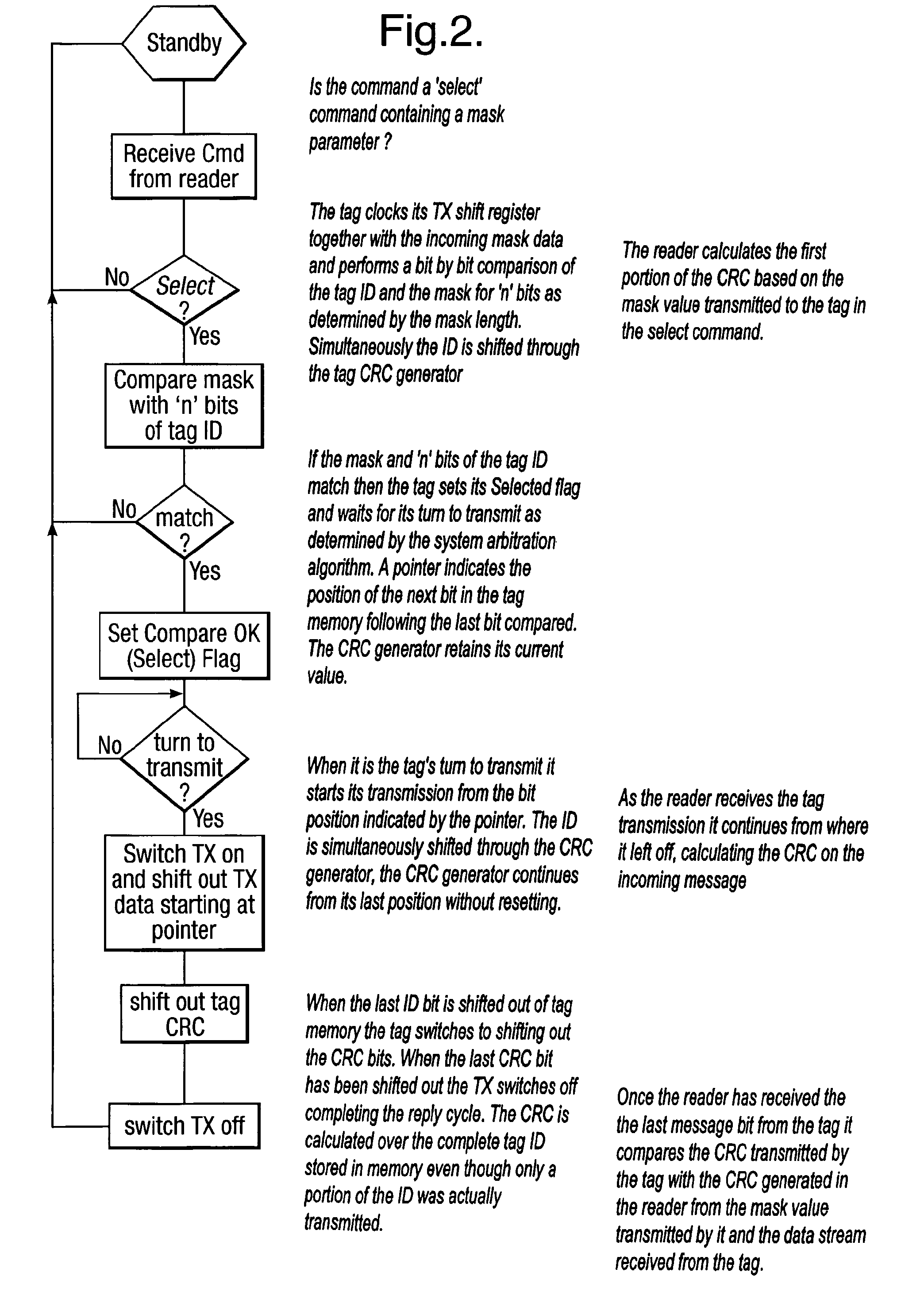
[0035]FIG. 2 shows a flow diagram of the command response sequence;
[0036]FIG. 3 shows the relative internal timing in the tag of the incoming command, the compare sequence and the transmitted tag message, together with the internal timing signals A, B, C and D and
[0037]FIG. 4 is a block diagram of a typical tag in accordance with one embodiment of the invention.
[0038]A typical RFID system comprises a reader and a plurality of tags, the reader issues a request command containing a mask for all tags present within the reader's illuminating field to reply if for example the first 16 bits of the tag identity match the 16 bits in the mask field contained within the reader's request command. The tags...
PUM
 Login to View More
 Abstract
Description
Claims
Application Information
 Login to View More