
Motion vector refinement for MPEG-2 to H.264 video transcoding
a technology of motion vector and video transcoding, applied in the field of video transcoding, can solve the problems of weak transcoding, inefficient transcoding between video standards, and inefficient conventional solutions, and achieve the effect of reducing partition sizes and efficient transcoding
- Summary
- Abstract
- Description
- Claims
- Application Information
AI Technical Summary
Benefits of technology
Problems solved by technology
Method used
Image

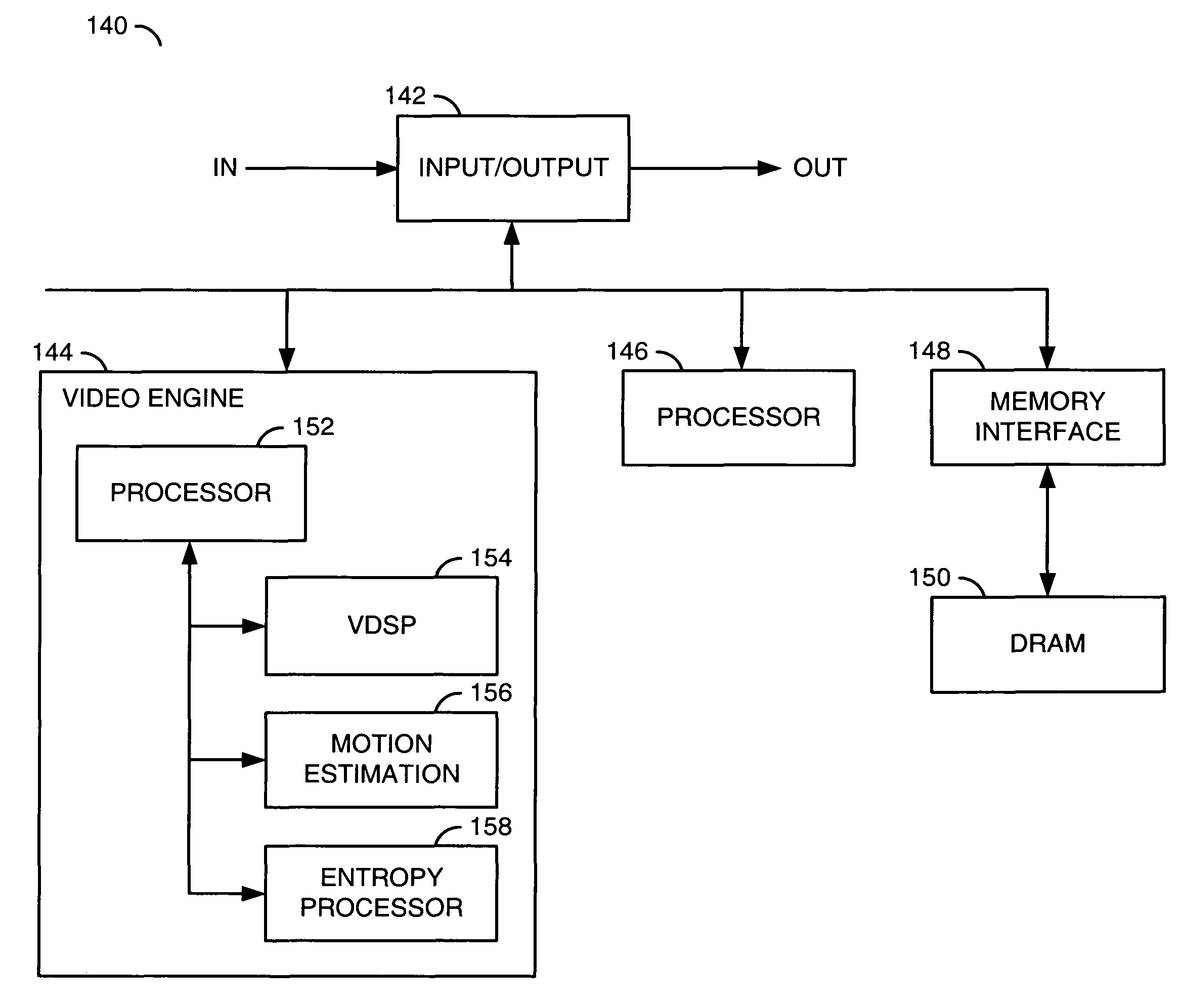
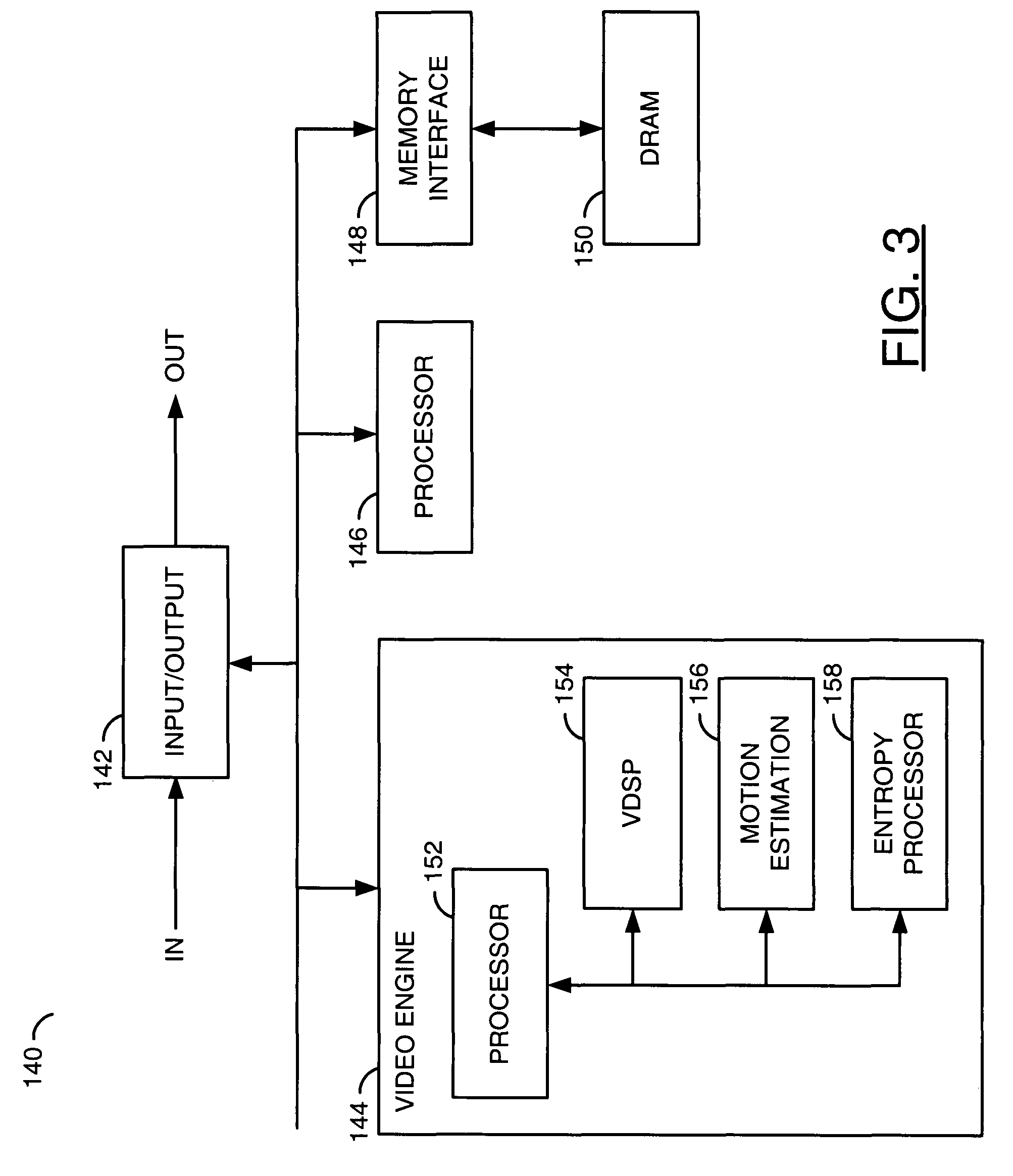
Examples
Embodiment Construction
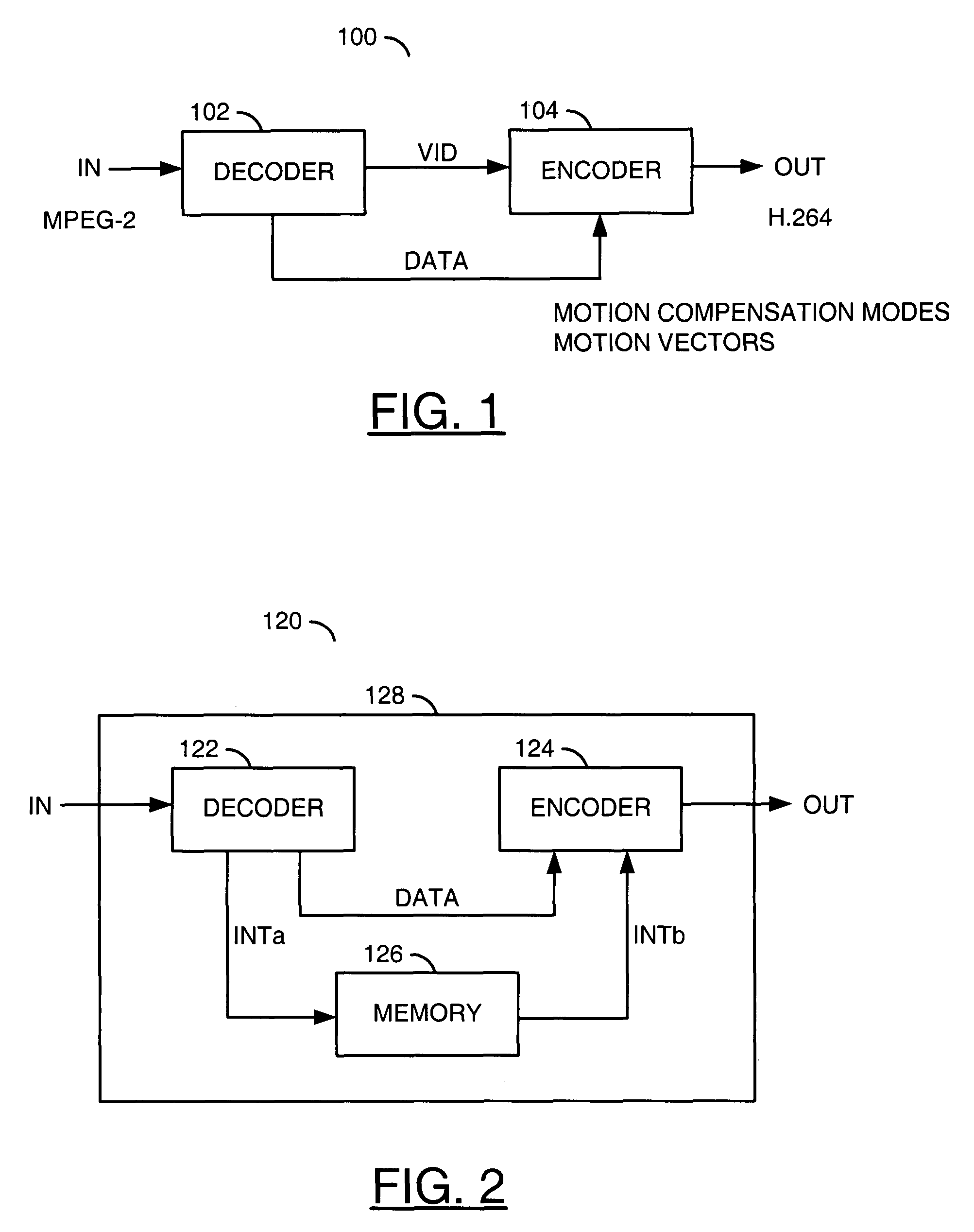
[0019]Referring to FIG. 1, a functional block diagram of a first system 100 is shown in accordance with a preferred embodiment of the present invention. The first system (or circuit) 100 may be implemented as a video transcoder. The system 100 generally comprises a decoder module (or function) 102 and an encoder module (or function) 104. A signal (e.g., IN) may be received by the module 102. The module 102 may generate a signal (e.g., VID) and generate one or more signals, generally represented by a signal (e.g., DATA). The module 104 may receive the signals VID and DATA. A signal (e.g., OUT) may be presented by the module 104.
[0020]The signal IN may be a compressed digital video bitstream compliant with a starting video standard (or format). The starting video standard may be an MPEG-2 standard. The signal VID may be a non-compressed digital video signal in an interlaced format or a progressive format. The signal OUT may be a compressed digital video bitstream compliant with an end...
PUM
 Login to View More
 Abstract
Description
Claims
Application Information
 Login to View More