
Compositions and methods for modulating hemostasis
a technology of coagulation enzymes and compositions, applied in the field of medicine and hematology, can solve the problems of many coagulation enzymes that act poorly on their protein substrates, and achieve the effect of modulating hemostasis
- Summary
- Abstract
- Description
- Claims
- Application Information
AI Technical Summary
Benefits of technology
Problems solved by technology
Method used
Image

Examples
example 1
Variant Factor XA Zymogen / Protease
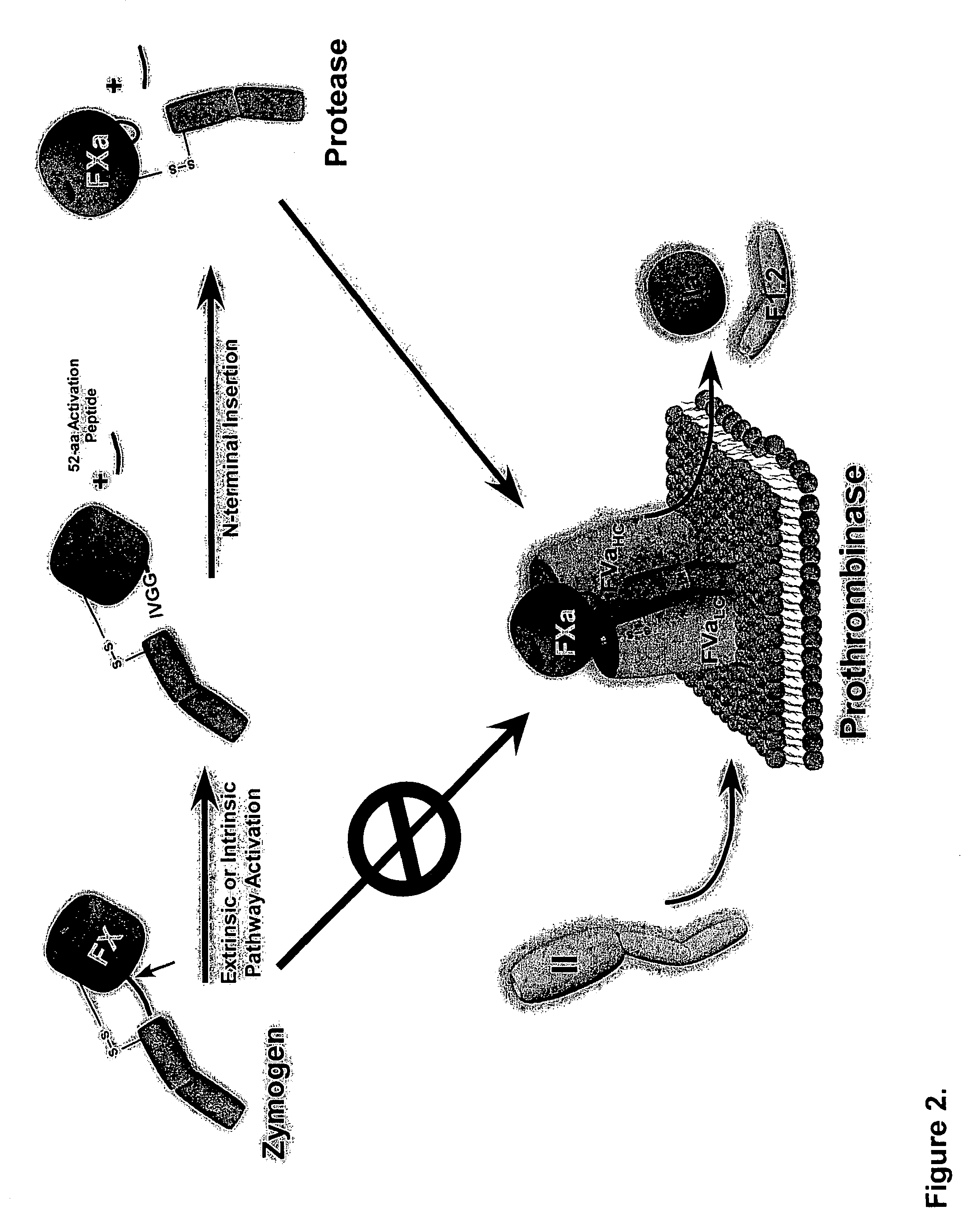
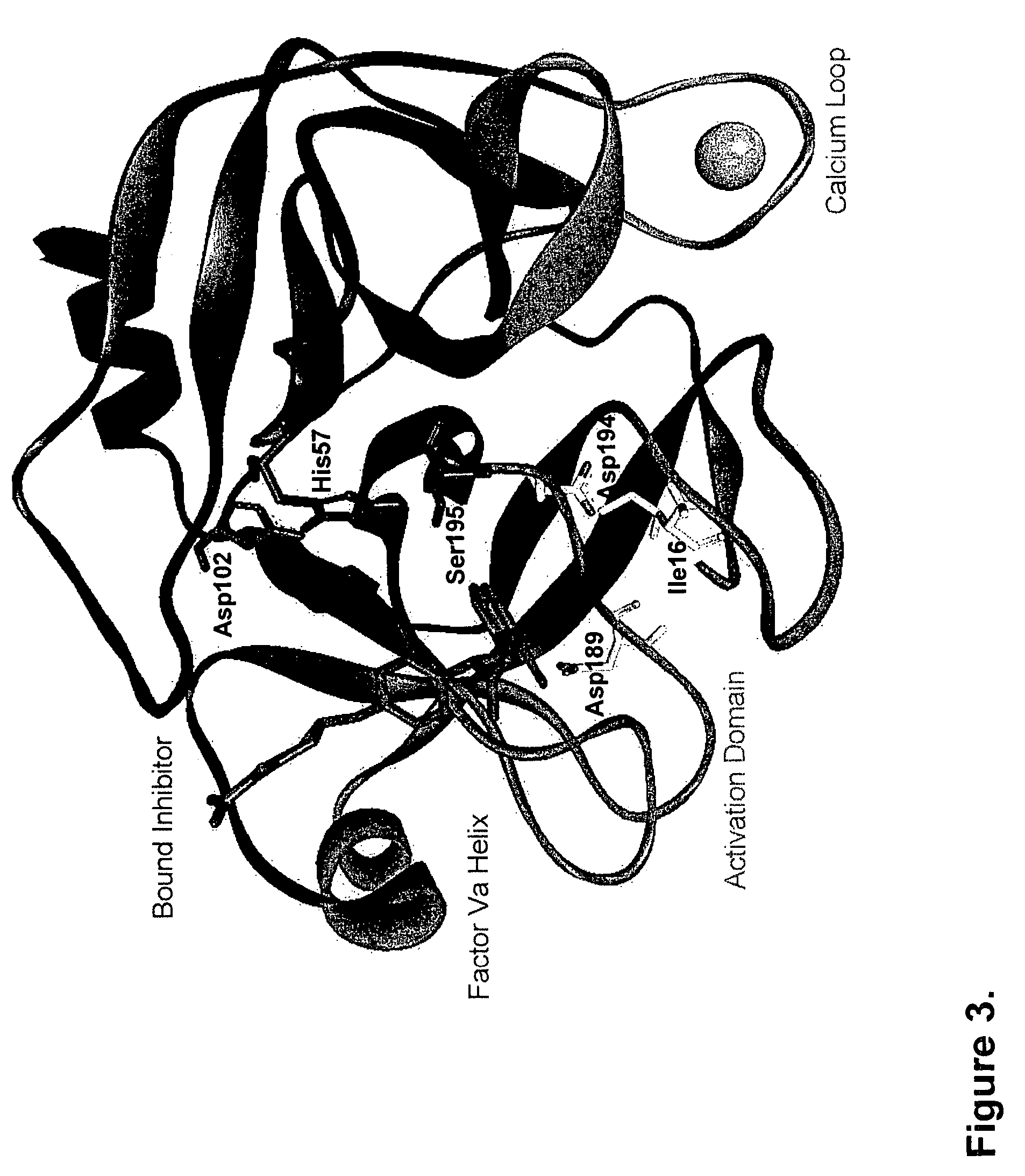
[0099]Proteolytic processing of precursor plasma proteins to affect activation is a hallmark of blood coagulation. The paradigm for this type of activation mechanism is the zymogen to protease transition in the chymotrypsin-like serine protease family. Bond cleavage at a highly conserved site (Arg15-Ile16 i.e., at positions 234 and 235 of SEQ ID NO: 1; chymotrypsin numbering system) unmasks a new N-terminus which acts as an intramolecular ligand for Asp194 (FIG. 2). This new salt-bridge results in or is associated with a conformational change and ordering of the so-called “activation domain”, surface loops consisting of the S1 specificity pocket, oxyanion hole, autolysis loop, and sodium biding site (FIG. 3). It is well documented in the trypsin system that Ile235-Asp418 internal salt-bridge formation is allosterically linked to the S1 specificity site; that is changes at one site influence the other site and vice versa. The basic principles of the ...
PUM
| Property | Measurement | Unit |
|---|---|---|
| clotting time | aaaaa | aaaaa |
| time | aaaaa | aaaaa |
| time | aaaaa | aaaaa |
Abstract
Description
Claims
Application Information
 Login to View More