
Decorative disposer flange and strainer assembly
a technology of disposer flange and strainer assembly, which is applied in the direction of gas current separation, washing stand, grain treatment, etc., can solve the problems of difficult removal, rotting smell from the sink, and awkward or out of place stainless steel flanges that do not often match the finish of the sink,
- Summary
- Abstract
- Description
- Claims
- Application Information
AI Technical Summary
Benefits of technology
Problems solved by technology
Method used
Image

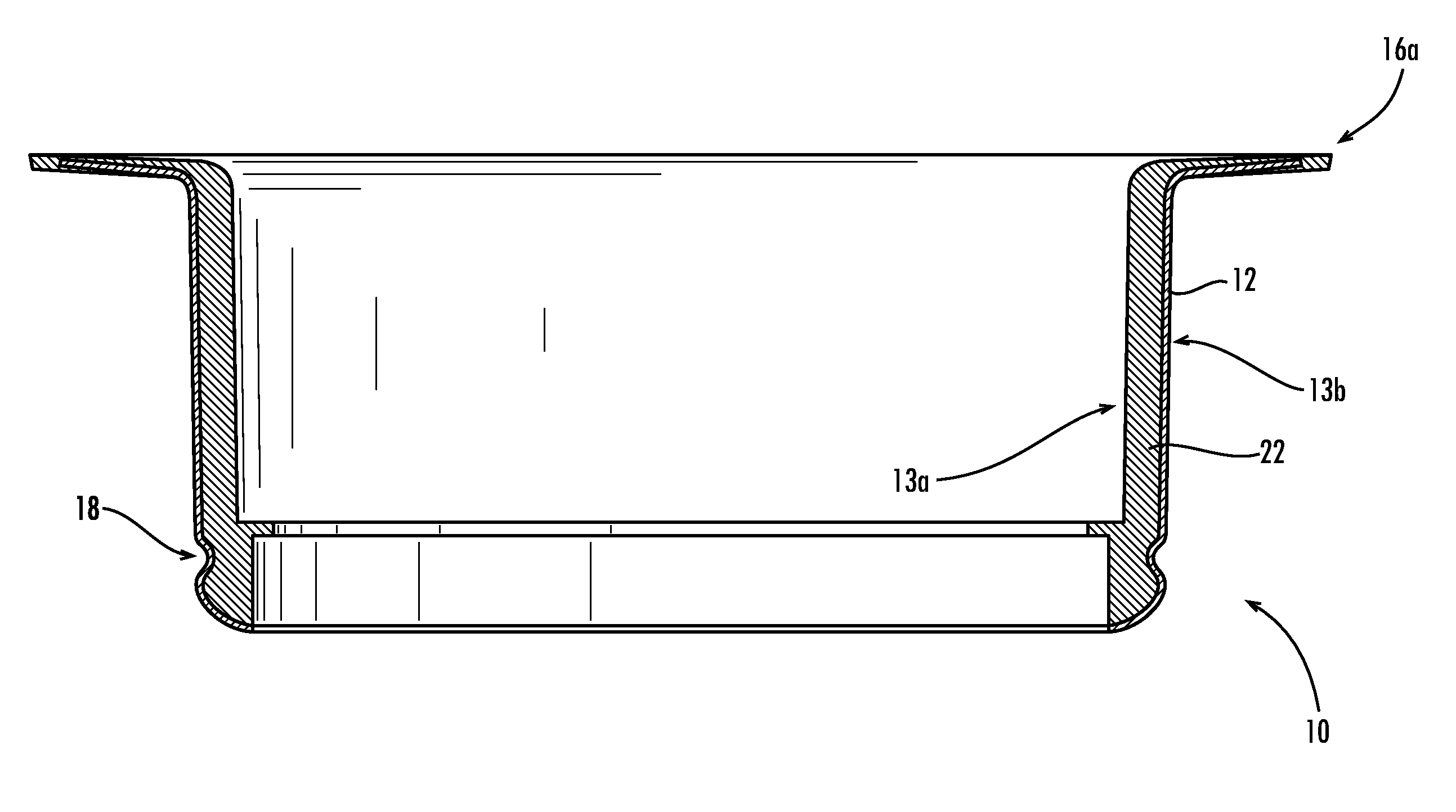
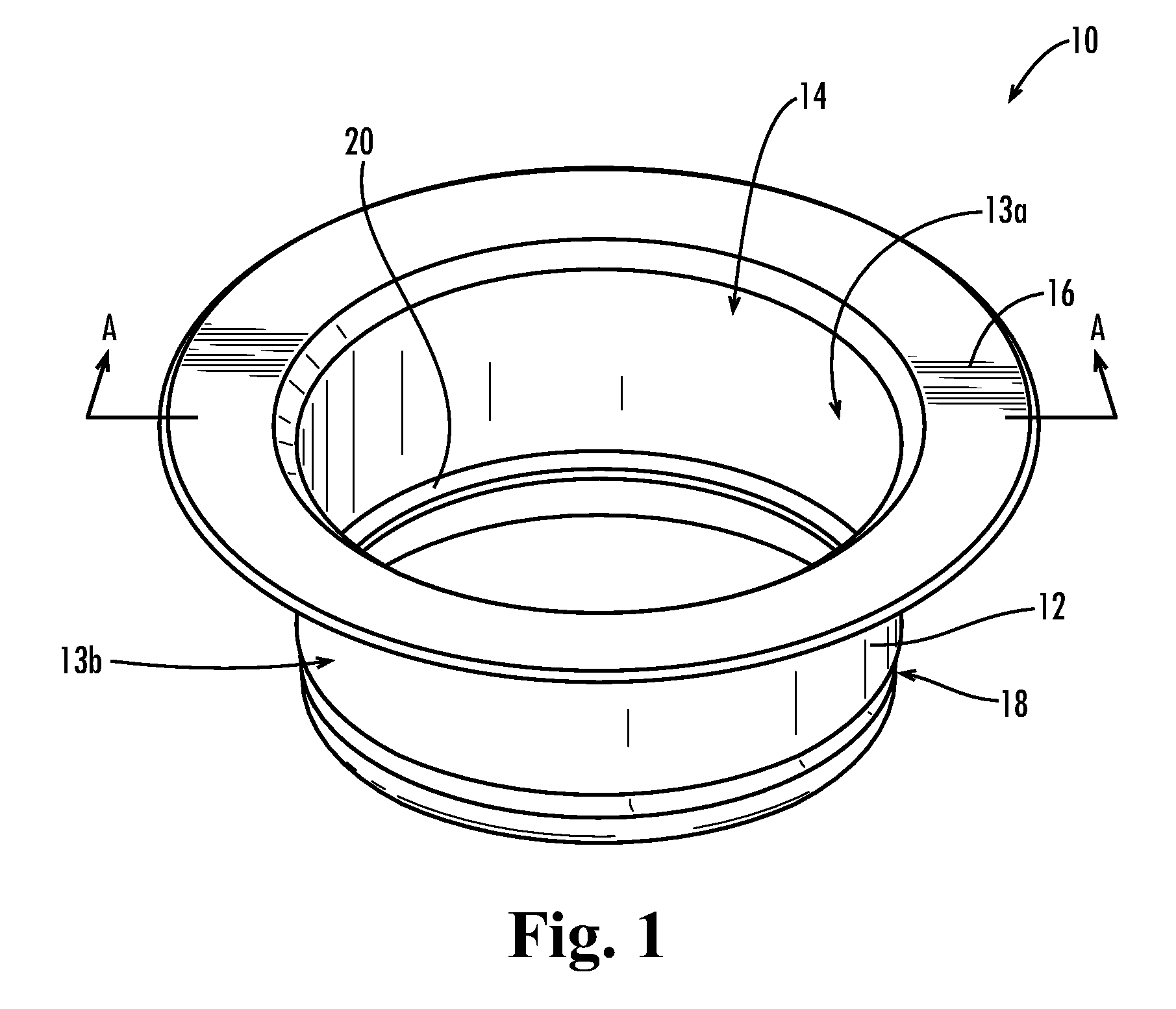
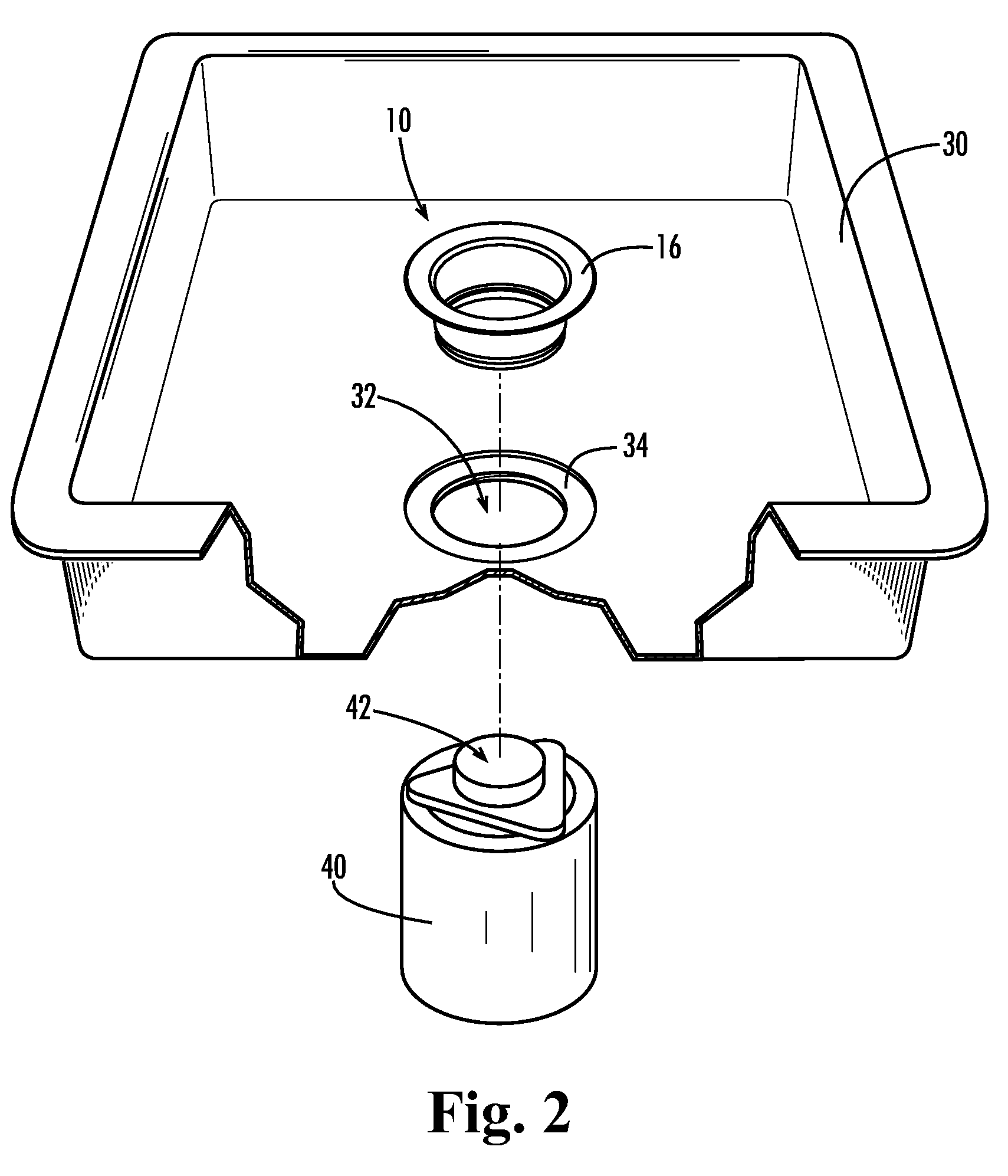
Examples
Embodiment Construction
[0014]The present invention may be understood more readily by reference to the following detailed description of the invention taken in connection with the accompanying drawing figures, which form a part of this disclosure. It is to be understood that this invention is not limited to the specific devices, methods, conditions or parameters described and / or shown herein, and that the terminology used herein is for the purpose of describing particular embodiments by way of example only and is not intended to be limiting of the claimed invention. Also, as used in the specification including the appended claims, the singular forms “a,”“an,” and “the” include the plural, and reference to a particular numerical value includes at least that particular value, unless the context clearly dictates otherwise. Ranges may be expressed herein as from “about” or “approximately” one particular value and / or to “about” or “approximately” another particular value. When such a range is expressed, another...
PUM
 Login to View More
 Abstract
Description
Claims
Application Information
 Login to View More