
System and method for allocating jamming energy based on three-dimensional geolocation of emitters
a technology of three-dimensional geolocation and allocating energy, applied in the field of allocating jamming energy, can solve the problems of wasting energy, rf emissions that may not be effective on critical emitters, etc., and achieve the effects of cost-effectiveness, small size and rapid discrimination
- Summary
- Abstract
- Description
- Claims
- Application Information
AI Technical Summary
Benefits of technology
Problems solved by technology
Method used
Image

Examples
Embodiment Construction
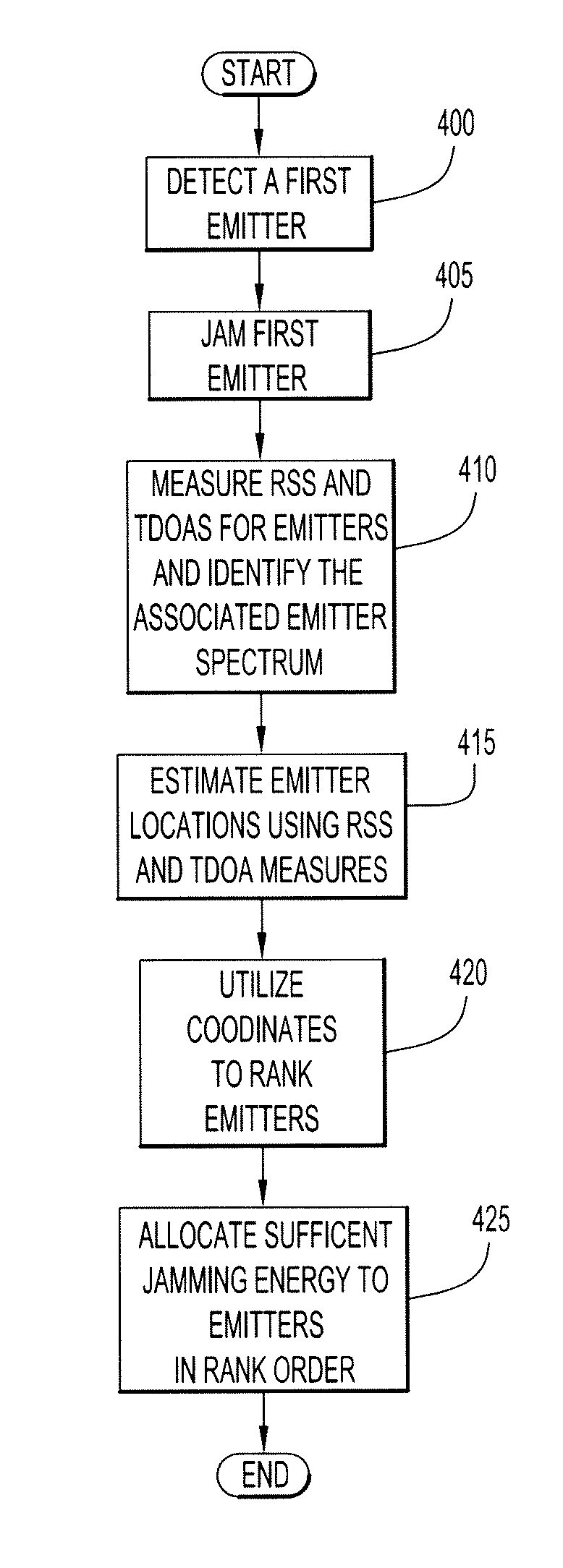
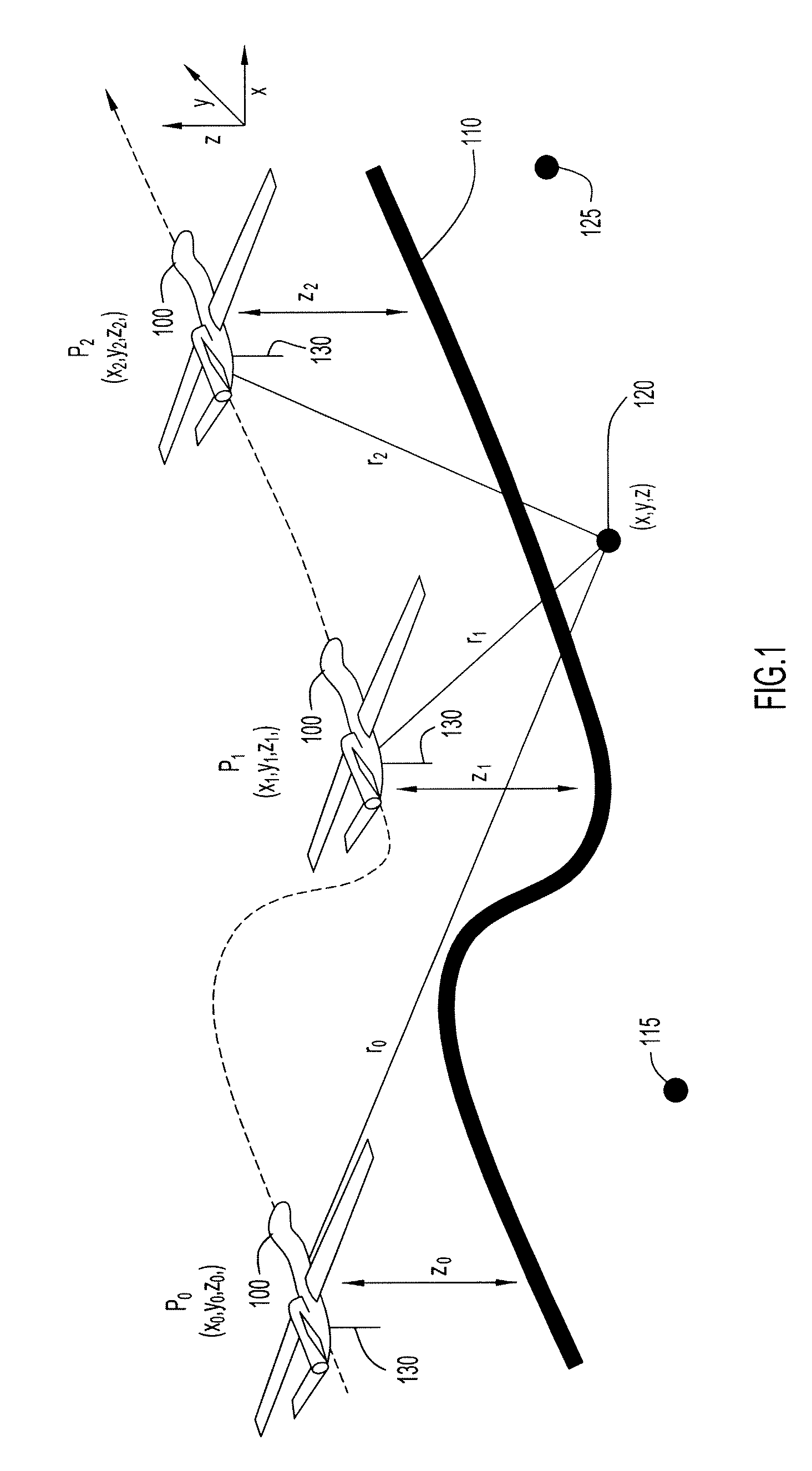
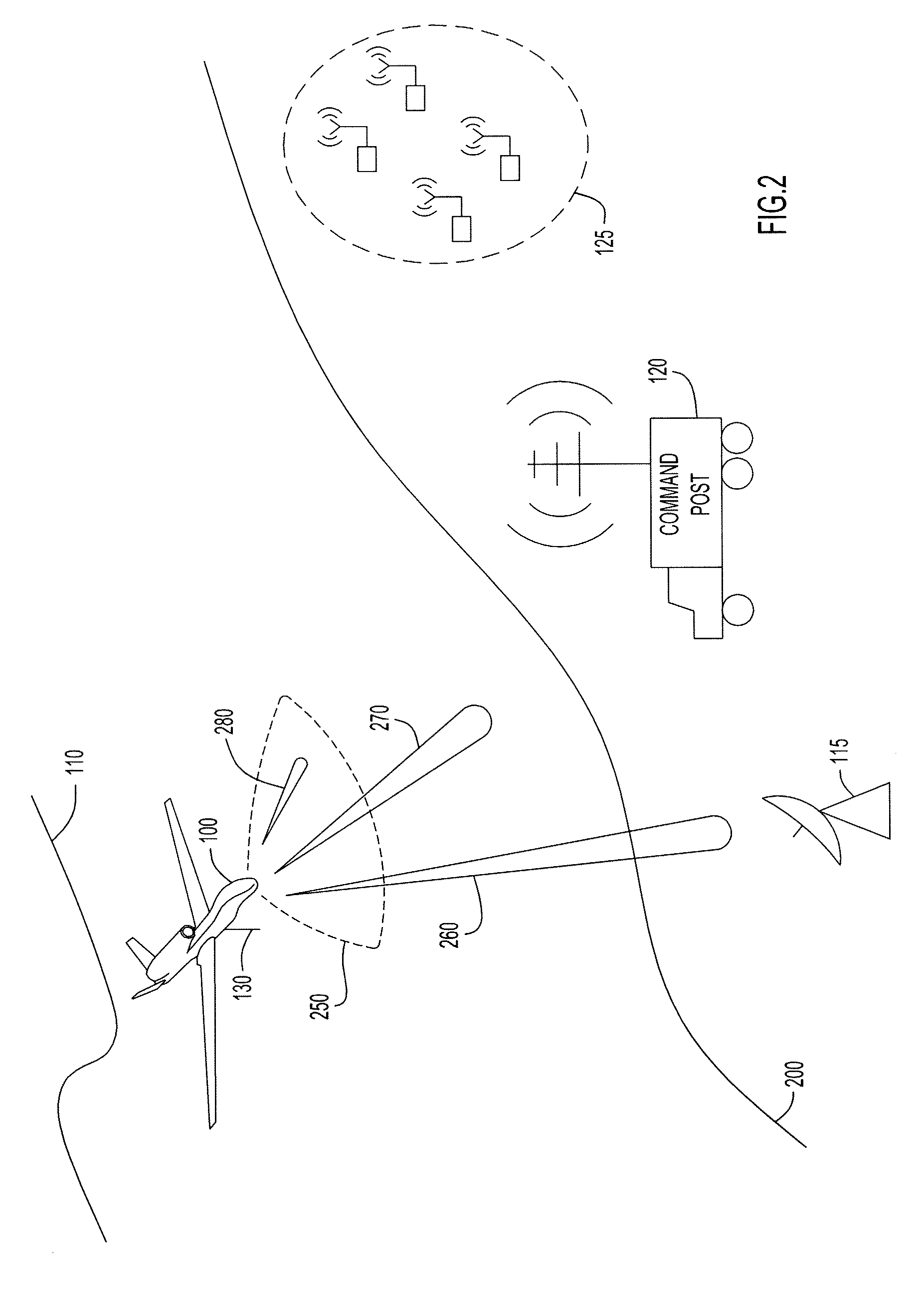
[0014]Embodiments of the present invention pertain to a jamming system that employs a three-dimensional (3-D) geolocation technique to obtain reliable geolocation estimates of a radio frequency (RF) emitter and uses the geolocation and other information to optimize jamming efforts. The geolocation of a radio frequency (RF) emitter is a critical need for many applications including identifying emitters to receive jamming energy. The technique of present invention embodiments may be employed with unmanned air vehicles (UAV) that are usually small, utilized for low altitudes, and employ typical guidance technologies for operation (e.g., following pre-planned or manually provided paths or waypoints). These types of vehicles are well suited for enabling three-dimensional (3-D) geolocation of radio frequency (RF) emitters of interest and jamming their emissions.
[0015]An example environment for determining the geolocation of a target radio frequency (RF) emitter in a three-dimensional spac...
PUM
 Login to View More
 Abstract
Description
Claims
Application Information
 Login to View More